 Dodi Irawan
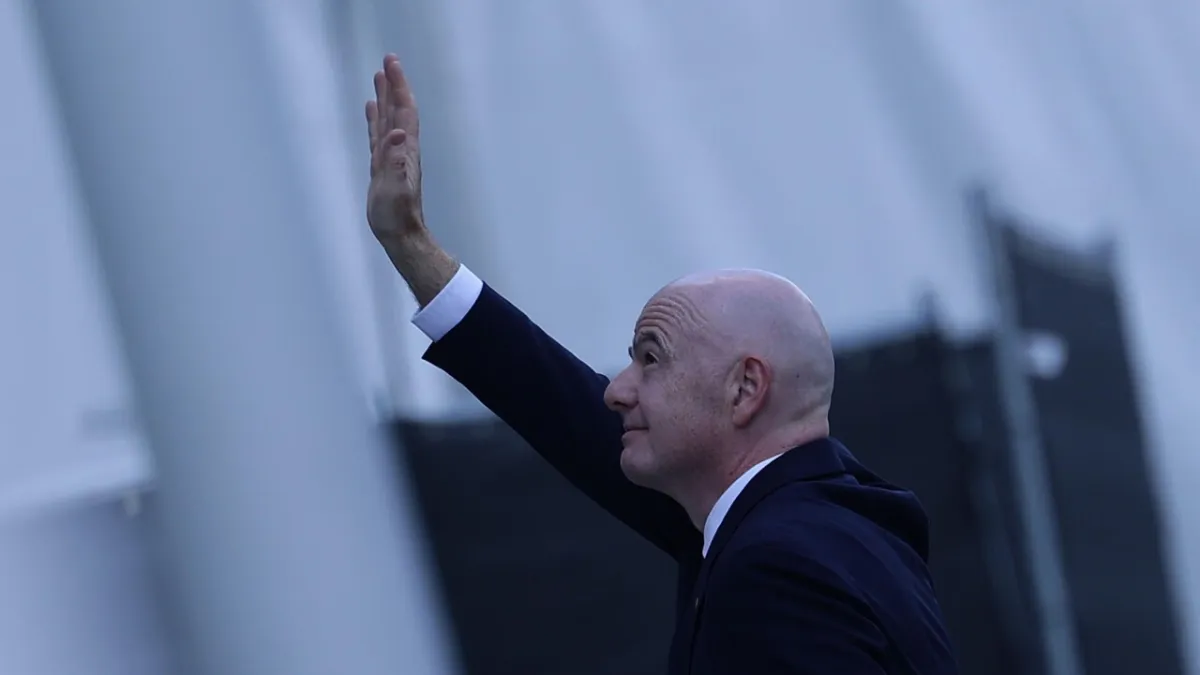
ZURICH — The discussion regarding the expansion of the World Cup format has resurfaced after FIFA President Gianni Infantino openly stated his willingness to evaluate the possibility of a 64-team tournament. This surprising statement was made by Infantino in an exclusive interview with Swiss media outlet Bluewin in early 2026, reaffirming his commitment to global football inclusivity.
Infantino, known for his ambitious vision to expand the reach of the sport, emphasized the philosophy that “everyone must be able to participate.” This statement initiates a serious discussion among global football federations about the future of the most prestigious competition, which is currently scheduled for 48 teams for the 2026 edition in North America.
The proposal for a 64-team format, if realized, would mark a significant change in World Cup history. Since the 32-team format was implemented in 1998, and later expanded to 48 teams for the upcoming tournament, every adjustment has always sparked intense debate about quality, logistics, and its impact on the match schedule.
Football observers and tournament logistics experts immediately highlighted the major challenges that such an expansion would entail. The addition of 16 teams means a significant increase in the number of matches, and the need for more stadiums, training facilities, and accommodation for teams and supporters.
"This evaluation is not just about numbers," said a sports analyst from London. "It involves massive infrastructure planning, a denser schedule, and potential impacts on player health. However, if done correctly, it could also open up new markets and talents."
Gianni Infantino believes that such an expansion is essential to provide more opportunities for small and developing nations to experience the World Cup atmosphere. This vision of inclusivity aligns with FIFA’s efforts to democratize football and spread the spirit of the sport to all corners of the world.
Previously, the 2026 World Cup, to be held in the United States, Canada, and Mexico, was set to host 48 teams. The transition from 32 to 48 teams itself has led to lengthy discussions about group and knockout stage formats, which are now further complicated by the 64-team idea.
If the 64-team idea moves forward, FIFA’s internal team will conduct in-depth feasibility studies. These studies will include analyses of financial, technical, and operational impacts, as well as extensive consultations with all confederations and member associations.
Proponents of the proposal argue that adding more teams will enhance geographical representation and provide an economic boost for future host nations. They also see this as an opportunity to increase the overall commercial appeal of the tournament.
However, criticism persists. Some fear that the quality of play in the group stages might decline with the inclusion of teams traditionally not as strong as football giants. Concerns also arise regarding the prolonged duration of the tournament, potentially burdening an already packed international football calendar.
In the context of other major competitions in 2026, such as the recently concluded 2026 Wimbledon Final with its epic duel between Sinner and Zverev, or other significant events in the sports world, the issue of expansion is always a hot topic. Much like other major tournaments considering scale and reach, the World Cup is not immune to these dynamics.
This discussion indicates that FIFA continues to seek ways to make football more global. Despite major challenges ahead, the spirit of giving 'everyone' a chance to participate remains at the core of Infantino’s leadership vision.
The next step is to await the results of FIFA's internal evaluation. The final decision on the future format of the World Cup, especially for editions after 2026, will have long-term implications for the face of international football. It will also determine whether Infantino's vision of inclusivity can truly be realized on a grander scale.
It is important to note that this expansion discourse occurs amidst various other global football agendas. In 2026, the world also witnessed various football stars, such as a young Spanish star celebrating his birthday amidst the fierce World Cup competition, showing how every element of the tournament is part of a larger narrative. Moreover, there were also moments of sorrow accompanying the journey of stars in the event, demonstrating the complexity of emotions inherent in this competition.
Regardless, the idea of a 64-team World Cup is a reflection of FIFA’s ambition to continue growing and reaching more communities. The crucial question now is how to balance this ambition with maintaining the integrity and appeal of the competition itself.
The debate over a larger World Cup format reflects the evolution of modern sports, which not only pursues athletic performance but also its social, economic, and political dimensions. Infantino seems ready to face criticism to realize his vision of a more equitable football.