 Angel Doris
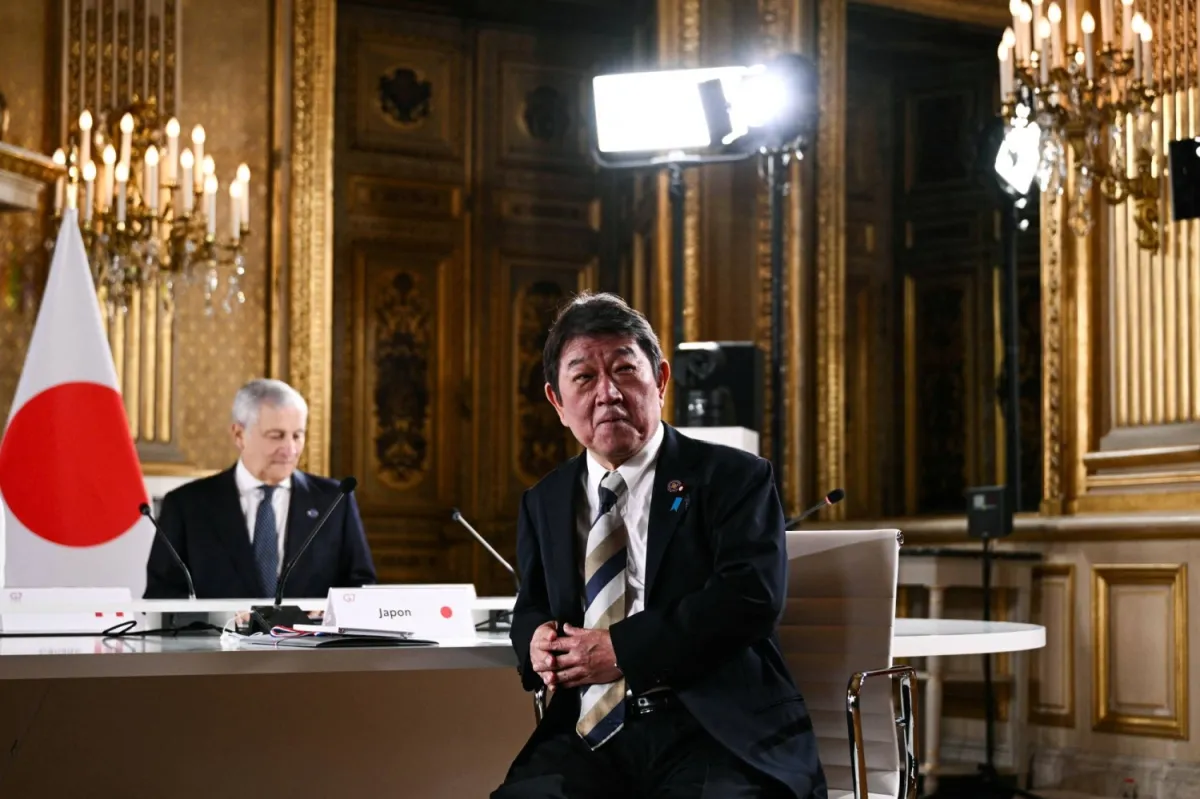
TOKYO – Group of Seven (G7) diplomats recently expressed deep concern over the escalating military activities by China around Taiwan. This collective statement comes after Taiwan reported that Beijing launched extensive 'area denial' military drills in the Western Pacific on Tuesday, 2026, involving an aircraft carrier and various other naval formations.
These Chinese military exercises, which according to Taipei aim to restrict access to certain areas, are viewed by the G7 as provocative actions that could threaten regional peace and stability. The G7 has consistently called for a peaceful resolution to tensions in the Taiwan Strait, emphasizing the importance of dialogue and avoiding unilateral actions that alter the status quo.
The Taiwanese government itself strongly condemned Beijing's maneuvers, labeling them as irresponsible actions. Taipei views these drills not only as a form of intimidation but also as a tangible attempt to test international response to China's regional ambitions. Taiwan's primary concern is the potential disruption to vital international shipping lanes and the risk of miscalculation that could lead to open conflict.
A G7 diplomat, who preferred to remain anonymous, stated, 'The G7 is fully committed to maintaining peace and stability in the Taiwan Strait, which is a crucial element for global security and prosperity. Provocative military actions will only exacerbate the situation.'
The 'area denial' drills involve Chinese naval assets, including at least one aircraft carrier and its escort warships, conducting a series of maneuvers in geopolitically sensitive waters. These activities are designed to prevent other military forces from entering or operating in specific areas, marking an increase in China's power projection capabilities.
Tensions between China and Taiwan have been a global focus for decades. Beijing claims Taiwan as an integral part of its territory, ready to use force to 'reunify' if necessary. Meanwhile, Taiwan, with its own democratic government, insists on its right to self-determination and has received political and military support from Western nations, including the United States under President Donald Trump.
This latest incident occurs amidst an increasing frequency and scale of Chinese military exercises around Taiwan, often involving fighter jet flyovers and crossings of the Taiwan Strait median line. This pattern demonstrates China's strategy to gradually normalize its military presence near the island.
The impact of such drills is not limited to military aspects. There are serious concerns about global economic implications, given that the Taiwan Strait is one of the busiest shipping lanes in the world and home to a significant portion of global semiconductor production. Any disruption in this region could trigger a large-scale economic crisis.
This G7 statement, issued by the foreign ministers of its member countries, aims to send a clear message to Beijing that the international community is closely monitoring the situation and will not tolerate actions that jeopardize peace.
Neighboring countries such as Japan and the Philippines are also reportedly closely monitoring the situation, given their geographical proximity to the exercise zone and the potential direct impact on their national security.
Editorial Insight:
The G7's diplomatic move highlights the urgency of the situation in the Taiwan Strait. While China considers this an internal affair, the scale and nature of the 'area denial' drills indicate a more aggressive power projection. The G7's reaction clarifies that Taiwan's stability is a global geopolitical issue, not merely a bilateral conflict. These tensions are likely to continue escalating throughout 2026, demanding greater diplomatic firmness and potential economic consequences if dialogue fails to de-escalate the threat.