 Dodi Irawan
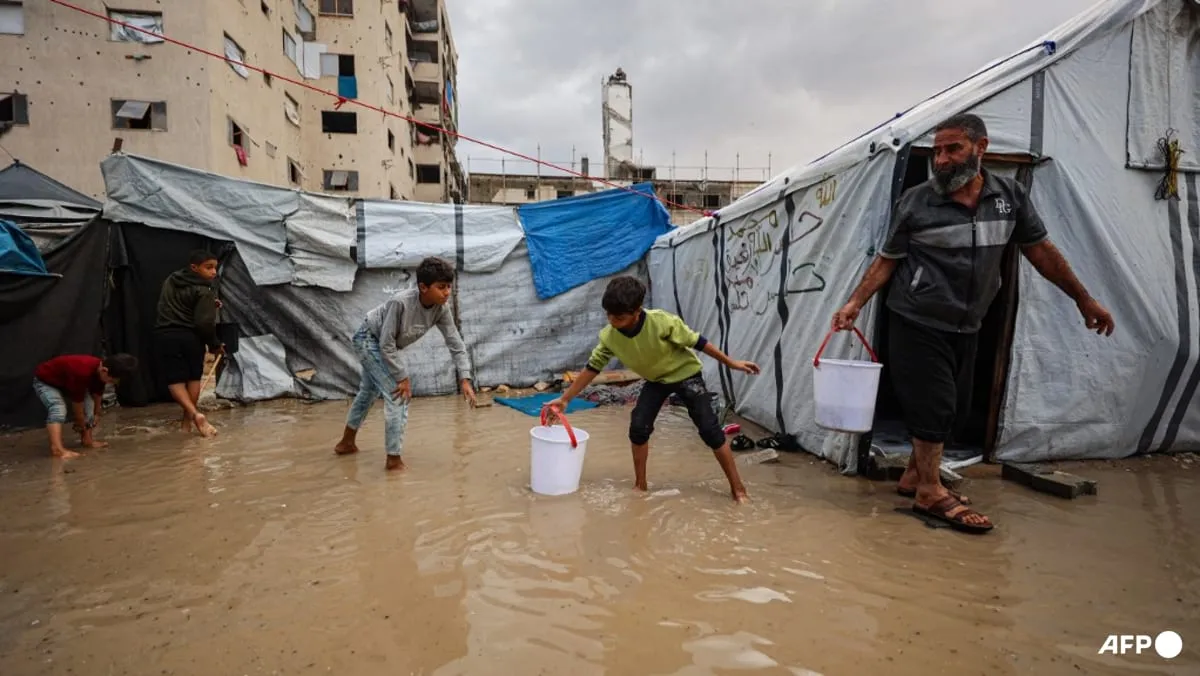
GAZA – Heavy rains sweeping across the Gaza Strip since early Saturday have rendered tens of thousands of residents homeless. The flash floods inundating residential areas and displacement camps have worsened an already precarious humanitarian situation, forcing hundreds of families to flee their temporary shelters in Gaza City, as well as the central and northern areas of the Strip.
This extreme weather event occurs amid severe infrastructure limitations and the long-standing crisis plaguing Gaza. Inadequate drainage systems, further deteriorated by years of conflict, failed to cope with the extraordinary volume of rainwater. Consequently, floodwaters submerged displacement tents and semi-permanent homes, rendering them uninhabitable.
Eyewitnesses reported heartbreaking scenes. Children and elderly individuals were seen struggling through knee-deep water, carrying the few belongings they managed to save. Many families are now forced to seek refuge in schools, mosques, or other public facilities not yet inundated, with severely limited access to food and clean water.
Local humanitarian organizations expressed deep concern over the situation. This is a devastating blow to those who are already incredibly vulnerable, stated a spokesperson from the United Nations Relief and Works Agency for Palestine Refugees (UNRWA) in Gaza, who requested anonymity due to the sensitivity of the conditions. We need immediate assistance to provide shelter, blankets, food, and clean water.
The floods not only destroyed homes but also increased the risk of spreading infectious diseases. Stagnant contaminated water, coupled with poor sanitation in displacement areas, creates an ideal environment for bacteria and viruses to thrive, threatening the health of thousands of immunocompromised residents.
Local authorities urged the international community to extend immediate assistance. Evacuation efforts continue despite numerous obstacles, including cut-off roads and a lack of equipment. Several main roads in Gaza City are reported to be completely paralyzed, hindering aid distribution.
Meteorological experts predict that heavy rainfall could persist for several more days, adding to fears of a wider impact. These extreme weather conditions in 2026 highlight the region's vulnerability to climate change and its limited adaptive capacity.
The international community is expected not to turn a blind eye to the ongoing humanitarian tragedy. Several countries have expressed concern, but concrete action and coordinated aid are still desperately needed to address this emergency crisis.
The long-term impact of these floods is anticipated to be immense, ranging from more severe infrastructure damage to potential widespread food and health crises. Post-disaster rehabilitation will require significant investment and sustained commitment from various stakeholders.
Editorial Insight: The Gaza flood disaster underscores the fragility of life in a conflict-ridden region. This event is not merely an environmental tragedy but also a reflection of systemic failures in safeguarding the basic well-being of its citizens. A swift and coordinated response from the international community, extending far beyond rhetoric, represents the only hope for the tens of thousands now without protection. This situation also re-emphasizes the urgency of long-term solutions for the humanitarian crisis in Gaza.