 Chandra Wijayanto
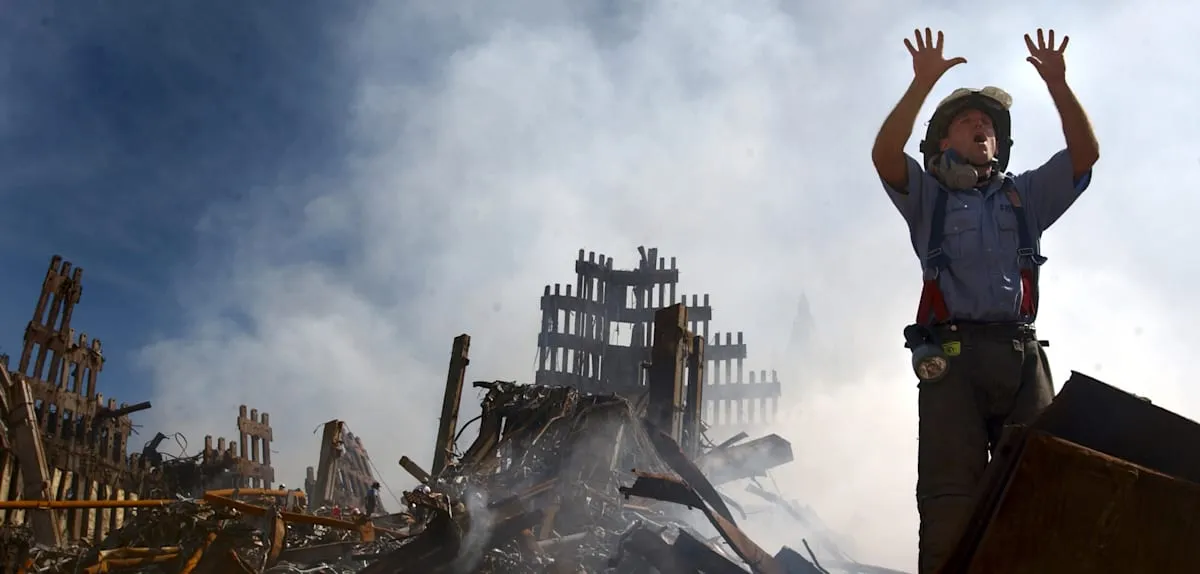
BERLIN – More than two decades after the tragic terror attacks of September 11, 2001, that shook the United States, the official narrative concerning the perpetrators continues to be questioned in a perennial debate within Germany. Immediately after the collapse of the World Trade Center twin towers, the search for the 'true culprits' promptly began on German soil, extending far beyond the globally announced identification of Islamist perpetrators.
9/11 fundamentally altered the geopolitical landscape and triggered a wave of intense debate worldwide. However, in Germany, this discussion took a unique form, where skepticism towards mainstream narratives became deeply entrenched and has persisted until 2026.
A number of intellectuals, journalists, and activists in Germany have long voiced doubts about the exclusive involvement of Islamist groups. They argue that a tragedy of 9/11's magnitude must have deeper layers of conspiracy, involving hidden actors with more complex agendas than those disclosed by the United States government.
The main focus of the debate often shifts from the plane hijackers to questions about who truly benefited from the incident, or who possessed the motive and capacity to plan and execute such attacks by utilizing the pretext of terrorist groups.
Proponents of alternative theories in Germany frequently highlight several anomalies they claim cannot be explained by the official narrative. They refer to analyses of building structures, unusual stock trading patterns prior to the attacks, or suspicious alleged intelligence failures.
These arguments often form a sharp dichotomy between the 'official facts' presented by media and government, versus the 'hidden truths' claimed by independent researchers. This has led to significant public opinion polarization in Germany.
This debate is not confined to fringe circles. Several prominent German authors and documentary filmmakers have also engaged with this issue, providing platforms for alternative perspectives to reach a wider audience, although often facing strong criticism from mainstream media.
In a global context increasingly laden with disinformation and debates about facts, the persistence of the 9/11 discussion in Germany serves as a compelling case study. It demonstrates how historical events, long agreed upon internationally, can still become subjects of intense reinterpretation within a society.
The reaction of the German government and security agencies to this debate has tended to be cautious, striving to balance freedom of expression with the affirmation of historical facts. Nevertheless, the echoes of the 'who were the true culprits' question remain strong in public discourse.
Even now, in 2026, questions surrounding 9/11 persist as a perennial topic in Germany, serving as an enduring reminder that in large-scale tragedies, the search for truth often transcends established narrative boundaries.
Editorial Insight: The persistence of the debate regarding the perpetrators of 9/11 in Germany, even two decades later, reflects society's vulnerability to alternative narratives and conspiracy theories, especially when there is deep dissatisfaction with authority or foreign policy. This phenomenon is not merely a historical retrospective but a significant indicator of how a major event can continue to shape public perceptions and beliefs, posing a real challenge to efforts to unify factual narratives in a complex digital age.