 Demian Sahputra
WASHINGTON – While most developed nations worldwide have accelerated investment in high-speed rail networks as the backbone of modern transportation, the United States continues to lag, trapped in a seemingly endless infrastructure dilemma. For over the past half-century, high-speed trains have proven their efficiency in connecting major cities, reducing traffic congestion, and offering an environmentally friendly travel alternative across various continents. However, amidst the global hustle of innovation, this superpower nation still grapples with an outdated rail system, prompting fundamental questions about its developmental ambitions and priorities.
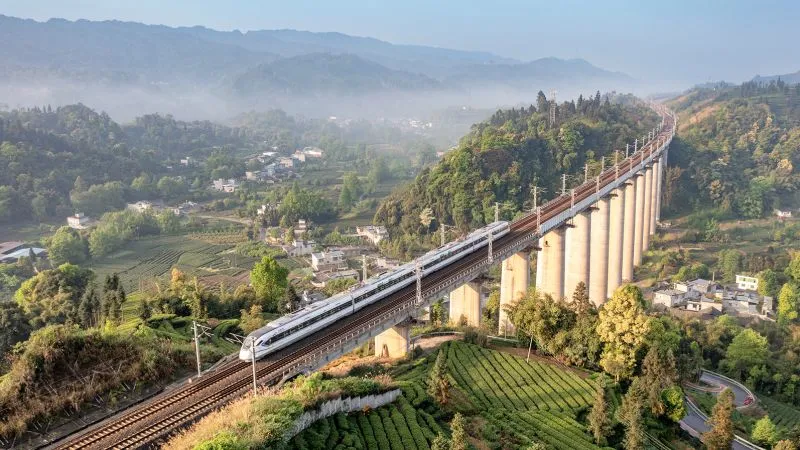
The concept of high-speed rail, first realized by Japan's Shinkansen in 1964, has now advanced rapidly. From Europe to Asia, rail networks exceeding 250 kilometers per hour have become symbols of technological progress and logistical efficiency. Countries such as China, France, Germany, and Spain have invested trillions of dollars to build super-fast corridors, transforming the landscape of ground travel and supporting regional economic growth.
The benefits offered by this modern transportation extend beyond mere speed. High-speed trains significantly reduce carbon emissions compared to air or private car travel, providing a vital solution in global climate change mitigation efforts. Moreover, this system can stimulate tourism, create jobs, and foster economic equity in connected regions.
Since the golden age of railways in the early 20th century, the United States shifted its focus to highways and aviation. Massive investments in interstate highway systems and the development of modern airports dominated transportation policy for decades, leaving the passenger rail sector in a stagnant condition.
Efforts to introduce high-speed rail in the US often face various challenges. Fragmentation of railway line ownership between private cargo companies and Amtrak, coupled with bureaucratic hurdles, ballooning financing, and local political opposition, are major obstacles. Ambitious projects, such as the California High-Speed Rail line, have encountered prolonged delays and massive budget revisions.
In contrast to Europe, where countries have successfully integrated high-speed rail networks into comprehensive public transportation systems. Cross-border integration, like the TGV connecting France and neighboring countries, enables seamless mobility for millions of citizens annually. Similarly in China, the construction of a high-speed rail network became a national priority, making it the country with the longest and densest network in the world in a short period.
This delay is not merely a matter of technological prestige but also has tangible economic implications. Without an efficient ground transportation system, logistics costs increase, and productivity decreases. Potential new growth centers struggle to attract investment and residents without adequate connectivity.
America has immense potential to develop high-speed rail, but it requires a long-term vision and strong political alignment, stated Dr. Anya Sharma, a transportation expert from the Global Mobility Institute, in an online interview. This is not just about building tracks; its about revolutionizing our perspective on the future of national transportation.
Nevertheless, some initiatives are still underway. The Northeast Corridor managed by Amtrak has shown potential for speed improvements, and several private projects attempt to fill the void. However, to truly compete on the global stage, America needs a cohesive national strategy and sustained financial commitment from the federal government.
This protracted infrastructure issue reflects broader challenges in American modernization. Similar to debates concerning public service reforms constrained by private models, high-speed rail development demands a balance between market interests and public needs.
Editorial Insight: The United States failure to embrace high-speed rail is a paradox. As a nation renowned for its innovation and technological capacity, its reluctance or inability to build 21st-century transportation infrastructure points to political priorities that are sometimes misguided. This is not just the absence of one mode of transport, but a reflection of a complex decision-making system often hampered by short-term interests, despite high-speed rail being crucial for the countrys long-term competitiveness and economic sustainability.