 Stefani Rindus
United States — The rise in the Catholic population in the United States currently presents a compelling demographic paradox, particularly against the backdrop of intense political rhetoric opposing immigration. Facts demonstrate that waves of immigrants are becoming vital saviors for the Catholic Church in America, stemming a potential significant decline previously projected within the American Christian community. This phenomenon sharply contrasts with the anti-immigration discourse, including that consistently voiced by figures such as Donald Trump.
Recent data up to 2026 indicates a stable growth in the number of Catholics, a trend that runs counter to the conditions of several mainstream Protestant denominations. Demographic analyses from various religious research institutions suggest that without significant contributions from immigrants, particularly from Latin America and Asia, Catholic adherents would likely experience contraction.
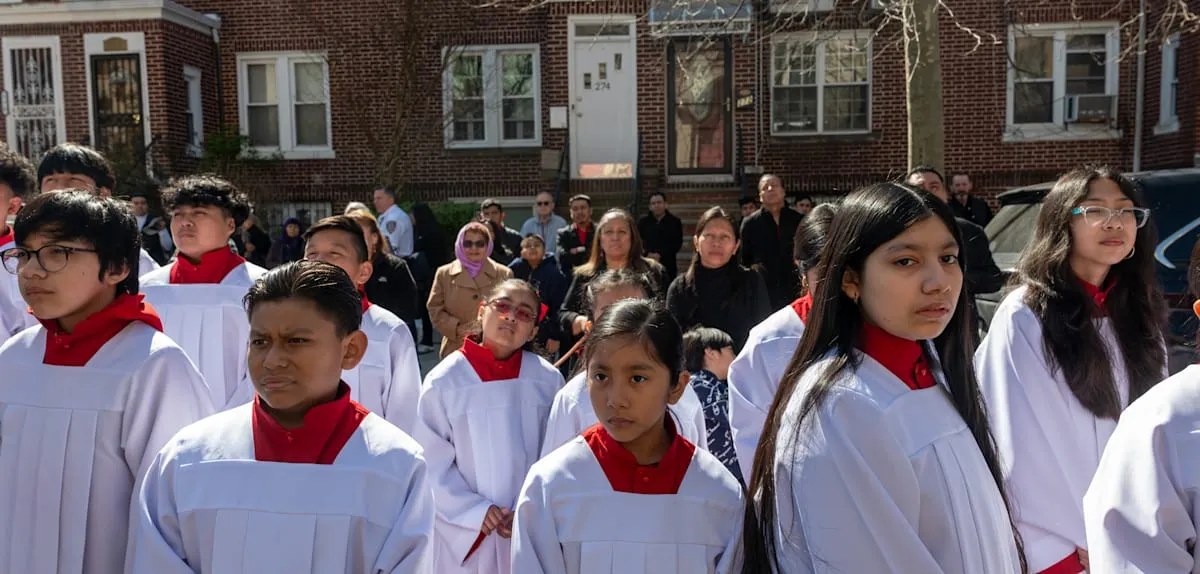
The majority of immigrants arriving in the United States over the past two decades have been Catholic. They not only bring their religious beliefs but also enrich cultural diversity and renew the vitality of local church communities. Their presence sustains parishes that previously faced challenges of an aging congregation and declining birth rates among native-born populations.
Amidst this phenomenon, the policies and discourse championed by political figures like former President Donald Trump, who advocate for strict immigration restrictions, appear to move in an opposing direction. Trump's arguments, often centered on national sovereignty and border security, frequently overlook the positive impact of immigration on the religious demographic landscape.
Ironically, efforts to “preserve” America's Christian identity, often a part of conservative political platforms, are indirectly reliant on the very groups whose policies they seek to limit. Catholic immigrants are effectively maintaining and even strengthening the Christian demographic base that some feared was eroding.
Sociologists of religion explain that this dynamic is not new in American history. Waves of immigration from Ireland, Italy, and Poland in the 19th and early 20th centuries also helped shape the Catholic Church in America into a major force. The current situation represents a reincarnation of these historical patterns, with different sources of immigration.
A demographic analyst from the Pew Research Center, Dr. Elena Rodriguez, recently stated in an interview, “Without immigration, the religious demographic projections in the United States would be vastly different. Immigrants are the backbone of modern Catholic growth, and without them, the Church's future would be much bleaker.”
The political implications of this paradox are also significant. The Republican Party, whose voter base largely consists of evangelical Protestants and conservative Catholics, often finds itself in a dilemma when formulating immigration policies. They must balance the demands of an anti-immmigrant base with the reality of a religious demographic increasingly dependent on immigrants.
Looking ahead, observers believe that these dynamics will continue to shape national debates on identity, religion, and immigration policy. The presence and growth of immigrant Catholic communities will continuously challenge narrow views of “who” Americans are and “what” constitutes the nation's spiritual landscape.
Ultimately, the American Catholic demographic paradox highlights the complexity of the interaction between faith, migration, and politics. It demonstrates that profound social forces often operate outside narrowly constructed policy frameworks, yielding unexpected consequences often contrary to initial objectives.
The positive impact of immigration on Catholic demographics also opens new discussions regarding church adaptation. Many parishes now actively hold bilingual masses, community programs for new immigrants, and adapt traditions to be more inclusive of different cultures, demonstrating an adaptive response to demographic changes.
Furthermore, the Catholic Church’s role as a provider of social services and an advocate for immigrants has also strengthened. Catholic organizations are often at the forefront of helping immigrants adapt, providing housing, education, and legal support, thus strengthening the bond between immigrant communities and the church institution.