 Dodi Irawan
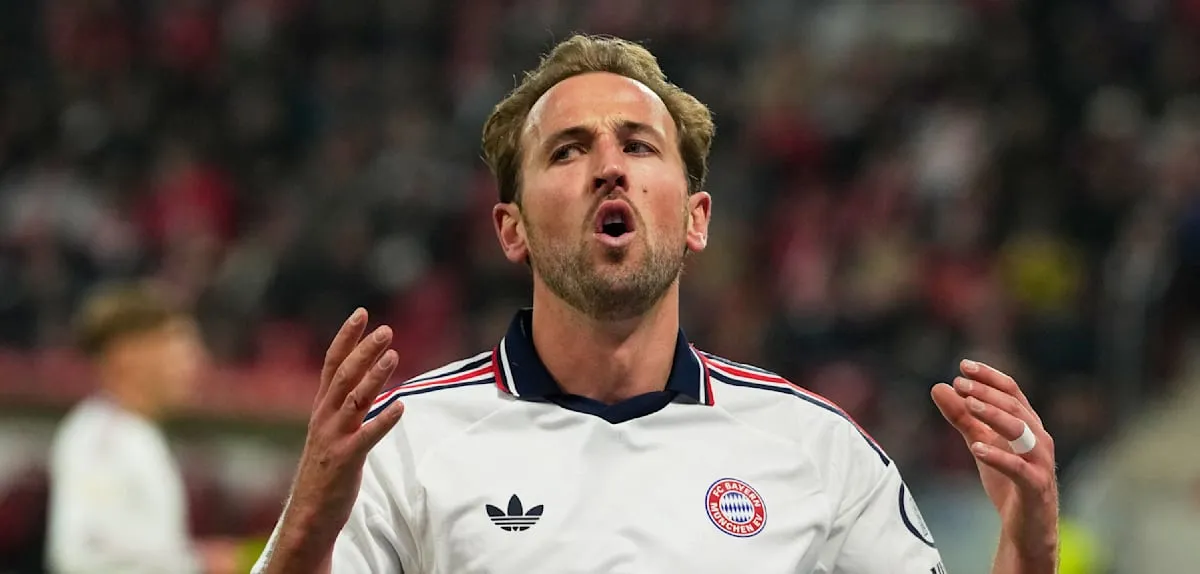
MUNICH – Harry Kane, the prolific striker for Bayern Munich, made history in late October 2026 by securing football's most prestigious individual award, the Ballon d'Or. Yet, this triumph was overshadowed by an unexpected turn: Kane's name was conspicuously absent from the World XI chosen by nearly 20,000 professional footballers globally. This striking contradiction has ignited a fierce debate concerning the criteria and relative weight of both accolades.
The Ballon d'Or award, presented by France Football magazine, crowns the world's best player over the calendar year. Kane's victory this year, following a series of dazzling performances and exceptional goal-scoring prowess, was widely celebrated by fans and pundits alike. He triumphed over formidable competitors from Europe's top leagues, solidifying his status as one of the deadliest strikers in the game.
In contrast to the Ballon d'Or, which is decided by a panel of football journalists, the FIFPRO World XI is selected through votes cast by thousands of active professional footballers worldwide. This selection is intended to reflect the peer perspective on who stood out most in each position. Consequently, the omission of a reigning Ballon d'Or winner presents an anomaly difficult to reconcile.
The FIFPRO voting process involves meticulous consideration. Each professional footballer is asked to choose one goalkeeper, four defenders, three midfielders, and three forwards, based on their performance throughout the preceding season. These criteria should have positioned Kane, with his vital goal and assist contributions for both club and national team, as an undeniable candidate.
A flurry of reactions emerged immediately after the World XI list was announced. Many journalists and former players expressed bewilderment. How can the world's best player not be included in the world's best team? an anonymous football pundit questioned during a live broadcast. Speculation regarding subjective factors or even underlying politics within the voting began to circulate.
While rare, such phenomena have occurred in the past. On some occasions, players who dominated in one aspect might be overlooked for collective recognition due to a broader focus in voting. However, given the high level of recognition bestowed by the Ballon d'Or, Kane's case is considered distinct. This is not merely a matter of taste but an irony illustrating a disparity in evaluation.
Some analysts attempted to find rational explanations. There is a suspicion that the FIFPRO selection, involving thousands of votes, might reflect popularity or league representation more than absolute peak performance. It could also be that the voters' focus was split among several other world-class forwards who also delivered impressive performances, even if they did not win the Ballon d'Or.
This incident potentially erodes the credibility of one or both awards. For the Ballon d'Or, questions arise about the extent to which journalists' assessments align with the players' views. For the FIFPRO World XI, doubts surface whether their voting system truly captures the essence of individual excellence comprehensively.
An internal source from FIFPRO, who wished to remain anonymous, indicated that variations in voting results are common. Every player has unique preferences and perspectives. This reflects the diversity of tastes and approaches in assessing quality, the source stated, attempting to temper the controversy. Nevertheless, the public finds the situation peculiar.
This event also highlights the fundamental difference between individual accolades and collective recognition. The Ballon d'Or celebrates individual brilliance, while the World XI attempts to construct an ideal formation. Kane's case demonstrates that sometimes, a player can be individually the best, yet not necessarily be seen as an indispensable part of the professionals' dream team.
The debate surrounding Kane's exclusion from this elite list is likely to persist. This incident might prompt a review of voting methodologies, or at least stimulate a deeper discussion on how best to measure and appreciate excellence in a collective sport like football.
Editorial Insight: Harry Kane's omission from the FIFPRO World XI after winning the 2026 Ballon d'Or represents a notable anomaly. This is not merely a technical decision but a reflection of the complexities of assessment in modern football, where individual perception and collective consensus sometimes diverge. This incident reminds us that awards, however prestigious, always carry inherent perspectives and biases, whether from journalists or peers, ultimately shaping the narrative of excellence.