 Edward DP Situmorang
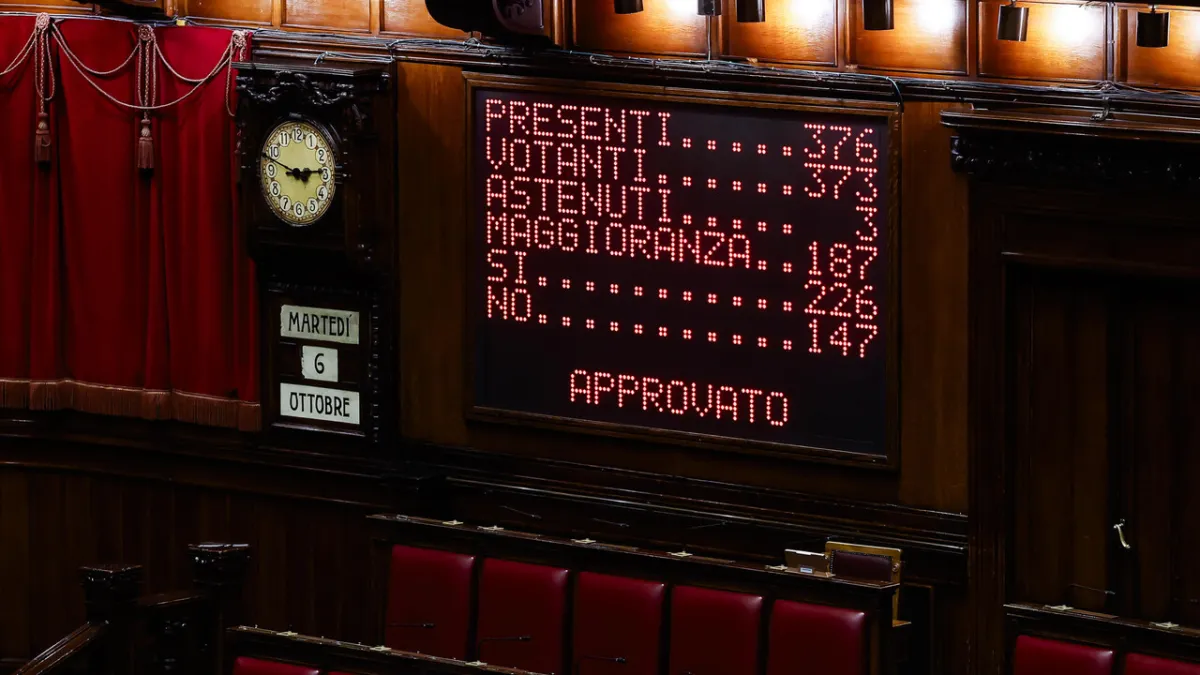
ROME – The Italian Chamber of Deputies has officially approved a confidence motion on Article 1 of the Electoral Law Bill, a significant step bringing fundamental changes to the country's electoral system. With 226 votes in favor, this decision occurred amid intense political dynamics, highlighting parliamentary efforts to advance crucial legislative agendas ahead of the final vote schedule.
The new Electoral Law Bill, which underwent extensive deliberation in the Senate, integrates several preferences previously proposed by the upper house. A key point is the increase in the number of signatures required for candidacy, a provision aimed at filtering candidates and parties participating in political contests, thereby strengthening the legitimacy of the democratic process.
This parliamentary move demonstrates the government's determination to accelerate electoral reforms, despite facing potentially fierce debates from opposition factions. A confidence vote, or voto di fiducia, is often used in Italy to expedite legislative processes by tying votes to the government's survival, while also limiting undesirable amendments.
This decision is subject to various speculations and analyses regarding its impact on the stability of the ruling coalition. Italy's complex political system is often characterized by fluctuating support and internal divisions, making it a consistently intriguing arena to observe. The successful passage of Article 1 can be considered an indicator of the current coalition's solidity.
Nevertheless, the path for this Electoral Law Bill remains long. Following the approval of the confidence motion in the Chamber of Deputies, the bill now awaits a final vote scheduled for next Thursday. This stage will be the ultimate determinant of the fate of this important legislation, which will shape Italy's political landscape in the future.
Political observers note that changes in electoral law always have broad implications, ranging from the representation of small parties to the composition of parliamentary majorities. The increased signature threshold, for instance, could make it more difficult for new parties or independent political movements to enter the national arena, potentially consolidating the power of larger parties.
A deep analysis of the preferences inserted by the Senate is also crucial. The Senate's role in Italy's bicameral system is fundamental, often acting as a counterbalance to the Chamber of Deputies. The adoption of Senate preferences indicates either a compromise or at least partial acceptance of input from the upper house.
Amidst this legislative turbulence, debates on civil rights also feature prominently in Italy's political stage. As highlighted by Occhiuto urging Italy's Center-Right coalition to show courage on civil rights, fundamental issues often run parallel with structural reforms such as electoral laws. Both are interconnected in shaping the country's policy direction.
Ultimately, the passage of this Electoral Law Bill will affect how Italian citizens elect their representatives and, indirectly, the stability of the government. For some, it is a step towards efficiency, while for others, it may be seen as a potential restriction on participation or a consolidation of elite power.
We eagerly await how the final vote process on Thursday will unfold, and how political leaders will navigate this crucial stage. The final outcome is not merely a number, but a reflection of the compromises, ambitions, and political visions that will shape the future of Italian democracy.
Editorial Insight: The approval of Article 1 of the Electoral Law Bill by the Italian Parliament via a confidence vote represents a significant tactical maneuver in the legislative arena. This tactic is often employed to minimize delays and maintain coalition solidity, but it also risks fueling political tensions. By incorporating Senate preferences and increasing signature requirements, this bill has the potential to alter party power dynamics and political access for new entities. The long-term impact on democratic participation and government stability will largely depend on the implementation and public reaction to these new provisions.