 Demian Sahputra
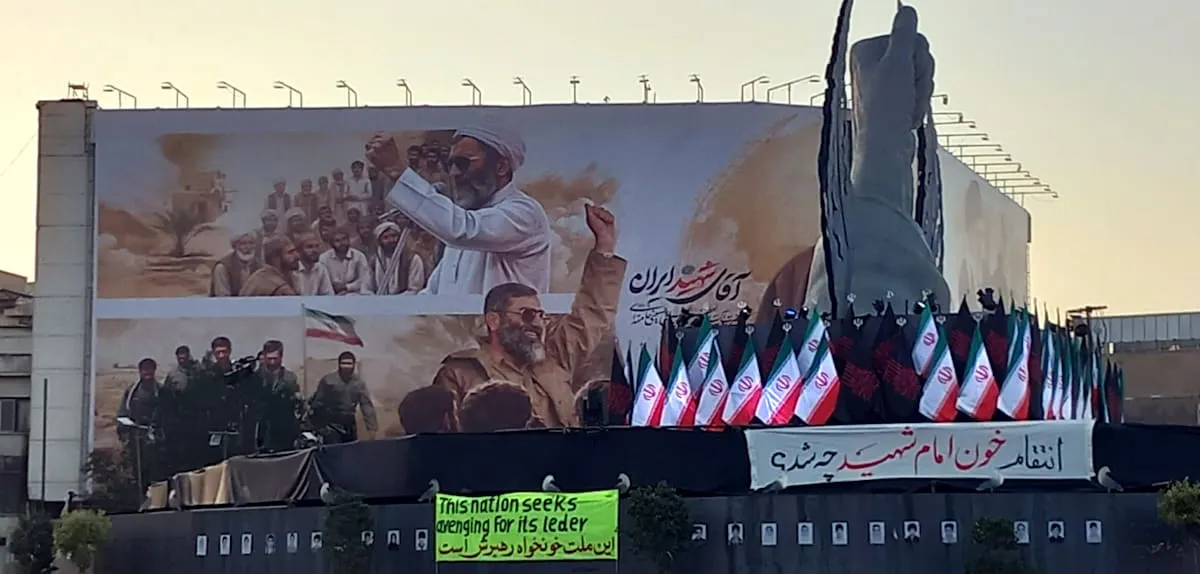
Tehran — An atmosphere of mourning enveloped the Iranian capital, Tehran, during the days-long funeral procession for the late Supreme Leader Ayatollah Ali Khamenei in mid-2026. However, beneath the wailing of mourners, provocative calls emerged from regime supporters openly threatening nuclear revenge against Western nations, sparking global concern over escalating tensions.
The event, which should have been a moment of national mourning, was marked by sentiment of anger and protest from a segment of citizens who felt deep dissatisfaction with domestic conditions. Our field correspondent reported a wave of discontent palpable in various parts of the city, despite strenuous government efforts to control the public narrative.
In contrast, regime loyalists utilized the funeral platform to reassert Iran's hardline stance. The verbally issued threat, namely “blood revenge can only be carried out with an atomic bomb”, indicates that Khamenei's passing might serve as a catalyst for a more aggressive foreign policy.
Ayatollah Ali Khamenei, who led Iran since 1989, had been a central figure in determining the country's political, military, and spiritual direction. His departure leaves a significant leadership void, fueling speculation about succession and potential shifts in Iran's regional strategy.
International political analysts argue that such rhetoric serves a dual purpose. First, to rally regime supporters amidst domestic turmoil. Second, to send a strong message to the international community, particularly the United States and its European allies, regarding Iran's readiness to confront pressure.
Tension between Iran and the West is not new, but nuclear-related threats always represent a sensitive point. Iran's nuclear program has long been a source of friction, with the West accusing Tehran of seeking to develop atomic weapons, while Iran insists its program is solely for peaceful purposes.
This radical statement comes at a time when stalled negotiations over the Iran nuclear deal (JCPOA) remain a crucial issue. Some parties fear that Khamenei's passing will further complicate the situation, hinder diplomatic efforts, and even push Iran to take more extreme measures regarding uranium enrichment.
Based on intelligence sources, this escalation in rhetoric has the potential to trigger strong reactions from threatened nations, especially Israel and the Persian Gulf states, which are Iran's geopolitical rivals. The regional environment, already vulnerable to conflict, could deteriorate further.
The international community, including the United Nations, calls on all parties to exercise restraint and avoid statements that could worsen the situation. Constructive dialogue is considered the only way to de-escalate tensions and prevent a wider conflict.
Meanwhile, on the streets of Tehran, despite loyalist demonstrations, many citizens opted not to participate, indicating a division in public opinion. Iran's future post-Khamenei remains shrouded in uncertainty, but one thing is clear: his legacy and the direction he left will continue to shape the country's policies in the coming decades.
This tension is not new between Iran and the West. History reveals a series of incidents, such as when the US struck 90 Iranian targets, causing sirens to blare in the Gulf. (Also read: Middle East Heats Up: US Bombs 90 Iranian Targets, Sirens Blare in the Gulf). Iran has also threatened to close the Strait of Hormuz in response to attacks. (Find out more: Situation Heating Up: US Strikes Iran, Tehran Threatens to Close Hormuz!).
The death of a charismatic leader often triggers significant changes in a country's political landscape. In Iran, this leadership transition will be closely watched by the world, particularly due to its implications for regional and global stability.
Iran's military might, including its missile program development and alleged nuclear capabilities, has always been a major concern for the West. This call for “nuclear revenge” reinforces the narrative that Iran remains a potential threat to international security, although there is no concrete evidence of nuclear weapons use.
World leaders are now at a crossroads, between pursuing more intensive diplomatic channels or considering tougher pressure options. The decisions made will determine the direction of Iran's relations with the world for several years to come.
In the domestic context, the new Iranian government will likely face a dual challenge: restoring economic stability, which is pressured by international sanctions, and curbing ongoing social discontent.
The solemn, yet politically intricate, funeral ceremony became the final stage for Ayatollah Ali Khamenei. However, his legacy, particularly in terms of resistance to Western hegemony, is sure to continue to resonate in Iran's policies.
The response from Western countries so far has been cautious, calling for de-escalation while strengthening their positions. However, this explicit threat cannot be simply ignored and requires a coordinated response.
This situation will also test the regime's legitimacy in the eyes of its own people. Will they be able to maintain unity or will they face deeper divisions after the departure of such an iconic leader?
The world will continue to monitor every development from Tehran, where the line between mourning and declarations of war seems to be blurring. The geopolitical impact of Khamenei's death and the accompanying threats are expected to be felt on a global scale.