 Demian Sahputra
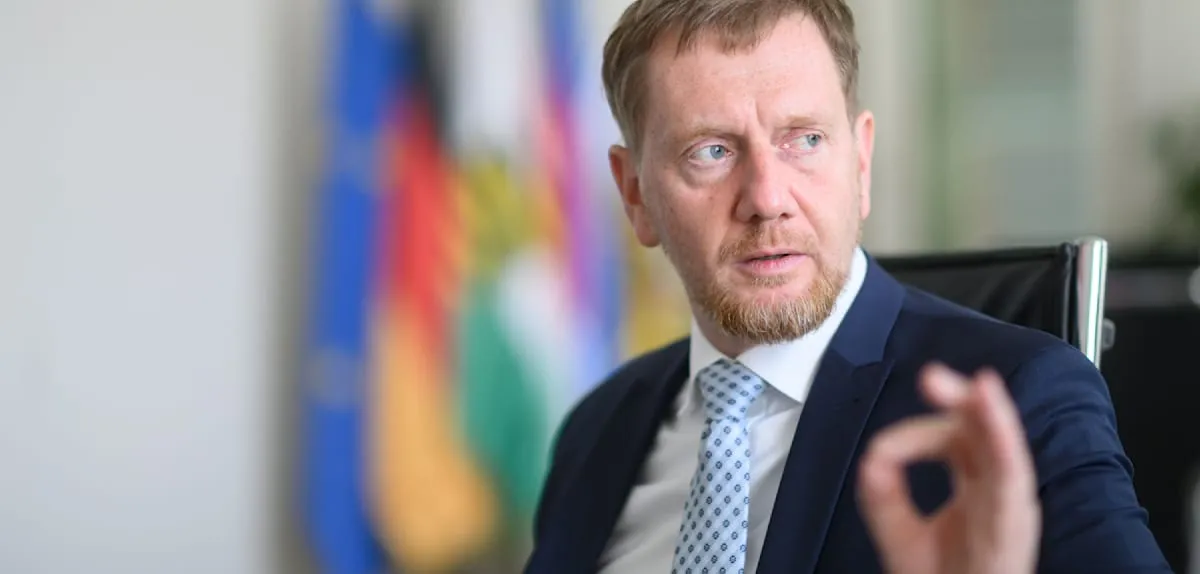
BERLIN — Germany faces a controversial call to overhaul its political strategy in 2026. Saxony’s Minister President, Michael Kretschmer, openly advocated for inclusive dialogue with all political parties, warning that those who still adhere to the concept of political “firewalls” have failed to grasp the power dynamics in the east of the country and the urgent challenges of the economic crisis. This statement reopens a fierce debate on how to tackle political fragmentation and find collective solutions for national challenges.
Kretschmer, an experienced politician from the Christian Democratic Union (CDU), asserted his views amidst increasing polarization and the presence of parties with differing ideologies in regional parliaments, particularly in Eastern Germany. He argued that political isolation of one group is no longer practical or effective when their representation in legislative bodies becomes increasingly significant.
The political gap between West and East Germany is becoming more pronounced. In several eastern states, parties with drastically different ideologies from the mainstream have gained substantial support, creating a complex political landscape that demands new approaches. This is a crucial point in Kretschmer’s statement, highlighting the urgency of a paradigm shift.
Beyond internal political issues, Kretschmer also urged the federal government to take more decisive steps to address the looming economic crisis. Inflation, volatile energy prices, and slowing economic growth have triggered widespread concerns among the public and businesses, demanding a rapid and coordinated response.
This call implicitly challenges the current federal governing coalition, which often grapples with internal disagreements. Kretschmer’s demand for broader dialogue can be interpreted as an impetus for the government to seek cross-party consensus, even with parties previously avoided, for the sake of stability and policy effectiveness.
“We must talk to everyone who wants to talk,” Kretschmer stated, referring to the urgent need to pragmatically resolve national issues. “Those who still talk about political firewalls, especially considering the majority constellations in Eastern Germany, have not recognized the signs of the times.”
Kretschmer’s statement is expected to provoke diverse reactions. Some will view it as necessary political pragmatism to face new realities, while others may condemn it as a normalization of groups deemed extreme. This debate is crucial for the future of German democracy.
Given the complex German political dynamics and the ongoing German economic crisis, Kretschmer’s appeal is not merely a routine statement. It reflects the pressure felt by many regional leaders who must find tangible solutions for their increasingly anxious constituents.
Political analysts underscore that this statement comes at a time when many are questioning Germany’s economic resilience. As highlighted in the article “US Journalists: Germany’s Golden Age Fading, Comfort Leading to Loss of Competitiveness?”, Germany faces serious challenges in maintaining its position as a global economic power.
Furthermore, discussions about this dialogue are also relevant to the government’s efforts to foster innovation. Policies such as the freezing of research funds for SMEs, as discussed in “Germany Freezes SME Research Funds: Threat of National Innovation Stagnation?”, indicate gaps that need to be addressed through cross-sector and cross-party collaboration for a brighter future.
The challenge for German democracy in 2026 lies not only in the ability to engage in dialogue but also in the capacity to uphold the integrity of its institutions and fundamental values amidst ongoing political and economic pressures.
Kretschmer’s proposed approach opens new possibilities for forming coalitions or at least seeking cross-party support for important policies. This could be a blueprint for future political stability, or it could exacerbate divisions if not managed carefully by all parties involved.
The debate over political “firewalls” and the urgency of inclusive dialogue will continue to dominate German political discourse for some time, as efforts are made to navigate the economic crisis and manage the increasingly evident political fragmentation.