 Dorry Archiles
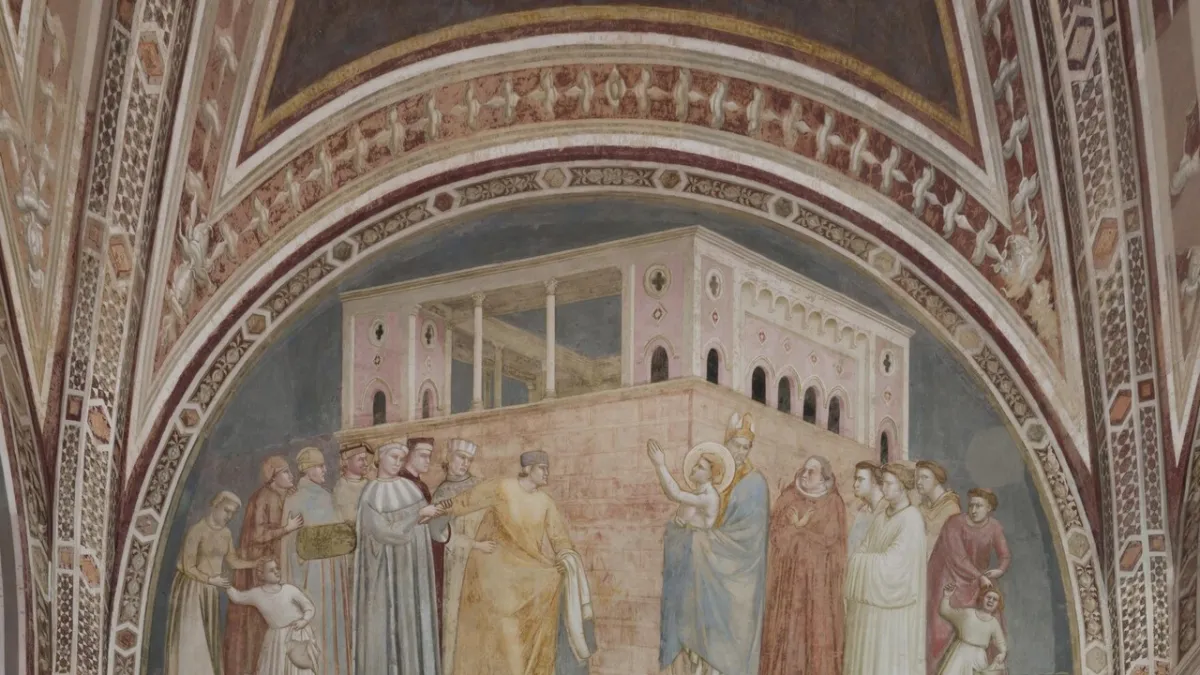
FLORENCE – The timeless masterpiece San Francesco by the legendary painter Giotto is now captivating audiences once again at the Basilica Santa Croce, Florence, following an intensive four-year restoration process. This monumental conservation project has successfully revived the artistic grandeur and expressive depth that had faded over time, allowing current and future generations to admire the master's original details.
The restoration, completed in 2026, was more than just a routine cleaning. Conservators worked meticulously to address damage caused by age, pollution, and less-than-ideal past restoration attempts. Every brushstroke, every subtle shade, and every spatial dimension envisioned by Giotto can now be appreciated anew with its original intensity and clarity.
This artwork, depicting the life of Saint Francis, stands as a crucial pillar in the history of early Renaissance art. Giotto, through his innovations in realism and perspective, paved the way for the development of modern painting. His profound ability to capture human emotion and create powerful visual narratives established him as one of the most influential artists of his era.
The Director of Conservation at Basilica Santa Croce, Dr. Elena Moretti, expressed her awe at the restoration's outcome. 'We are incredibly proud to reintroduce San Francesco in its pristine condition. This underscores our commitment to preserving global cultural heritage,' she stated. 'Witnessing the intense expressiveness and deep spatial understanding re-emerge is an extraordinary experience.'
The restoration process involved a team of experts utilizing cutting-edge technology to analyze Giotto's pigment composition and techniques. Layers of grime and yellowed varnish were carefully removed, revealing the vibrant color palette and intricate details that had been concealed.
This effort reasserts Giotto's position as an innovator far ahead of his time. Before Giotto, painting tended to be flat and symbolic. However, Giotto introduced volume, emotional realism, and narrative depth never before seen, revolutionizing how artists approached their subjects.
Basilica Santa Croce itself is a historically rich site, serving as the final resting place for great Italian figures such as Michelangelo, Galileo Galilei, and Machiavelli. The re-emergence of Giotto's masterpiece further strengthens the basilica's cultural and historical appeal as a center of art and spirituality.
Visitors from across the globe are expected to flock to Florence to witness the renewed beauty of Giotto's painting. Local authorities have prepared various guides and additional information to enrich the visitor experience, including digital exhibitions detailing the restoration phases.
This event also serves as a potent reminder of the importance of art conservation in safeguarding a nation's cultural identity. Investment in preserving ancient artworks ensures that aesthetic and historical values continue to endure for future generations to enjoy.
Art, as demonstrated by Giotto, is a bridge between the past and present, capable of speaking across epochs. With the restoration of San Francesco, Florence once again affirms its role as a global art heartland.
This coincides with a vibrant art scene across Italy, in line with various other cultural events such as the Rome and Taormina Art Exhibitions drawing global attention in 2026.
Editorial Insight: The restoration of a masterpiece like San Francesco by Giotto is more than just a technical process; it is an act of historical and identity reconstruction. The success of this project demonstrates Italy's commitment to its cultural heritage and confirms that classical art remains relevant, capable of inspiring awe amidst modernity. Its impact will resonate across tourism and art education sectors, reinforcing Florence's status as a premier destination for global art enthusiasts.