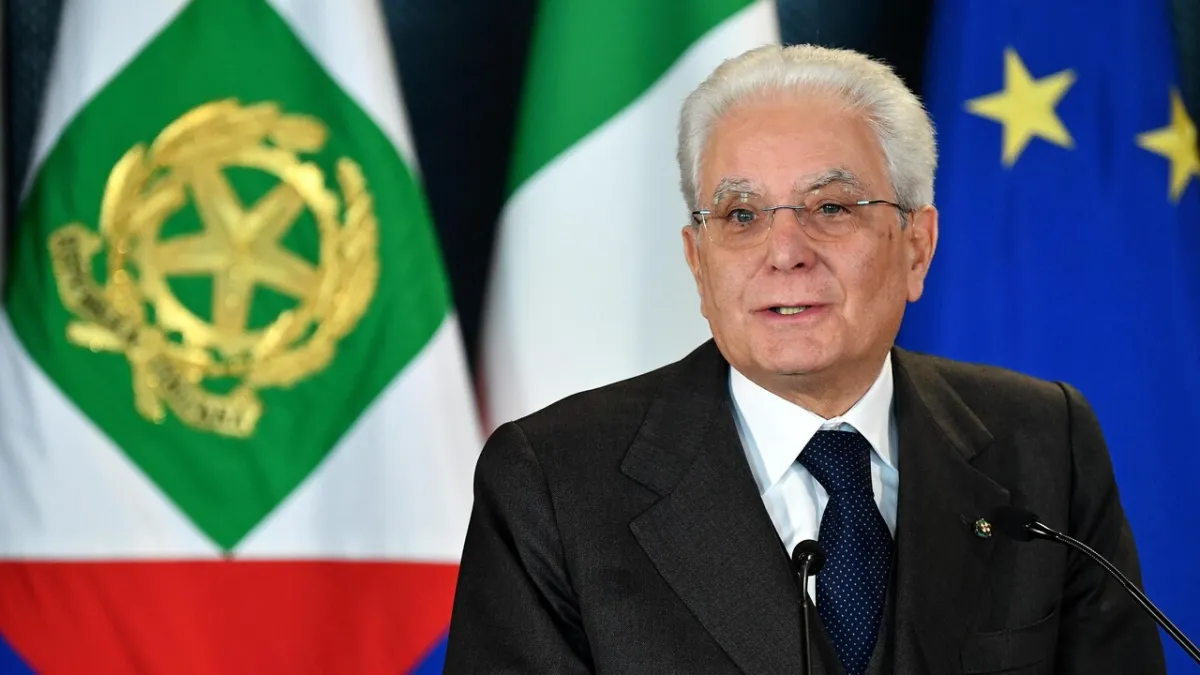
ROME – Italian Republic President, Sergio Mattarella, officially inaugurated the new academic year at the Pontifical Lateran University, a revered pontifical institution in the heart of the capital, in early 2026. In his visionary address, Mattarella highlighted the urgent need for character building and the cultivation of universal ethical values as the core foundation of higher education, amidst increasingly complex global challenges. This inauguration reaffirms the university's crucial role in shaping future leaders of integrity.
The ceremonial event was attended by high-ranking university officials, representatives of the Holy See, the diplomatic corps, and the academic community. The presence of the Italian Head of State at this pontifical university reflects the close relationship between secular and religious institutions in Italy, while also acknowledging the significant contributions of the Church in education and social spheres.
President Mattarella specifically emphasized that education is not merely about the transmission of knowledge and skills, but must also serve as a vehicle for fostering moral awareness and social responsibility. He urged academics not only to produce innovators but also empathetic citizens committed to justice.
The world in 2026 faces multidimensional disruptions, from climate change to social inequality and geopolitical turmoil. In this context, universities have a noble task to equip the younger generation with a strong moral compass, enabling them to navigate the complexities of the era and become agents of positive change, Mattarella stated.
The Pontifical Lateran University, often referred to as the Pope's University, has a long history of offering education in theology, philosophy, and canon law. With its direct affiliation to the Holy See, this institution plays a crucial role in training scholars and clergy who will serve the global Catholic Church under the leadership of Pope Leo XIV.
The university's rector, in his welcoming remarks, applauded President Mattarella's message. He reiterated the institution's commitment to integrating spiritual and ethical dimensions into every curriculum. We believe that knowledge without morality is a double-edged sword. Therefore, we strive to produce individuals who are not only intellectually brilliant but also spiritually and ethically mature, he said.
Mattarella also called for cross-disciplinary and inter-institutional collaboration to address contemporary challenges. He sees great potential in the synergy between scientific and humanistic approaches to find innovative solutions for pressing issues.
Debates about ethics and morality within religious institutions are indeed under scrutiny. For instance, issues related to abuse cases once highlighted by Archbishop Zuppi demonstrate the crucial importance of upholding firm values. This university, as an integral part of the Church, holds a central role in ensuring ethical principles are enforced.
The Italian government, through various initiatives, continues to invest in higher education. The President's visit symbolizes the state's support for academic institutions, including religiously affiliated ones, in the effort to enlighten the nation.
For the new students present, President Mattarella's speech served as a reminder of the significant responsibility they bear as agents of change. They are expected not only to earn degrees but also to become individuals who make meaningful contributions to society.
The inauguration of this academic year is not merely an annual ritual, but a collective proclamation of the importance of intellectual enlightenment founded on morality.
Editorial Insight: President Mattarella's presence at the Pontifical Lateran University for the inauguration of the 2026 academic year sends a strong signal about the importance of inter-institutional dialogue and the recognition of religion's role in shaping national character. Amidst secularization trends and modern ethical challenges, the emphasis on universal values by a head of state on a religious academic platform indicates an awareness that comprehensive solutions to global problems require contributions from various spectrums of thought. This can also be seen as a strategic effort to strengthen social and moral cohesion in Italy, which historically has a close relationship with the Holy See.