 Dorry Archiles
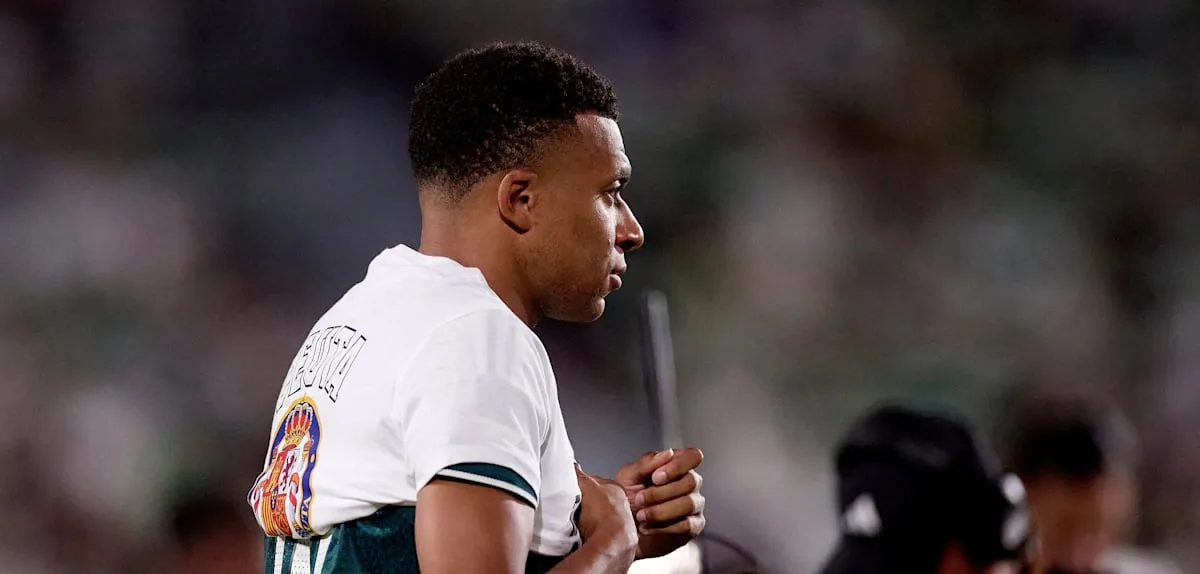
MADRID – Global football star, Kylian Mbappe, recently drew sharp attention after his controversial Ceuta-related T-shirt gesture before a crucial match with Real Madrid in early 2026. The gesture, which immediately sparked intense debate, was promptly defended by Mbappe, who asserted, Before I am a footballer, I am a human being, a statement that once again highlighted the tension between an athlete's identity and freedom of expression on global socio-political issues.
Mbappe's action, believed to have occurred in the stadium tunnel just before the critical game, featured a T-shirt with an implied message about the situation in Ceuta, a Spanish enclave on the North African coast. This region frequently serves as a focal point for migration issues and humanitarian crises, making it a highly sensitive and potentially divisive topic.
The statement Before I am a footballer, I am a human being was delivered by Mbappe during a brief post-match press conference, in response to a barrage of questions from journalists. He seemingly wished to convey that his humanitarian concerns transcended his professional obligations as an athlete.
Public and media reactions were inevitable. Many praised Mbappe's courage in voicing his conscience, while others criticized his actions as unprofessional and potentially conflating sports with politics. Social media platforms were inundated with pro and contra hashtags, illustrating a strong polarization of views.
Real Madrid's management itself has not issued an explicit official statement regarding the incident. However, internal sources indicate that the club is evaluating the situation, considering Mbappe is a key player and a global icon who only recently joined. Club policy generally tends to avoid involvement in political issues, especially controversial ones.
This incident is not the first time a major athlete has used their platform to deliver social or political messages. From Tommie Smith and John Carlos at the 1968 Olympics to Colin Kaepernick in the NFL, sports history is replete with examples where athletes refused to be mere 'entertainers'.
Ceuta itself has a complex background. As a border territory of the European Union with Africa, the city serves as a gateway for thousands of migrants seeking asylum or a better life. Conditions there are often the subject of human rights reports and spark calls for international attention.
Mbappe's gesture could potentially affect his image, not only among fans but also sponsors. While his courage is lauded, there is a risk that some parties might view it as an action that could disrupt team focus or generate unnecessary controversy.
The debate over whether athletes should 'shut up and play' or 'speak truth to power' continues. Mbappe's case adds to a long list of athletes who choose not to remain silent, indicating that the line between sport and activism is increasingly blurred in modern society.
Although no official sanctions have been announced, this incident could set an important precedent. Football federations or other governing bodies may feel compelled to review rules regarding athletes' personal expressions in public, especially if done during official match events.
Editorial Insight: Kylian Mbappe's Ceuta T-shirt incident highlights the perennial dilemma of top-tier athletes in this digital age. With global reach and massive influence, their every gesture carries significant political and social resonance. Mbappe's decision to prioritize his human identity above the label of footballer is a powerful statement that may shape how we view athlete activism in the future. This is not just about a T-shirt; it is about redefining the role of an idol on an increasingly polarized global stage.