 Demian Sahputra
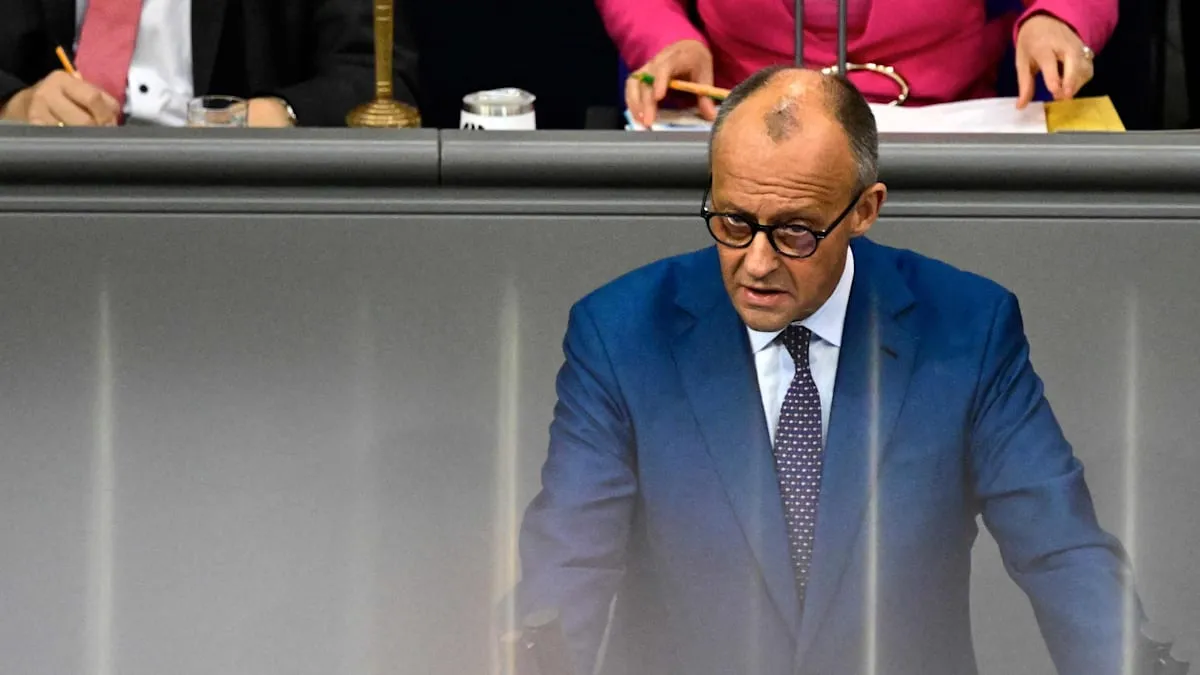
BERLIN — German Chancellor Friedrich Merz (CDU) launched a scathing attack on opposition parties Alternative for Germany (AfD) and Die Linke (The Left). He accused both parties of dividing the nation and potentially leading Germany to the brink of collapse. Merz delivered this controversial statement in the Bundestag on Thursday morning, immediately after his return from the 2026 NATO Summit.
In his impassioned government address on the current political situation, Chancellor Merz emphasized that national unity is crucial amidst complex geopolitical dynamics. \"They are dividing our country and would lead it into the abyss,\" Merz stated, referring to the political maneuvers of AfD and Die Linke, which he believes undermine the foundations of German democracy.
This statement comes on the heels of the recently concluded 2026 NATO Summit, a vital forum discussing global security challenges and Germany's role on the international stage. Merz seemingly sought to underscore the importance of internal stability to maintain Germany's credibility and strength within the defense alliance. A focus on domestic political cohesion is a primary agenda for his government.
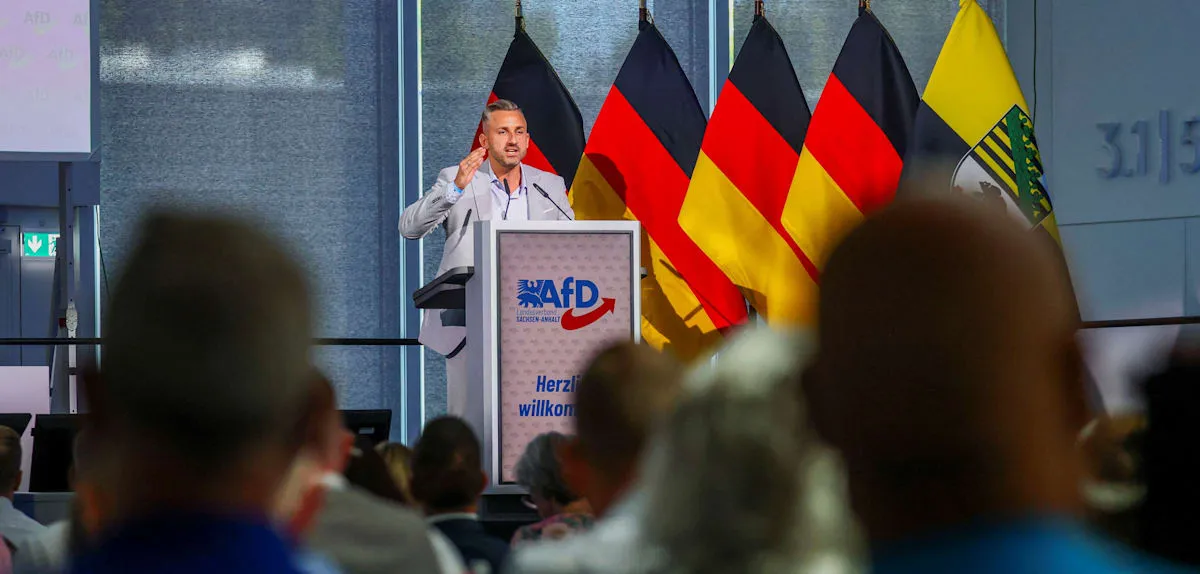
Chancellor Merz's harsh rhetoric reflects deep concerns about the increasing political polarization in Germany. The AfD, with its anti-immigrant and Eurosceptic narrative, continues to gain significant support, while Die Linke is often considered radical in its economic and social policies.
Political analysts suggest that Merz's attack is an attempt to strengthen the Christian Democratic Union's (CDU) position as a guarantor of stability and a moderate force amid a turbulent political spectrum. Issues such as sovereignty, integrity, and the future of Europe dominate public discourse, demanding decisive leadership.
Global context post-NATO Summit adds weight to Merz's statement. Germany, as Europe's largest economy, bears significant responsibility for maintaining regional stability. Internal divisions could weaken Germany's bargaining position on crucial issues, ranging from defense to energy diplomacy.
Criticism of the AfD is not new for the CDU, but the intensity of Merz's attack this time indicates an escalation in rhetoric. The CDU in Brandenburg once declared a firm blockade against the AfD. Conversely, Die Linke's stance is also often targeted for being counterproductive to national development policies.
The Chancellor's statement immediately sparked fierce debate among parliamentarians and the media. The AfD and Die Linke factions are expected to respond strongly, accusing Merz of using divisive rhetoric for his personal political gain. This could mark a new chapter in the political struggle within the Bundestag.
In light of these developments, it is important to observe how Merz's statement will impact Germany's political landscape leading up to upcoming regional and national elections. Will this call for unity yield results, or will it deepen existing divides? This discourse raises fundamental questions about Germany's future direction.
The Merz government faces dual pressures: maintaining economic growth amidst a global energy crisis and ensuring social cohesion domestically. Without political unity, both objectives will be difficult to achieve. The NATO Summit has shown that the world needs a strong and stable Germany.
Previous articles have also highlighted Germany's political dynamics, such as \"CDU Brandenburg Firm: AfD Barricade Remains Amidst Internal Frictions\" and \"Mecklenburg-Vorpommern: Left Coalition Strengthens, Serious Threat to AfD's Dominance?\". This situation illustrates how political forces in Germany continue to shift and reshape the governmental landscape. Read more here.
Chancellor Merz emphasized that the threat of division is not just rhetoric but a real danger to the foundation of the Federal Republic of Germany. He called for all democratic political forces to unite for the greater good of the nation, transcending partisan interests.
The debate in the Bundestag continues, with various factions attempting to digest and respond to the Chancellor's explosive statement. Germany's political future, especially regarding coalition and opposition, will be largely determined by how this rhetorical escalation is responded to and managed in the coming weeks.