 Stefani Rindus
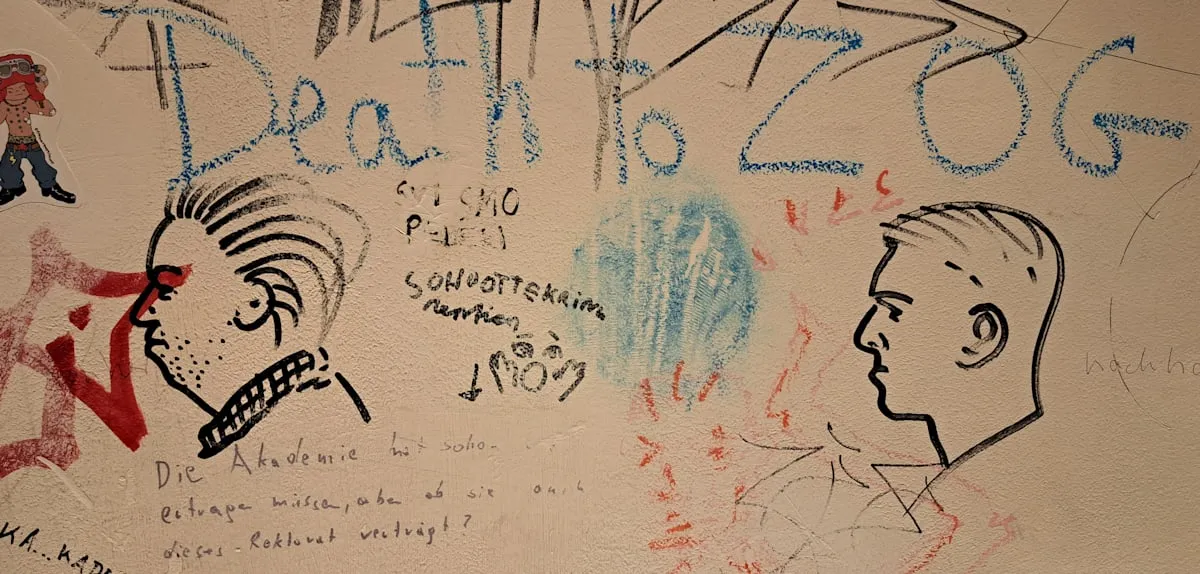
VIENNA – A street art phenomenon that has long enveloped the Austrian capital, Vienna, is now entering a new chapter. Mysterious men's head sculptures affixed to electrical boxes throughout the city have sparked a fierce debate between art enthusiasts and city authorities, raising the central question: is this provocative artwork or merely unsettling vandalism? After years, an art detective successfully traced the artist behind these enigmatic creations, uncovering a surprising movement profile that extends to Croatia.
This installation project, publicly known as 'Stromkastenkopfe' or 'electrical box heads', has become a distinctive urban feature of Vienna. Hundreds of sculpted faces with diverse expressions, from melancholic to humorous, adorn often-overlooked urban infrastructure. Their presence has attracted the attention of residents and tourists, transforming the city into an unexpected open-air gallery.
Authorities initially struggled to identify the perpetrator behind these installations. The activity technically violates city regulations regarding public property, sparking debate about the limits of freedom of expression and law enforcement. However, instead of being fully removed, many pieces have remained, perhaps due to their artistic appeal.
Recently, an independent art detective, whose name remains undisclosed to protect the integrity of the investigation, took the initiative to uncover the identity of the mysterious artist. Employing forensic art analysis methods, the detective gathered data from installation locations, materials used, and the consistent artistic style.
The art detective spent months building the artist's movement profile. The distribution pattern of the installations suggests careful planning, not just random placement. Each 'head' appears to be positioned with a specific purpose, creating a hidden visual narrative.
This investigation, combining geographical analysis and digital footprints, finally yielded a significant breakthrough. The accumulated evidence indicates that the artist not only operated in Vienna but their activity trail extends to Croatia. This suggests a much larger scale of operation than initially anticipated.
This discovery reignited discussions about the definition of street art. For some, attaching works to public property without permission constitutes defacement. However, for others, the 'Stromkastenkopfe' works are clever social commentaries, transforming everyday objects into mediums for reflection.
The artist's trajectory seems parallel to other urban art phenomena that often tread the fine line between creativity and legality. For instance, in 2026, the art world was also stirred by the Sensasi Seni Jago: 'For A Piece Of Real Estate' Guncang Gallarate 2026 exhibition in Italy, which illustrates how contemporary art continues to push conventional boundaries and norms. This demonstrates similar dynamics in the global art landscape.
Art critics have begun to view these installations as part of a neo-Dada or more modern pop art movement, utilizing found objects to convey messages. This interpretation affirms that the value of an artwork is not always determined by the legality of its placement but by the resonance it creates.
With the trail now leading to Croatia, speculation arises that the artist might be part of a larger street art network or using different locations to evade capture. The investigation is ongoing, and the artist's identity remains confidential, protected by the art detective.
A key question that persists is the artist's true motive. Is this a form of resistance against urban homogeneity, an attempt to encourage public interaction with art in unexpected spaces, or simply a personal expression intended for sharing?
Whatever the motive, 'Stromkastenkopfe' has successfully transformed many people's perspectives on urban infrastructure and the role of art within it. The presence of these sculptures has injected an element of surprise and imagination into the daily routines of Vienna residents.
The investigation conducted by this art detective is not merely about apprehending an unauthorized artist, but also about understanding a larger cultural phenomenon. It is an effort to document and analyze creative footprints that often go unnoticed by the public.
The people of Vienna now await the next chapter of this mystery. Will the artist finally be revealed, or will they continue to operate in the shadows, leaving behind a legacy of enigmatic head sculptures for future generations?
Editorial Insight: Street art phenomena like Vienna's 'Stromkastenkopfe' underscore a paradigm shift in contemporary art. The line between vandalism and artistic expression blurs, forcing us to question curatorial authority and the democratization of public spaces. The discovery of the artist's cross-border trail indicates a more organized urban art movement, aware of its global impact. This is no longer merely casual graffiti but a cultural statement that challenges the very definition of art, simultaneously testing the response of society and law enforcement to creativity that transcends conventional boundaries.