 Demian Sahputra
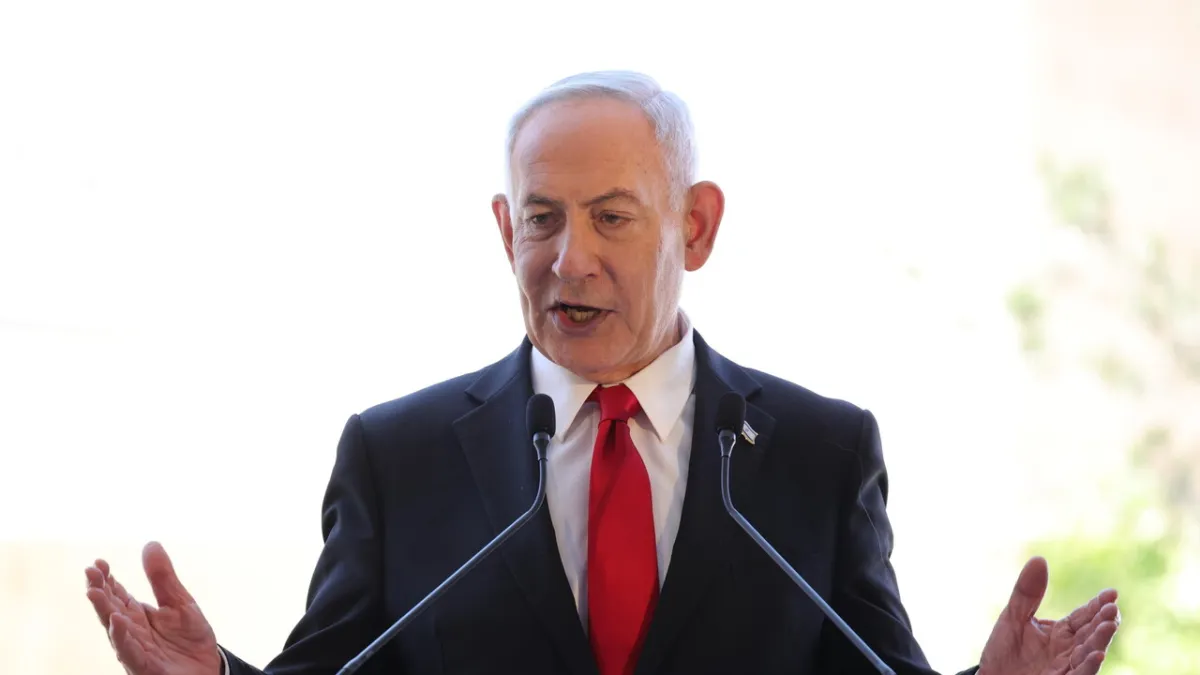
Jerusalem — Israeli Prime Minister Benjamin Netanyahu, in early 2026, unequivocally rejected the withdrawal of the Israel Defense Forces (IDF) from what he termed 'security zones' along the borders of Gaza, Lebanon, and Syria. This declaration emerges amidst escalating regional tensions, highlighting Israel's uncompromising security policy for long-term stability.
Netanyahu's controversial decision reflects Israel's commitment to maintaining a military presence in these strategic areas. The Israeli government argues that these zones are vital to prevent infiltration by militant groups and attacks on Israeli communities along the border. A troop withdrawal is seen as creating a security vacuum that could be exploited by Israel's adversaries.
In the Gaza Strip, the IDF's presence in the often-disputed buffer zones aims to minimize rocket threats and cross-border attacks. Netanyahu's stance effectively closes the door on international pressure to reduce Israel's military footprint in the Hamas-controlled territory, even after various peace mediation efforts.
A similar situation exists on the Lebanese border. The IDF's presence there is considered crucial for monitoring the activities of Hezbollah, an Iranian-backed armed group with significant influence in southern Lebanon. Netanyahu's statement underscores that Israel will not overlook potential threats from the north.
Meanwhile, on the Syrian border, Israel has long maintained surveillance zones in the Golan Heights, captured in 1967. Netanyahu has consistently opposed relinquishing control over this strategic territory, making it a vital line of defense against destabilization from the Syrian internal conflict and the presence of Iranian proxies.
Diplomatic analysis indicates that Netanyahu's firm stance could provoke a wave of criticism from the international community, particularly from countries advocating for de-escalation in the Middle East. Many fear this decision could hinder prospects for dialogue and a two-state solution, as well as prolong the cycle of violence.
Hamas leaders in Gaza and Hezbollah in Lebanon are expected to react strongly to this declaration, likely viewing it as a provocative act. This could worsen the security situation, triggering military responses or more frequent attacks.
In the broader context of regional tensions, this statement is not isolated from complex geopolitical dynamics. Tehran — Iran, at the same time, stated that the United States is not involved in ongoing talks with Oman regarding the Strait of Hormuz. This statement from Tehran highlights separate diplomatic efforts occurring in the region, albeit without Washington's direct involvement.
The issue of the Strait of Hormuz, a crucial oil shipping lane, has always been a focal point of tension between Iran and Western countries, including the US. The absence of US involvement in negotiations with Oman could be interpreted as Iran's attempt to assert its autonomy in regional diplomacy or as a strategy to reduce international pressure.
The correlation between Israel's border security policy and Iran's diplomatic maneuvers in Hormuz, though not direct, demonstrates the vulnerability and interconnectedness of security issues across the Middle East. Every political decision has a resonance that can affect the balance of power in the region.
“This Israeli stance complicates already fragile peace mediation efforts,” said Dr. Aisha Rahman, a Middle East geopolitics expert from National University. “Netanyahu views these zones as the last bastion of security. Without strong alternative security guarantees, policy changes are difficult to achieve, especially in 2026.”
Therefore, Netanyahu's rejection of an IDF withdrawal from these security zones not only maintains the military status quo but also reshapes the regional diplomatic and security landscape. Its impact will be felt on regional stability and Israel's relations with its neighbors for years to come.