 Demian Sahputra
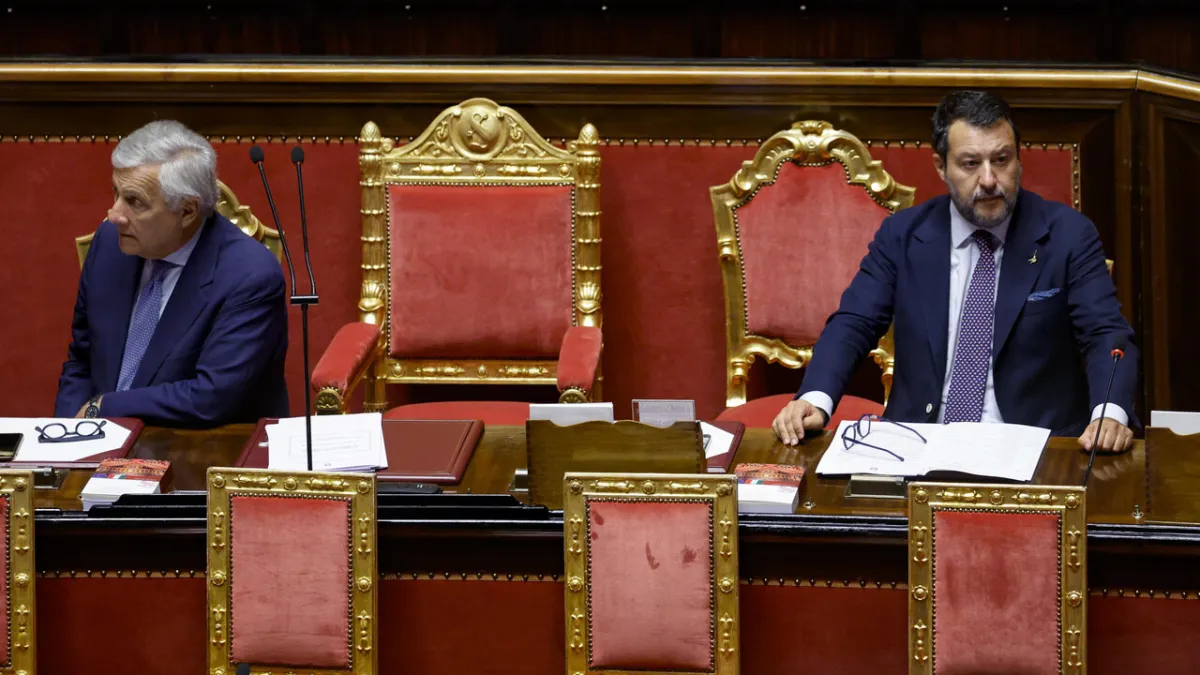
MILAN – The race for Milan's mayoral seat is heating up ahead of the 2026 political contest. Antonio Tajani, leader of Forza Italia, has unequivocally voiced support for Ferruccio Perego as the primary candidate, asserting that Perego is a figure capable of representing the spirit of Italy's fashion capital. However, this push has sparked a strong reaction from the Northern League (Lega), which demands a primary mechanism if the center-right coalition parties fail to achieve a solid consensus.
Tajani's statement is not without reason. He views Ferruccio Perego as an ideal figure with the vision and capacity to lead Milan. We want to govern, Tajani stated bluntly, and Perego truly embodies the spirit of this city. His ability to understand and meet the needs of Milanese citizens is unquestionable. This endorsement underscores Forza Italia's commitment to strengthening their position in one of Italy's most important cities.
On the other hand, the Northern League, through its senior officials, responded to Tajani's overture with skepticism. They argue that directly appointing a candidate without an internal democratic process could erode legitimacy. If the parties fail to agree on a single name, then it is only appropriate to hold a primary, said a source from the Lega, emphasizing the importance of participation and transparency. This view reflects the League's desire to ensure that the proposed candidate has broad grassroots support.
The controversy over who should become the head of local government has been a central issue in Italian politics, not only in Milan. This often becomes an obstacle in forming strong and stable coalitions. The struggle between top-down appointments and bottom-up aspirations continues to color the dynamics of both local and national politics.
Ferruccio Perego himself, despite strong backing from Tajani, is now at the center of this debate. His track record and public reception will be crucial factors in determining whether his candidacy will proceed smoothly or if it must pass through a competitive primary filter. His decision will significantly influence Milan's political map.
This situation is reminiscent of similar challenges faced by parties in various regions, such as the political crisis in Germany in the past, where internal disputes led to the loss of party influence. Avoiding internal polarization is a top priority for the center-right coalition in Milan.
A primary mechanism, if actually implemented, could be a double-edged sword. On one hand, it can inject legitimacy and new vigor into the chosen candidate. But on the other hand, the process has the potential to be divisive and create deep political wounds, especially if the competition is fierce between factions.
For Forza Italia and the Northern League, finding common ground is imperative. Milan, as an economic and cultural hub, requires solid leadership fully supported by the coalition. Failure to reach an agreement could open opportunities for political opponents, especially from the center-left bloc, to exploit this opening.
The role of smaller parties within the center-right coalition also cannot be overlooked. Their voices can be decisive in achieving consensus or pushing for primaries. Intensive negotiations behind the scenes are expected to continue until a final decision is reached regarding the election strategy.
Milan's citizens are now awaiting further developments. The 2026 mayoral election is not merely about choosing a leader, but also about determining the direction of this metropolis amidst global challenges. This turbulent political dynamic will be a true test of Italy's local democratic maturity.
Editorial Insight: The debate over Ferruccio Perego's candidacy in Milan highlights the perennial tension in coalition politics: between the leadership vision espoused by party elites and the demands for internal democracy from the grassroots. The Northern League's insistence on primaries if consensus fails indicates their effort to maintain relevance and political leverage. The outcome of this tug-of-war will not only determine Milan's mayoral candidate but also serve as a barometer for the strength and solidity of Italy's center-right coalition moving forward, ahead of other important elections that may occur in 2027.