 Chandra Wijayanto
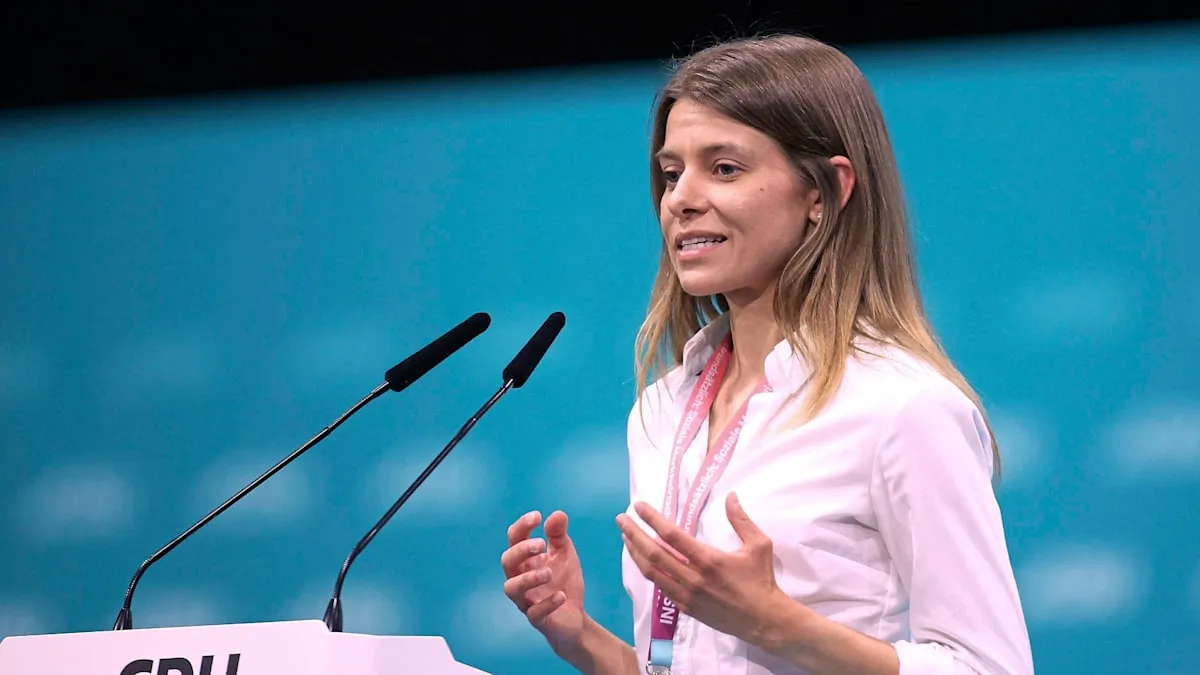
BRANDENBURG — Laura Strohschneider, the State Head of the Young Union Brandenburg, surprisingly announced her resignation from her position and simultaneously her departure from party membership on Monday, May 27, 2026. This drastic decision was triggered by a deep sense of shame regarding the direction and policies of federal politics, which she believes have betrayed core values, sparking a wave of disappointment among the party's grassroots in Germany.
Strohschneider's resignation, as an influential young figure in Brandenburg's political arena, immediately drew sharp attention. This move is not merely a routine leadership change but a clear reflection of mounting turmoil and dissatisfaction within Germany's dominant political parties.
As the leader of the youth wing, Strohschneider has long been known for vocally advocating for the aspirations of the younger generation. However, she feels that the policies adopted by the federal government in Berlin, dominated by a specific coalition, are increasingly diverging from public expectations, especially among young voters.
"I can no longer represent policies that contradict my beliefs and the aspirations of the party's base," Strohschneider stated in a written declaration distributed to the media. This statement implicitly points to several crucial issues currently facing Germany, ranging from economic crisis, energy policy, to immigration problems.
Marco Reinke, a senior reporter from WELT, observed that this incident underscores the intense anger surging at the party's base level. "This shows the extent of the anger simmering at the party's grassroots," Reinke said, highlighting the widening gap between the political elite in Berlin and their constituents in the regions.
Internal party upheavals are not new in the German political landscape. In recent years, major parties have often faced similar challenges, with dissenting voices from the young cadre base frequently emerging. This phenomenon adds to a long list of turbulences affecting parties in Germany, as previously reported in an article concerning CDU's internal turmoil.
Political analyst Professor Dr. Klaus Richter from the University of Potsdam argues that Strohschneider's resignation is a serious warning signal for her parent party. "This is not merely an isolated individual case, but a strong indication that the foundation of trust between leaders and members is eroding. Federal leaders must listen," Richter explained.
The issues fueling this dissatisfaction are diverse, ranging from suboptimal inflation management, energy transition policies burdening the public, to intense debates over defense budget allocation amidst global geopolitical tensions. These policies are accused of being unresponsive to the real needs of German citizens.
The strengthening of alternative parties and shifts in voter support, as seen in local election results in several states, are also significant factors. The success of parties like the AfD in some regions, discussed in a report on the shifting political map ahead of the 2026 elections, indicates a void that traditional parties have failed to fill.
Furthermore, criticism of the parent party's leadership and strategy has also emerged from various circles, raising questions about the credibility of the parent party's leadership, as highlighted in our analysis of CDU's credibility. Strohschneider's departure adds pressure on the national leadership to undertake deep introspection.
The Executive Committee of the Young Union Brandenburg is scheduled to hold an emergency meeting soon to discuss the implications of this resignation and determine the next steps. The search for a successor to lead this youth wing organization is expected to be a challenging process.
The long-term impact of this incident on German politics remains to be seen. However, it is clear that the departure of a promising young figure from the active political stage, for fundamental reasons such as shame over federal policy, sends a strong message to the entire German political spectrum to be more responsive and accountable to the voice of the people.