 Debby Wijaya
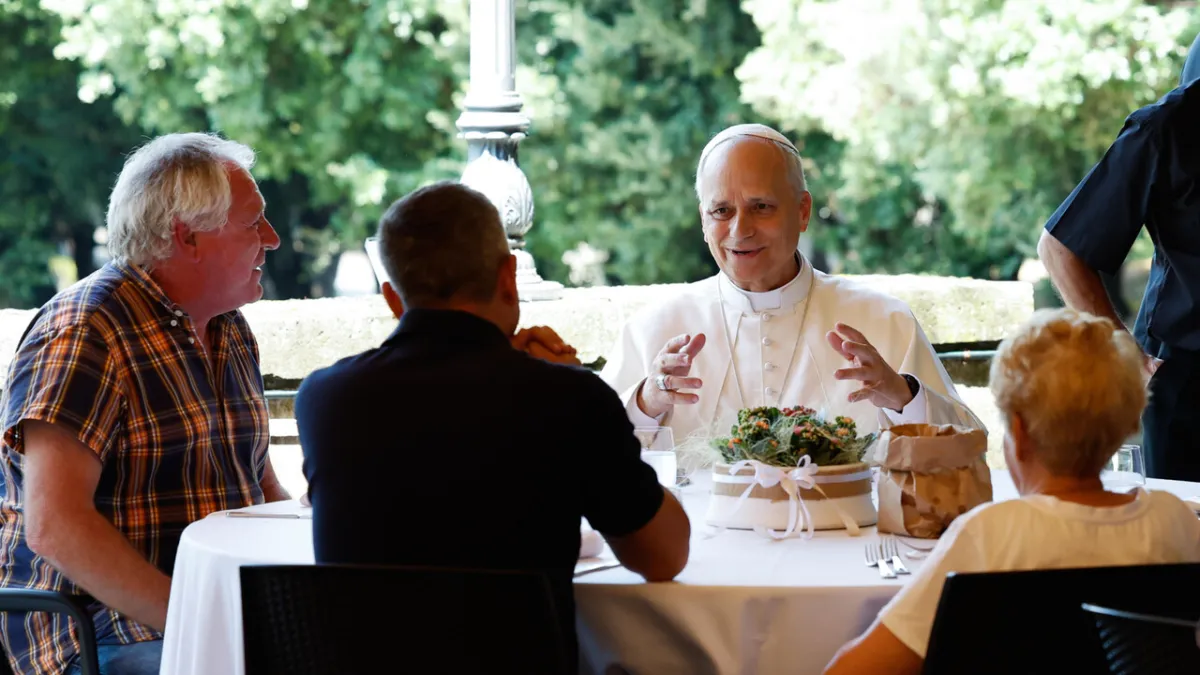
VATICAN CITY — Pope Francis in mid-2026 unequivocally called for a global struggle for justice and the elimination of the root causes of poverty, rather than merely addressing its symptoms. The resonating appeal from the heart of the Catholic Church was delivered as the Pope interacted with vulnerable groups, reaffirming the importance of solidarity and inclusion.
The Pope, renowned for his advocacy for the marginalized, declared "I hunger for justice" in a statement that touched consciences. This message is not merely a spiritual reflection but also a call to concrete action for world leaders and humanity.
The context of this statement was reinforced by a symbolic luncheon in Rome, where the Pope, or a key figure representing the Church, together with "Leone"—a term symbolizing strength and service—hosted individuals facing social fragility. This moment served as a visual affirmation of the Pope's message.
"We can no longer just extinguish fires; we must drain the swamp of their causes," the Pope asserted, underlining the urgency of addressing structural inequalities and exploitation that perpetuate poverty. His appeal encompasses intertwined economic, social, and environmental aspects.
Pope Francis emphasized that the Church has a fundamental role in embracing all people without exception. "The Church must open its doors and know how to welcome everyone," he stated, highlighting the mission of inclusivity that must be at the core of Christian service. This is not just an invitation but a divine mandate.
Global poverty issues in 2026 are increasingly complex, fueled by geopolitical tensions, the impacts of climate change, and widening wealth disparities. The Pope observed that conflicts and economic crises often hit the most vulnerable segments of society the hardest.
The Pope's message is a universal invitation to every individual, government, and international organization to collaborate. True justice, according to him, is impossible to achieve without the abolition of oppressive systems that benefit only a few.
The concept of solidarity serves as a central pillar in the Pope's thought. He encourages believers to see every suffering face not as a statistic but as brothers and sisters who need a helping hand and deep empathy.
Amidst global economic turmoil, the Pope's statement is highly relevant. Phenomena such as the extreme increase in wealth among certain segments, as evidenced by recent data showing an unprecedented surge in Italian family savings reaching trillions of euros by 2026, further illustrate the growing divide he criticizes. This highlights the urgency to re-evaluate current economic models. Italian Family Wealth Soars by 2026.
Leaders of nations, non-governmental organizations, and international financial institutions bear a moral responsibility to design more equitable policies. These policies must favor a more even distribution of resources and create equal opportunities for all societal strata.
With unwavering spirit, Pope Francis hopes his message can awaken a collective consciousness. He dreams of a world where the dignity of every human being is valued, and where no one has to suffer extreme hunger or poverty.
Pope Francis's call serves as an enduring reminder that social justice is not an option but a foundation for a civilized society. The Pope's initiative to share a meal with vulnerable groups further clarifies the Church's inclusive and serving vision.