 Gabriella
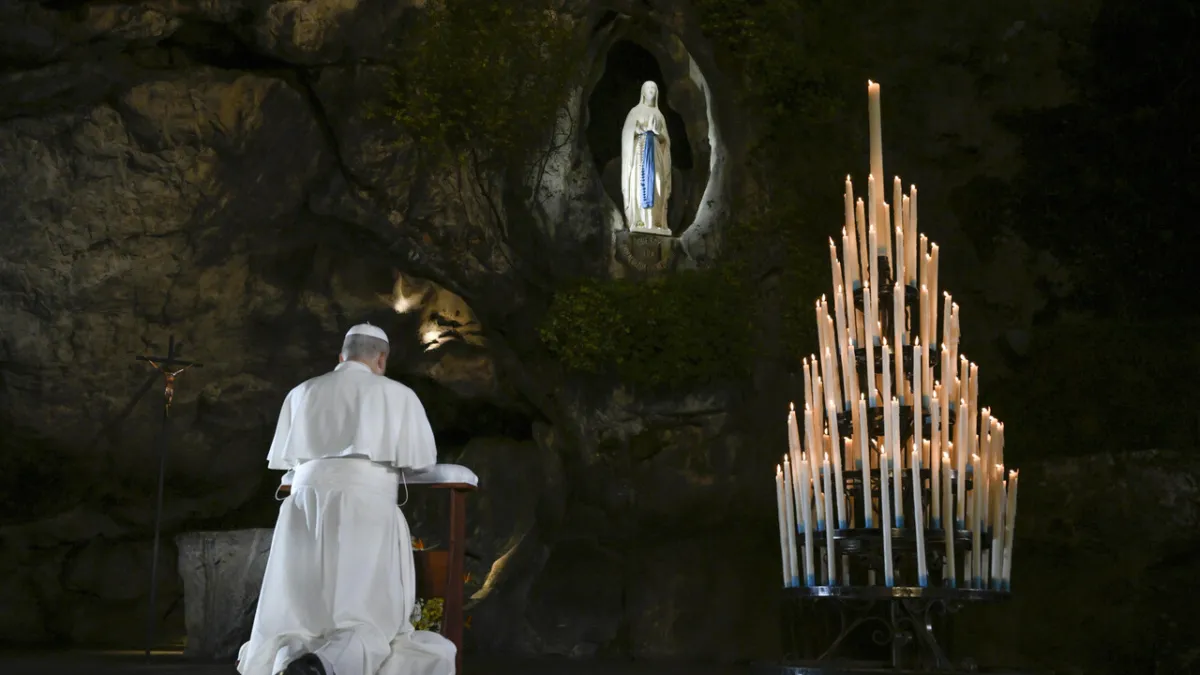
PARIS – Pope Leo XIV recently captivated the French capital, Paris, with an extraordinary massive Mass on the Champs-Elysees, a historic event attended by an estimated 800,000 Catholics. During this deeply significant moment, the Head of the Catholic Church urged French Catholics to 'not hide' and boldly 'renew the nation' through faith and tangible actions. This crucial visit was subsequently followed by a spiritual pilgrimage to the Grotto of Apparitions in Lourdes, reaffirming the Vatican's commitment to spiritual revitalization at the heart of Europe.
Pope Leo XIV's presence on the Champs-Elysees not only marked a colossal spiritual gathering but also served as a powerful demonstration of faith amidst a secular society. Thousands thronged the iconic avenue, from morning until evening, forming a reverent sea of people listening intently to the Pope's message. An atmosphere of solemnity mixed with enthusiasm permeated the air, signaling what many hope is a new chapter for the Church in France.
French media highlighted the visit as a major event, portraying the Pope as a star figure capable of captivating the masses. An article titled Pope Leo XIV Stirs Paris: French Media Hails the Leader as a Star reflected how the event dominated news coverage, underscoring the appeal and influence of the Catholic Church's leader.
In his homily, Pope Leo XIV unequivocally called on Catholics to step out of their comfort zones and assume an active role in society. 'Do not hide!', he repeatedly urged, 'Renew this nation with the values of the Gospel, with love, justice, and solidarity. France needs your courageous and open testimony of faith.'
This message serves as a direct challenge to what the Pope perceives as the diminishing influence of the Church in France. He emphasized that faith is not merely a private affair but a transformative force that must be manifested in public and social life. This message is particularly pertinent given the rising challenges of secularism across various European nations.
Following his successful engagement in Paris, Pope Leo XIV continued his journey to Lourdes, one of the most significant Catholic pilgrimage sites globally. The visit to the Grotto of Apparitions, where the Virgin Mary is believed to have appeared, holds profound meaning for Catholics. There, the Pope led prayers and reflections, seeking divine blessings and guidance for the Church and the entire world.
The pilgrimage to Lourdes provided a fitting conclusion to the Pope's visit to France, connecting the echoes of revitalization from the capital with the strong spiritual roots of the pilgrimage site. It symbolized a journey of hope for the renewal of faith and spirit among French Catholics.
The Pope's visit also addressed social issues. Earlier, Pope Leo XIV was also reported to have visited migrants in Paris, offering a 'Voice of Hope' that resonated widely, as covered in the article Pope Leo XIV Visits Paris Migrants: A Voice of Hope Resonates in France. This highlights the Pope's attention to pressing humanitarian and social concerns.
Furthermore, the Vatican, through Pope Leo XIV, also bestowed a 'Sacred Gift' to commemorate the 150th anniversary of the Catholic Institute of Paris, an important educational institution. This event was also part of the Pope's itinerary, demonstrating his support for Catholic education and its intellectual heritage, as reported in Sacred Gift: Pope Leo XIV Honors 150 Years of the Catholic Institute of Paris.
The wave of enthusiasm generated by Pope Leo XIV's visit is expected to rekindle missionary zeal in France, encouraging believers to be bolder in their testimony and make tangible contributions to society. While secularism remains a challenge, this message from the Vatican offers renewed energy to the local Church.
Editorial Insight: Pope Leo XIV's visit to France is more than just a spiritual agenda; it is a strategic statement from the Vatican to revitalize Catholic faith in Europe, especially in a country with strong secular traditions like France. The Pope's call to 'rise up' and 'renew the nation' can be interpreted as an urging for the Church not just to survive but also to become a positive agent of change amidst contemporary challenges. Its long-term impact will depend on the extent to which French Catholics can translate this inspiring message into concrete actions relevant to the modern context.