 Angel Doris
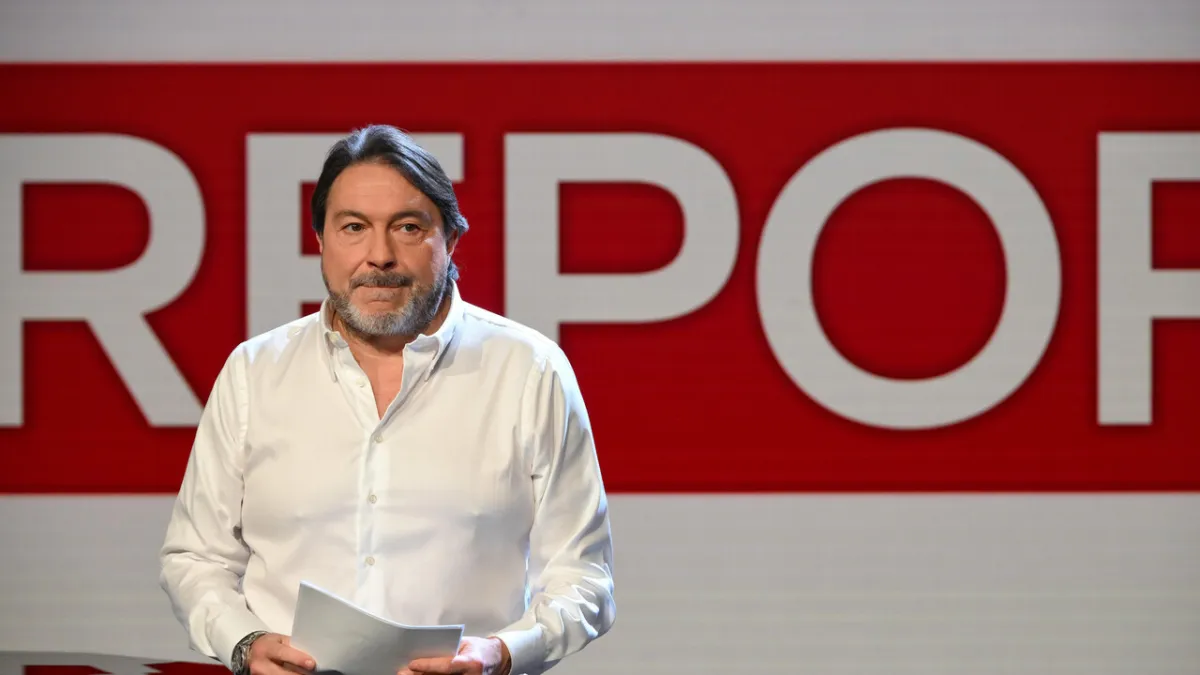
ROME – Sigfrido Ranucci, senior investigative journalist and editor-in-chief of the Report program on RAI television, has vehemently denied allegations that Antonio Lavitola influenced his investigation. Ranucci's statement comes after the Fratelli dItalia (FdI) party filed a complaint, which according to him and the Report editorial team, contains erroneous claims. Amidst a barrage of criticism and attacks, the Report editorial team affirms its unwavering commitment to continue their journalistic work.
The complaint from Fratelli dItalia alleged that there was an attempt to 'condition' Report's investigation, supposedly involving Antonio Lavitola. FdI claimed that the investigation had been influenced by external parties, thereby casting doubt on the integrity of its reporting. This has sparked intense debate regarding media independence in Italy.
Addressing these serious accusations, Ranucci stated, "No investigation was conditioned by Lavitola. The complaint from FdI is wrong and unfounded." He emphasized that the Report team consistently adheres to principles of objectivity and accuracy in every factual pursuit. Journalistic integrity remains their utmost priority.
The Report editorial board did not remain silent. Through an official statement, they affirmed their stance. "We are heavily attacked, but we will move forward with determination," read the statement from the Report team. These attacks are seen as a systematic attempt to silence critical voices and investigations that uncover the truth.
As one of the most influential investigative journalism programs in Italy, Report has a long history of exposing sensitive issues, ranging from political corruption and organized crime to economic scandals. Their reputation is built on courage and sharpness in presenting facts to the public.
Allegations of 'conditioning' an investigation, if proven, would be a severe blow to Report's credibility and press freedom in Italy. However, Ranucci and his team appear ready to face this challenge head-on, maintaining their position as a watchdog against power.
This issue reflects the complex dynamics of the relationship between media, politics, and the public in Italy in 2026. Pressure on investigative journalism often escalates when approaching significant political moments or when major interests are threatened with exposure.
Investigative journalism plays a fundamental role in ensuring accountability and transparency in a democratic society. Programs like Report serve as the fourth pillar of democracy, responsible for presenting information that certain parties might try to conceal.
Report has indeed often been a target of criticism and attacks, particularly from those who feel disadvantaged by the results of their investigations. However, this only proves that Report successfully touches crucial nerves and uncovers uncomfortable truths.
The commitment of Report's journalists remains unshaken. They are determined to continue conducting in-depth investigations, presenting strong evidence, and giving a voice to those who lack a platform. This stance serves as a reminder of the importance of press resilience in the face of pressure.
Press freedom is not just about the right to speak, but also the responsibility to seek the truth and present it ethically. In this context, the firm response from Ranucci and the Report editorial team is a strong statement against silencing attempts and a defense of core journalistic values.