 Gabriella
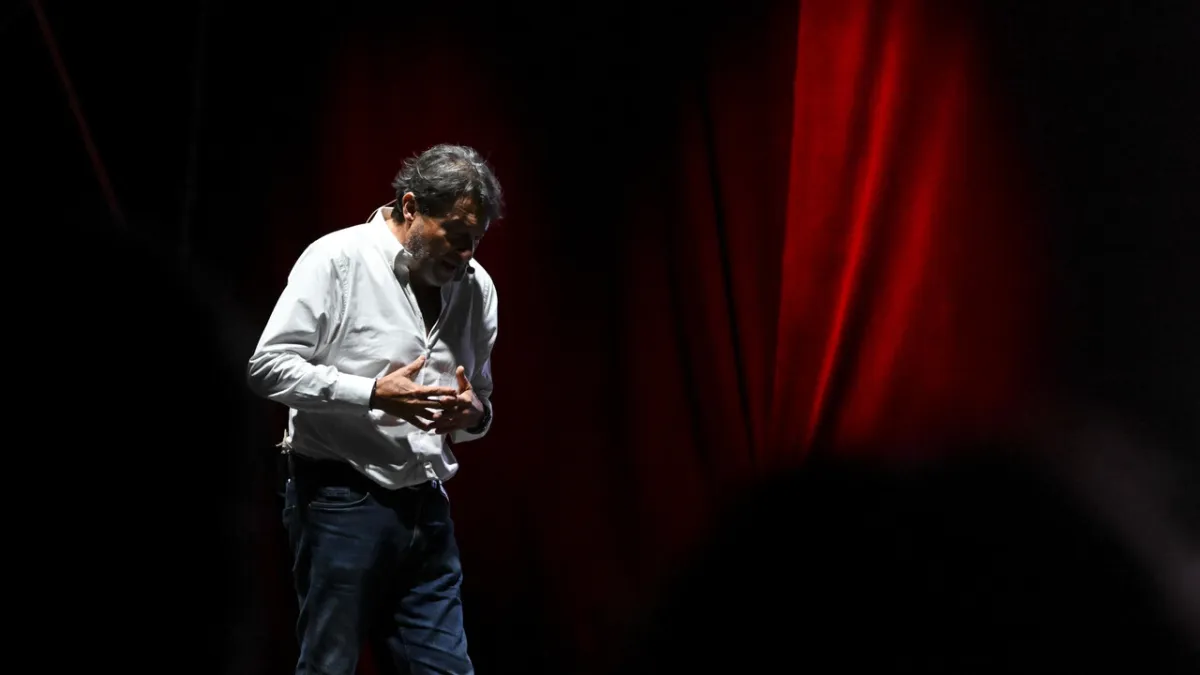
ROME – Prominent investigative journalist, Roberto Ranucci, finds himself embroiled in a political storm that has sparked fierce debate across Italy. The controversy stems from his alleged grave statements, criticized by the Unirai media workers union, leading to a strong rejection by the Fratelli d'Italia (FdI) party to grant the use of the Teatro dell'Efebo for an event involving Ranucci. Ironically, amidst this whirlwind of controversy, Ranucci is slated to receive the prestigious Premio Garitta this year, adding a paradoxical layer to his current predicament.
Unirai, Italy's national television workers union, explicitly criticized Ranucci's statements, labeling them grave or serious, without detailing the substance of the specific remarks. This accusation raises significant questions about the impact of a senior journalist's words on internal media dynamics and public perception.
Fratelli d'Italia (FdI), an influential political party in Italy, publicly expressed its opposition to permitting the use of the Teatro dell'Efebo. This decision, according to FdI, is directly linked to Ranucci's phrases concerning Riina, referring to Salvatore Toto Riina, one of the darkest figures in Italy's organized crime history and a notorious Sicilian mafia boss.
Salvatore Riina, who passed away in 2017, was known as the Boss of Bosses and was responsible for numerous brutal murders and terror attacks that shook Italy. Riina's name remains highly sensitive, symbolizing deeply rooted organized crime in the collective memory of the Italian public.
Responding to this wave of criticism and rejection, Ranucci did not remain silent. He voiced his bewilderment at the unfolding situation. The paradox is that today I receive the Premio Garitta, Ranucci stated, highlighting the stark contrast between the recognition for his work and the political attacks he is enduring.
As the host of the investigative program Report on Rai, Ranucci is a familiar figure in Italian journalism. The program is renowned for its courage in exposing issues of corruption, organized crime, and abuse of power, often provoking strong reactions from various quarters.
Ranucci's history of dealing with sensitive issues has been noted before, including his statements related to the Giulio Regeni tragedy in Egypt. Journalist Ranucci: Cairo Threatens Regeni, Meritocracy Neglected! serves as an example of how his views can ignite public discussion.
The Premio Garitta itself is an award presented to honor dedication and excellence in journalism, often bestowed upon individuals who bravely uphold the truth despite facing immense pressure. Ranucci's receipt of this award, amidst fierce polemics, underscores the dilemma between press freedom and political interference.
This situation not only highlights Ranucci's position but also fuels a broader debate about the limits of freedom of expression for journalists in Italy. The question of how far political parties are entitled to influence cultural events based on an individual's statements lies at the heart of this controversy.
This incident also reflects the escalating tension between courageous investigative journalism and political forces that seek to control public narratives. In the information age of 2026, as disinformation and political polarization become more rampant, the role of independent media and the bravery of journalists like Ranucci become increasingly vital yet simultaneously vulnerable.
Editorial Insight:
The controversy surrounding Roberto Ranucci underscores the perennial challenges to press freedom in democratic nations. FdI's denial of the Teatro dell'Efebo based on the journalist's statements illustrates the potential for political interference in public spaces and artistic expression. On one hand, it is crucial for journalists to be accountable for every word spoken. However, on the other hand, a political party's move to seemingly punish a journalist through restricting access to public facilities can be viewed as an attempt to silence critical voices, setting a dangerous precedent for the future of independent journalism in Italy.