 Demian Sahputra
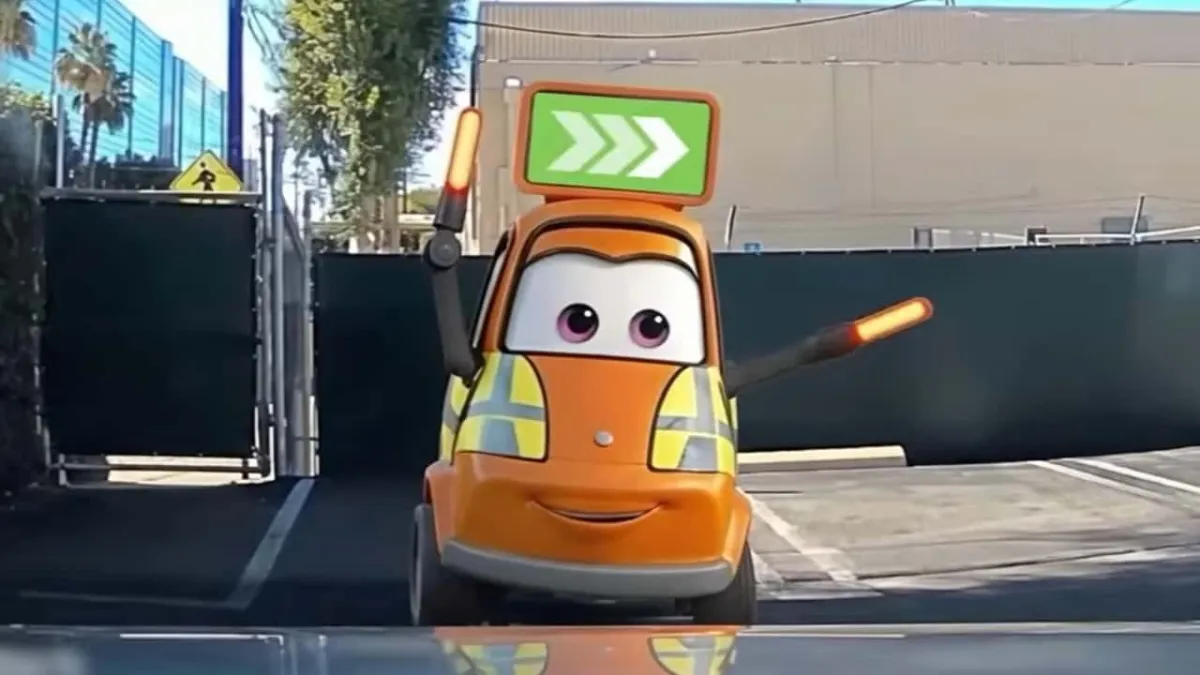
Orlando, Florida – Walt Disney Imagineering and Field AI have created a new breakthrough in 2026 by introducing a prototype autonomous parking guide robot. This innovation, inspired by the Cars characters, is designed to solve one of the classic problems faced by theme park visitors: the difficulty of finding a parking spot. The presence of a four-wheeled robot capable of waving, flashing, and displaying directions is expected to revolutionize the visitor experience across Disney facilities.
Initial testing of this advanced robot has begun at one of Disney's secret research facilities, marking a significant step in the adoption of artificial intelligence for operational efficiency improvements. The concept for this development originated from a deep analysis of heavy and often confusing vehicle traffic in Disney's massive parking areas, which often detracts from visitor comfort before they even enter the main gates.
The robot features a design reminiscent of iconic characters from the 'Cars' movie, combining high-tech functionality with Disney's signature visual appeal. More than just a navigation tool, this robot is designed to interact friendly with drivers, providing the personal touch that has always been a hallmark of the Disney experience.
The technology behind this robot involves advanced navigation systems, high-precision environmental sensors, and real-time data processing capabilities. Thus, the robot can efficiently identify empty parking spaces and guide vehicles to them with clear visual instructions via LED screens and easy-to-understand gestural cues.
A spokesperson from Walt Disney Imagineering stated, We are always looking for innovative ways to enhance every aspect of our guests' visits. This parking guide robot is not just about efficiency, but also about delivering a touch of Disney magic even before they step out of their cars.
Disney's move aligns with a global trend where increasingly more sectors, from retail to public services, are integrating AI and robotics solutions to improve efficiency and user experience. This phenomenon is also seen in the education and technology sectors, as discussed in an article about how the JET Programme has built a strong foundation of Japanese culture in facing the AI era.
Although the concept of a parking guide robot sounds futuristic, the challenges of its implementation are considerable. Extensive testing is required to ensure safety, reliability, and compatibility with various vehicle types and weather conditions. Adapting existing parking infrastructure is also a critical consideration for large-scale deployment.
The long-term potential of this project is enormous. Besides reducing congestion and parking stress, these robots have the potential to collect valuable data on traffic patterns and parking space utilization, which can be used for optimizing future parking area design and management.
The successful implementation of this system could become a benchmark for the global theme park and recreation industry. Other companies will likely follow Disney's lead in adopting similar technologies to enhance guest experience and operational efficiency.
These 'Cars' robots are a tangible representation of Disney's vision to continuously innovate and leverage cutting-edge technology to create unforgettable experiences for its millions of visitors each year. It is a natural evolution of the philosophy where imagination meets engineering.
Editorial Insight: Disney's initiative with the parking guide robots signifies a paradigm shift in the service industry. It is no longer just about providing a service, but about creating a frictionless experience enriched by technology. Looking ahead, we can expect deeper integration of AI across the entire theme park ecosystem, from personalized interactions to crowd management, shaping a smarter and more adaptive future for recreation. The success of this project will serve as an important case study on how automation can significantly enhance customer satisfaction.