 Edward DP Situmorang
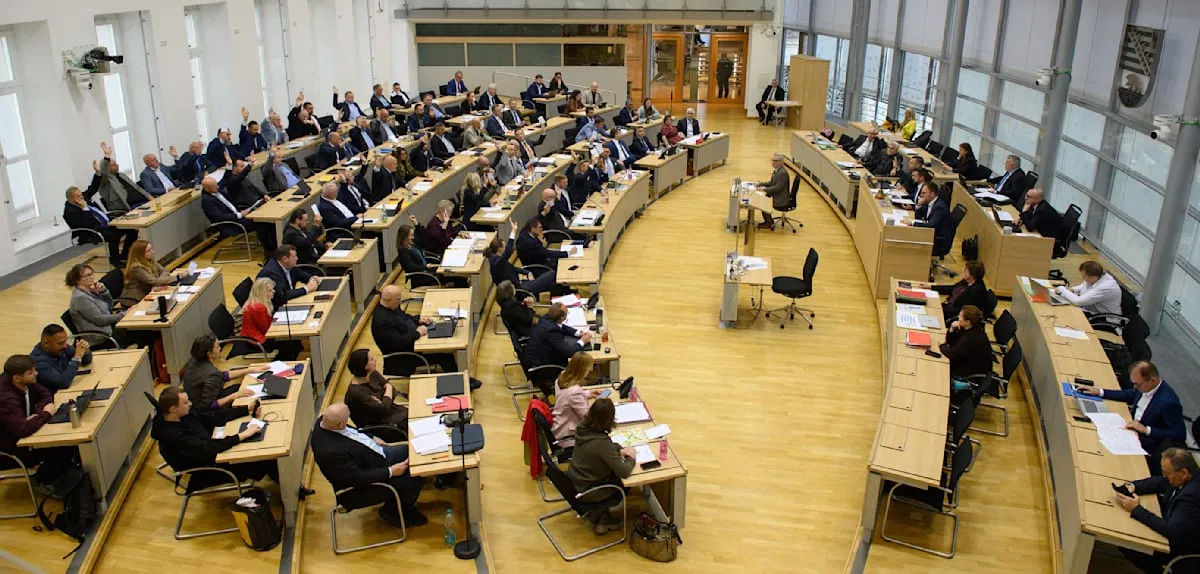
MAGDEBURG – The political stage in Sachsen-Anhalt, Germany, is once again heating up in December 2026, following demands for early general elections initiated by the far-right party AfD and echoed by calls for a 'democratic new beginning' from the left-wing party Die Linke. This situation creates significant uncertainty regarding the stability of the regional government ahead of the proposed Minister-President election on December 8.
A provocative move came from AfD Sachsen-Anhalt, whose lead candidate, Ulrich Siegmund, officially submitted a request for the Minister-President election to be held on that date. This submission directly challenges the existing governing coalition, signaling deep dissatisfaction with the current administration.
Not only AfD, but Die Linke also voiced similar sentiments, albeit with a different approach. The left-leaning party explicitly called for new elections across the state, arguing for the realization of a 'democratic new beginning in the state.' This statement indicates a cross-political spectrum consensus on the need for fundamental change.
The political conditions in Sachsen-Anhalt have indeed long been characterized by complex dynamics. For several years, coalition governments have often faced challenges, ranging from regional economic issues to social polarization. These demands for early elections can be interpreted as the culmination of accumulated tensions.
Local political observers highlight that both parties, despite being ideologically opposed, find common ground in their criticism of the status quo. AfD often uses immigration and security issues to garner support, while Die Linke focuses on social justice and addressing economic disparities.
This wave of demands has the potential to drastically reshape Sachsen-Anhalt's political landscape. If early elections truly occur, a new coalition formation is highly likely, which will impact crucial policies related to the region's budget, infrastructure, and education.
Other parties in the state parliament, such as the CDU and SPD, now face a strategic dilemma. They must decide whether to respond to the demands of AfD and Die Linke by supporting the process or attempting to maintain the stability of the existing coalition. This decision will largely determine the future political direction of Sachsen-Anhalt.
The people of Sachsen-Anhalt themselves show diverse reactions. Most citizens desire stability and concrete solutions to daily problems, but there are also those who feel that early elections are the only way to overcome political stagnation and achieve better representation.
The situation in Sachsen-Anhalt also draws national attention. Germany, as one of Europe's largest economies, often views regional political dynamics as indicators of potential changes at the federal level. This turmoil adds to the list of challenges for the federal government led by Chancellor Olaf Scholz.
This dynamic is reminiscent of situations in several other European states facing political upheavals and calls for reform. As seen in previous news about protests in Paris demanding strong changes, or criticism of dialogue policies in Italy, issues of political stability and governmental legitimacy are major focuses across the continent.
Editorial Insight:
The demands for early elections from AfD and Die Linke in Sachsen-Anhalt are a strong signal of dysfunction within the regional government. Although originating from opposing political spectra, the convergence of these demands indicates the vulnerability of the political system and likely widespread public dissatisfaction. The outcome of the proposed Minister-President election on December 8, or even potential general elections, will be an important barometer for Germany's political climate and future coalition stability. This situation could also set a precedent for other states facing similar turmoil.