 Chandra Wijayanto
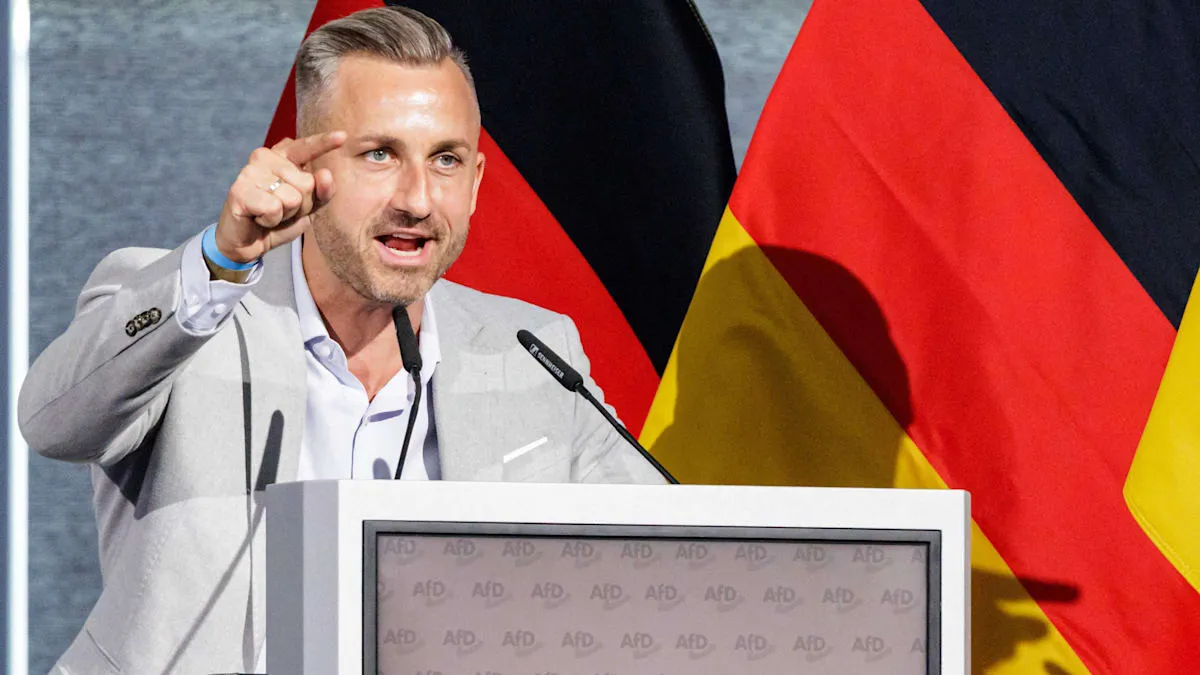
Magdeburg — Ulrich Siegmund, the lead candidate for the Alternative for Germany (AfD) party in Sachsen-Anhalt, has shaken the political stage by unveiling an ambitious 100-day program. This presentation in Magdeburg highlights several radical policies, including mandatory work for asylum seekers, intensified deportations, and financial incentives for families, while also questioning public fund allocation priorities that fail to provide free childcare facilities.
Siegmund sharply criticized the current situation by stating, “We have money for the whole world, but we cannot manage to provide free childcare services.” This statement forms the party's core argument regarding the necessity of a fundamental shift in fiscal and social policies within the state.
The AfD's program explicitly proposes immigration policy reforms. The implementation of “mandatory work for asylum seekers” is one of the central points claimed to integrate them into the labor market while reducing the state's budgetary burden.
Furthermore, an increase in deportations for individuals whose asylum status has been rejected is a key focus. This step, according to Siegmund, is essential for maintaining Sachsen-Anhalt's sovereignty and internal security.
In the social sector, the AfD promises “premiums for families” as a tangible effort to support the demography and welfare of native German citizens. This policy is designed to alleviate the economic burden on families and encourage birth rates.
Emphasizing urgency, Siegmund asserted, “We want to act immediately after the election.” This statement underscores the party's determination not to delay the implementation of its campaign promises.
This political maneuver by the AfD occurs amid a significant wave of support in several regions of Germany, including calls for a partial ban on the AfD by CSU Thuringia as highlighted in the article Geger Jerman 2026: CSU Thuringia Dorong Pelarangan Parsial AfD, Hak Pilih Höcke Terancam!. This indicates an intense debate about the AfD's position in Germany's political landscape in 2026.
This program not only has the potential to shape Sachsen-Anhalt's future but also sends a strong signal across Germany about the political direction the AfD intends to take. Issues such as migration and social subsidies are central to the national agenda.
Reactions to these proposals are expected to be diverse. While AfD supporters will welcome them as decisive solutions, opposition groups and human rights organizations are likely to strongly oppose mandatory work policies and increased deportations.
With such straightforward promises, Ulrich Siegmund and AfD Sachsen-Anhalt have drawn the political battle lines for the upcoming election, highlighting fundamental differences in their vision for Germany's future.