 Chris Robert
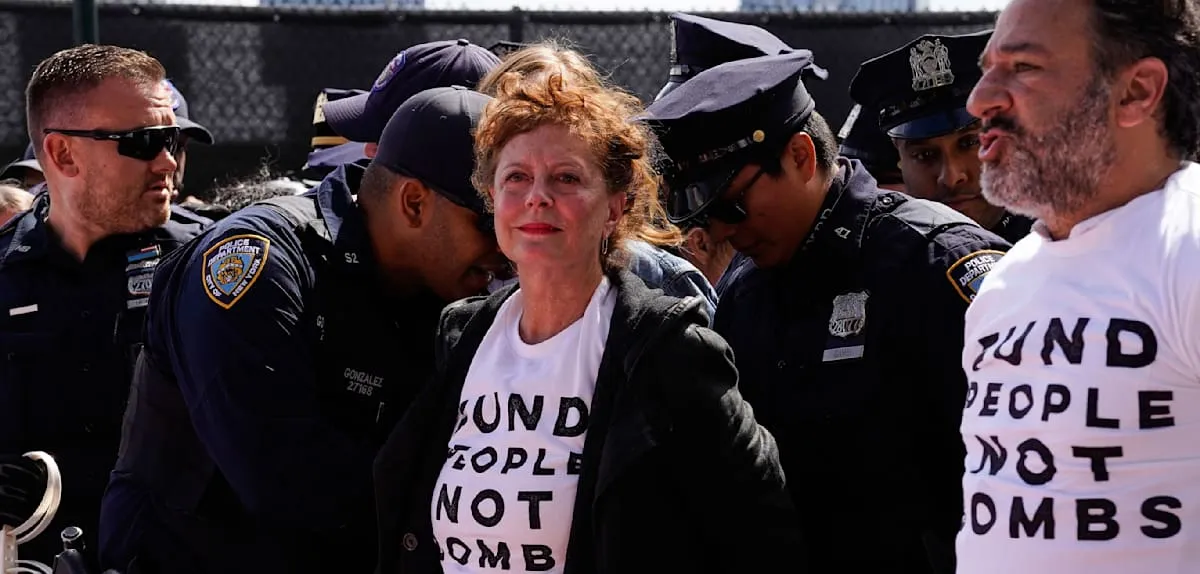
NEW YORK – Legendary Hollywood actress Susan Sarandon was detained by authorities after participating in an anti-Israel protest near the United Nations (UN) Headquarters in New York. The incident occurred when Sarandon, along with several other stars, refused to disperse from a street intersection, asserting their demands to stop what they referred to as 'genocide'.
The arrest garnered global public attention, highlighting the increasing involvement of public figures in sensitive humanitarian issues. The demonstration took place parallel to important UN agendas, attended by delegates from various countries.
The protesters carried various placards with strong slogans, including 'Stoppt den Genozid' or 'Stop the Genocide,' directed at Israeli Prime Minister Benjamin Netanyahu. This action is part of a broader wave of protests worldwide, demanding accountability for the ongoing humanitarian crisis.
Local police, after repeatedly warning the crowd to clear the intersection deemed disruptive to public order, eventually made arrests. Sarandon, known for her vocal advocacy on social and political issues, remained firm in her stance.
The involvement of celebrities like Sarandon in such demonstrations often sparks debate. Some praise their courage in using their platforms for important issues, while others view it as a form of potentially uninformed intervention.
This protest specifically targeted Prime Minister Netanyahu's visit for the UN General Assembly, hoping to exert international pressure on his government's policies. Protesters hoped their actions would compel more serious attention from the global community.
Sarandon's detention is not her first involvement in political activism. Throughout her career, she has been a supporter of various human rights and social justice movements, often drawing media attention to causes she believes in.
The arrest incident occurred amid a heated global political climate, where the conflict in the Middle East continues to be a major focus. The international community is increasingly divided in its response to the situation, creating deep polarization of views.
The event in New York indirectly recalls debates about the right to speak and demonstrate in public spaces, especially when involving famous figures who can significantly influence public opinion.
The New York City government affirmed its commitment to respecting the right to demonstrate but also emphasized the importance of maintaining public order and safety. The line between freedom of expression and law enforcement remains a constantly debated boundary.
Editorial Insight:
Susan Sarandon's arrest underscores both the power and vulnerability of celebrity activism on the global stage. While drawing widespread attention, such actions are also high-risk and can fuel polarization. The presence of public figures in these demonstrations effectively brings issues to the forefront, yet their long-term effectiveness in influencing policy remains a significant question. It also serves as a reflection of how protests and law enforcement responses will continue to evolve in 2026, particularly in major cities that serve as international diplomatic hubs.