 Gabriella
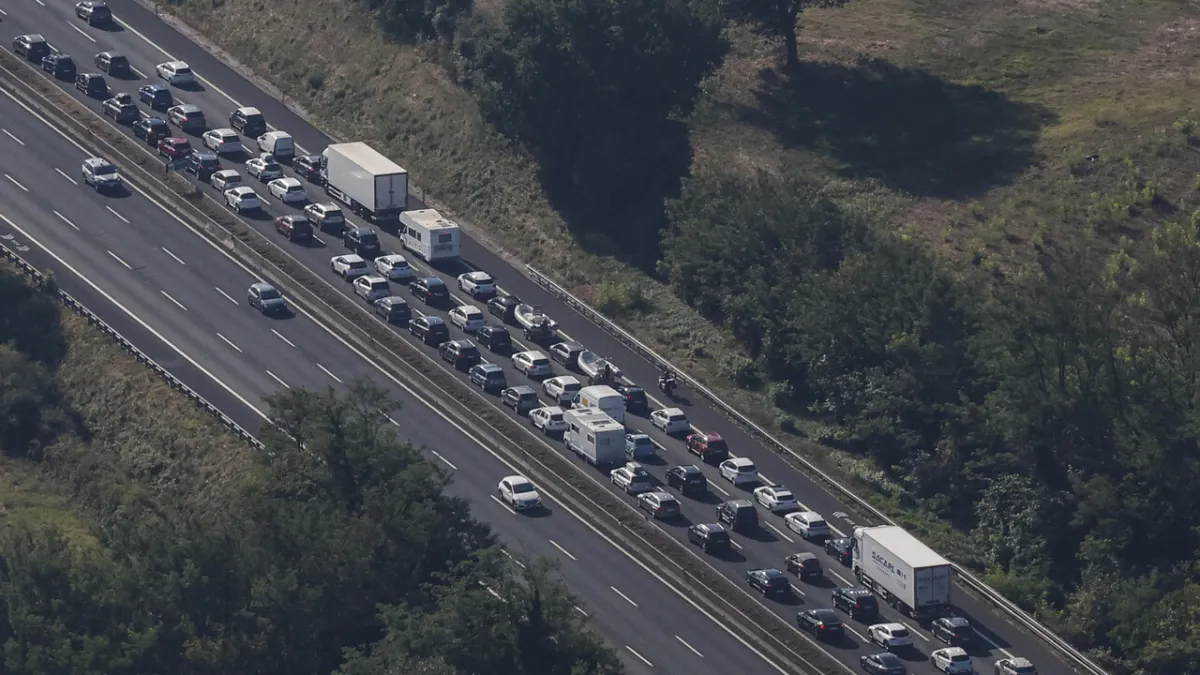
ROME – Millions of Europeans are anticipated to face the most massive traffic congestion in the history of the 2026 summer holiday, expected to peak this Saturday. Transport authorities in several countries have declared a \"bollino nero\" or black dot status, indicating extremely high traffic intensity, with a surge in vehicle volume already commencing today. This warning follows predictions of a massive exodus, an annual phenomenon where the desire for holidays meets infrastructure challenges.
\"Bollino nero\" is the highest alert code used by traffic authorities in some European countries, especially Italy, to describe road conditions approaching or exceeding maximum capacity, potentially causing hours-long queues. This situation demands extra preparation from travelers, ranging from planning alternative routes to readiness for significant delays.
Popular holiday centers along the Mediterranean coast, mountain resorts in the Alps, and main corridors connecting major cities in France, Germany, and Spain are predicted to be the most congestion-prone areas. Destinations such as the Cote dAzur, Costa del Sol, and the Dolomites are expected to be primary magnets for both domestic and international tourists.
This summer exodus is driven by school closures, extended company holidays, and deep-rooted family traditions to spend time outdoors during the warmer months. Many opt for road trips using private vehicles, leading to a concentration of vehicles on major highway networks.
Governments and public transport agencies have issued strong appeals for the public to postpone non-essential travel or consider other modes of transport such as trains. \"We highly recommend that people planning to travel this Saturday depart earlier, or even postpone until Sunday morning to avoid peak congestion,\" said a spokesperson for the Italian traffic authorities, Giovanni Rossi.
This surge in movement not only affects traffic flow but also has significant economic implications. The tourism, hospitality, and retail sectors in holiday destinations will enjoy substantial gains. However, logistical operational costs also increase, along with potential losses due to delayed goods supplies.
In recent years, with post-pandemic normalization, summer traffic volumes have returned to pre-2020 levels. Data indicates that last year's return peak also showed a similar pattern, strengthening projections for extreme conditions this weekend. Authorities have learned from previous experiences to optimize the deployment of officers and emergency units.
The risk of traffic accidents also increases proportionally with vehicle volume and travel duration. Driver fatigue, lack of attention, and frustration due to congestion are often contributing factors to incidents. Emergency services, including ambulances and tow trucks, are on high alert to respond to any occurrences.
Technology plays a crucial role in mitigating impacts. Real-time data-based navigation apps, digital information boards on highways, and special traffic radio broadcasts serve as primary information sources for drivers. However, their effectiveness still depends on the infrastructure's ability to handle data volume and response speed.
Travelers are advised to ensure their vehicles are in excellent condition, carry sufficient supplies, and plan regular breaks. Patience and vigilance are key to undertaking a safe and minimally stressful journey amidst this unavoidable summer traffic crunch.
Editorial Insight: The \"bollino nero\" phenomenon is more than just ordinary seasonal congestion; it reflects the complexity of modern mobility in Europe. The increasing number of private vehicles, infrastructure limitations, and mass holiday traditions continue to be fundamental challenges. Long-term solutions require sustained investment in high-capacity public transport and incentives to encourage changes in travel behavior, while balancing individual freedom with environmental sustainability.