 Chris Robert
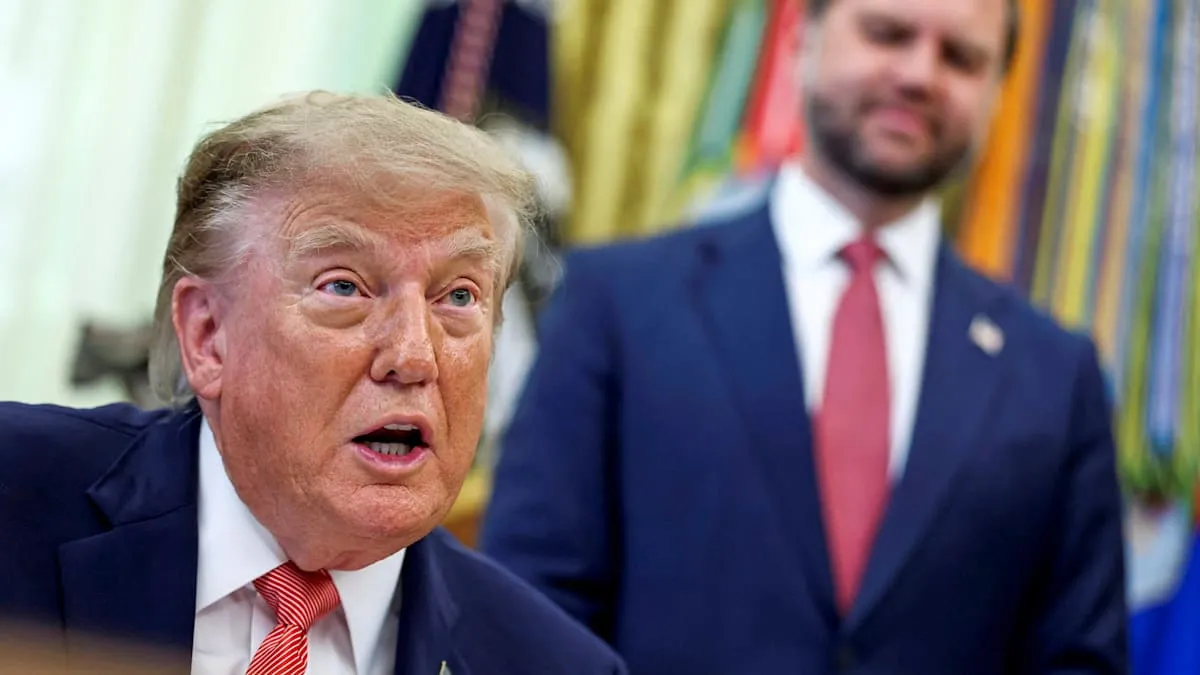
Washington, D.C. – United States President Donald Trump is significantly increasing pressure on Ukrainian President Volodymyr Zelenskyy, urging him to promptly agree to a peace deal with Russia. This diplomatic push is accompanied by a misleading narrative regarding the failure of Russia's initial large-scale invasion of Kyiv, raising profound questions about the motives behind Washington's strategy.
Trump, now serving again as the head of the superpower, has consistently voiced his strong desire to end the conflict in Ukraine, a promise that formed one of the main pillars of his campaign. However, his current approach has drawn sharp criticism from various parties, both domestically and within the international community, particularly due to the rhetoric accompanying his insistence.
Trump's statements claiming that the failure of Russia's early invasion of Kyiv was due to Ukraine's flawed strategy, rather than the tenacious resistance of the Ukrainian people and military along with Western support, are considered to distort historical facts. This analysis, according to observers, tends to minimize Russian aggression and shift the burden of responsibility for the conflict's continuation.
President Zelenskyy himself has steadfastly maintained that any peace agreement must respect Ukraine's sovereignty and territorial integrity. This position contrasts sharply with the pressure now being exerted by Washington. Previously, Trump had indicated a bold strategy to push Kyiv to surrender, which raised concerns among allies.
Such a push for negotiations under these conditions could potentially weaken Ukraine's bargaining position at the negotiating table. With a narrative that corners Kyiv, there are fears that any resulting agreement might be more beneficial to the aggressor, rather than based on principles of justice and international law.
European allies and NATO member states are watching this situation with great caution. Many worry that US pressure could divide the unified front that has supported Ukraine, while simultaneously lending legitimacy to Russia's views on the conflict.
Trump's move could also have broader geopolitical implications. It might set a dangerous precedent for future conflict resolutions, where major powers dictate peace terms without considering the sovereignty and rights of victims of aggression.
Within the United States itself, the pressure on Zelenskyy and Trump's controversial narrative have reignited fierce debate among policymakers. Political factions are divided between those who advocate a realistic approach to ending the war and those who insist on unconditional support for Ukraine.
Historical observers recall that such precedents have occurred in various global conflicts, where diplomacy sometimes sacrifices principles for short-term stability. However, proponents of Ukraine argue that this conflict is different, involving fundamental principles of the international order.
The future of Ukraine-Russia peace negotiations is now increasingly uncertain. With one party feeling pressured by its biggest ally and the other potentially benefiting from a biased narrative, the path to a just resolution appears to be growing steeper.
The world awaits how President Zelenskyy will respond to this direct pressure from the White House, and whether the narrative presented by President Trump will influence global public perception of this long-running war.
Editorial Insight: President Donald Trump's move to pressure Volodymyr Zelenskyy into a peace agreement with Russia, exacerbated by a misleading narrative regarding Kyiv's invasion failure, represents a high-risk diplomatic maneuver. This pressure not only risks undermining Ukraine's morale and bargaining position but also erodes allies' trust in US leadership for maintaining international order. If a peace deal is forged under duress and biased narratives, it could establish a dangerous precedent for future global conflicts, suggesting that aggression can be rewarded through negotiations that disregard justice. This situation demands extra caution from all stakeholders to ensure that any peace achieved is sustainable and equitable.