 Robert Andrison
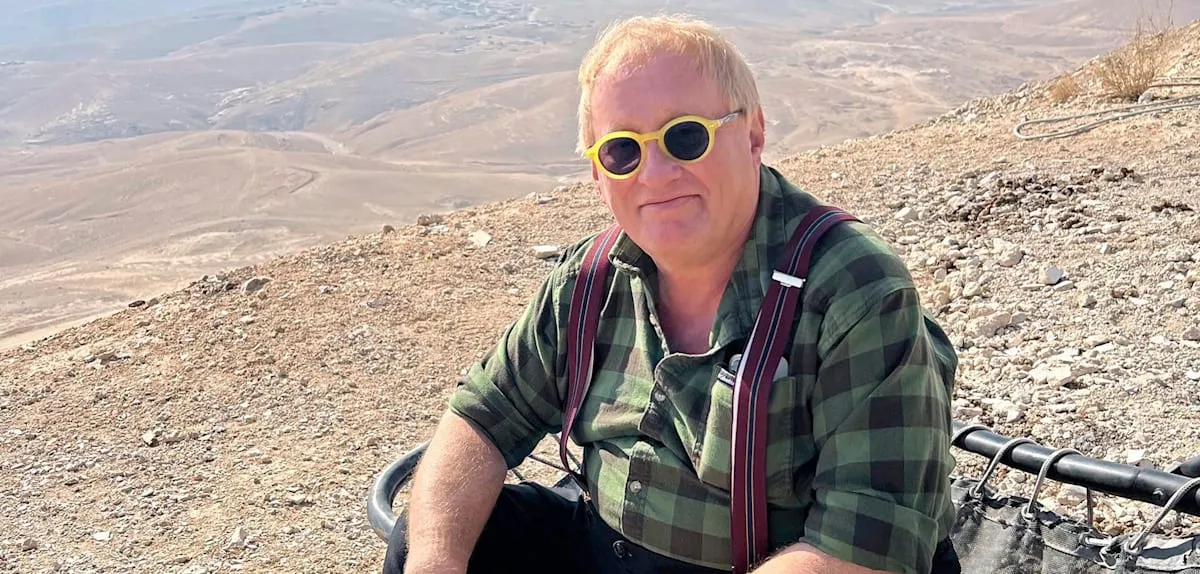
RAMALLAH – Author and journalist Tuvia Tenenbom has stirred public discourse with his eight-month immersive investigation among Jewish settler communities in the West Bank. His revelations expose the harsh realities of settler life, often marginalized from global media narratives, portraying them as individuals who are poorly fed, struggle with humor, and feel betrayed by Israeli politicians themselves.
Tenenbom, known for his immersive investigative style, infiltrated the daily lives of a group frequently demonized worldwide. He approached his subject not as a judge, but as an observer seeking to understand their perspective from within, a methodology rarely employed by mainstream journalism.
The eight-month experience unveiled an often-unseen side of the Israeli-Palestinian conflict. The settlers he encountered, according to Tenenbom, face substantial hardships, not only physical but also psychological.
No one is there with a camera when Arabs kill settlers, Tenenbom stated, highlighting what he perceives as a media bias that often focuses solely on the suffering of one side. This declaration underscores a profound concern regarding the imbalance of representation in international reporting.
He also observed that many settlers live under severe economic constraints. Food insecurity emerged as a significant issue, with diets often lacking proper nutrition. This aspect contributes to the overall picture of their high-pressure lives, far from any glamorous portrayal.
Furthermore, Tenenbom recounted his impression that West Bank settlers often struggle to understand or appreciate jokes. This could indicate the high levels of stress and anxiety they continuously experience amidst an environment fraught with political and security tensions.
The most poignant aspect of Tenenbom's report is the settlers claim of feeling betrayed by Israeli politicians. They believe the government has failed to protect their interests and well-being, despite their presence on the front lines of the conflict.
Narratives surrounding Jewish settlers in the West Bank are often oversimplified by global media, depicting them as a monolithic entity without considering the diversity of individual experiences and hardships. Tenenbom's exploration seeks to dismantle these stereotypes.
This report incites debate regarding the objectivity of media coverage and the challenges of comprehending such a complex conflict. Tenenbom's approach offers an alternative lens, prompting reflection on how stories from conflict zones are presented to the public.
The discussion about settler life in the West Bank becomes increasingly crucial given the constantly evolving geopolitical dynamics of the Middle East region. The United Nations has repeatedly called for a peaceful and just resolution for all parties involved.
Editorial Insight: Tenenbom's investigation highlights the fragility of single narratives in conflict journalism. By prioritizing real-life experiences, he successfully unearths layers of complexity often overlooked. Such reports are fundamental in fostering a more nuanced understanding, beyond mere black-and-white reporting, especially in sensitive regions like the West Bank, and can serve as a mirror for international media to delve deeper into their coverage.