 Demian Sahputra
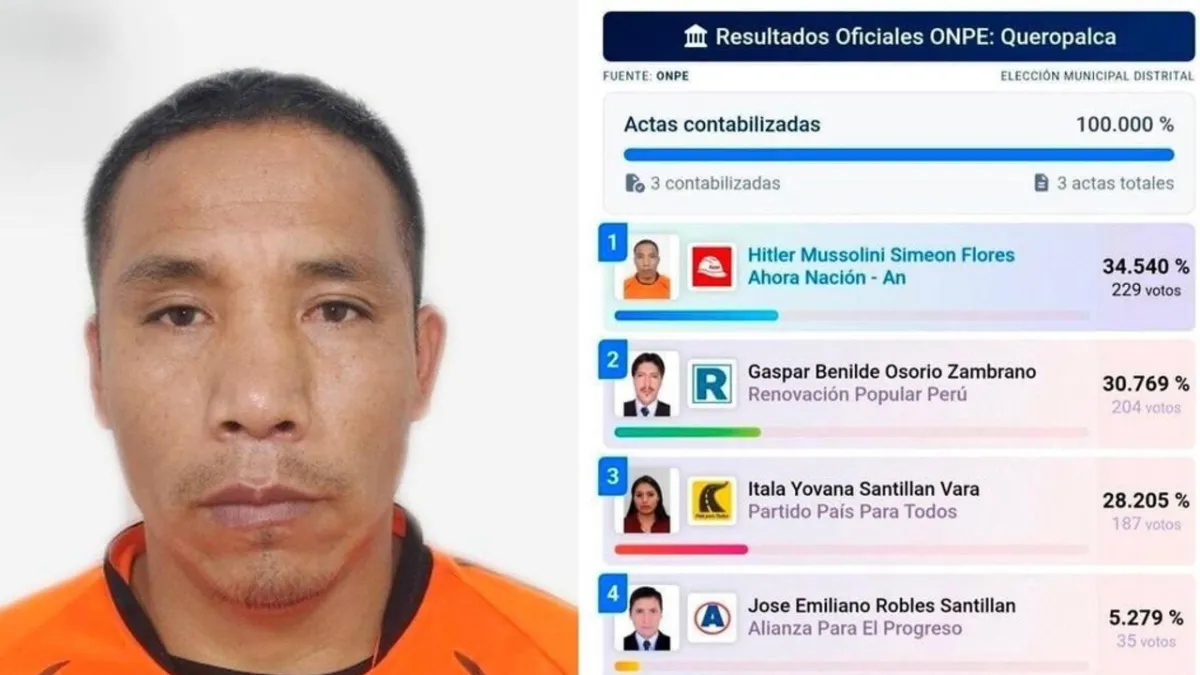
Queropalca – A global political sensation has swept Peru following the election of a candidate named Hitler Mussolini Simeon as mayor in the district of Queropalca. Simeon's victory in the 2026 general election immediately sparked widespread media uproar and intense discussion across various digital platforms worldwide, given the controversial historical connotations of his name.
The man who now leads one of the territories in Lauricocha Province, Huanuco Region, has garnered public attention not only for his vision and mission but also due to the combination of his names, which evoke the dark memories of 20th-century history. The name Hitler refers to the German dictator, Adolf Hitler, while Mussolini points to the Italian fascist leader, Benito Mussolini.
News of Simeon's victory first appeared in local Peruvian media before quickly spreading and becoming an international headline. Many, including journalists and political observers, highlighted how an individual with such ideologically charged names could garner majority support from voters.
General elections in Peru, as in many other democracies, often present unexpected dynamics. The case of Hitler Mussolini Simeon illustrates the complexity of factors influencing voter decisions, ranging from local issues to a candidate's personal appeal, regardless of their name's associations.
Observers view this phenomenon as a reflection of various aspects within a democratic system. The community's choice in Queropalca might have been based more on Simeon's track record in the community, campaign promises relevant to local needs, or even proximity to citizens, rather than broader historical considerations. Similar phenomena, where public votes play a crucial role in shaping the political landscape, are also evident in the electoral revolution in Italy which transformed the national political structure.
The controversial name itself inadvertently provided massive publicity. Prior to election day, Hitler Mussolini Simeon's name was already a topic of conversation, attracting attention that might not have been received by other candidates with more common names.
The phenomenon of unusual names in politics is not new in Peru. Several years ago, other unique politicians named Lenin and Bin Laden were also noted to have made their mark on the local political stage. This indicates a certain cultural tolerance or, perhaps, indifference to names in a local context.
Simeon's victory in Queropalca will certainly test his ability to prove himself as a competent and dedicated leader. His focus now is on how he can run the administration, overcome developmental challenges in his region, and build broader public trust.
International media will continue to monitor the performance of Mayor Hitler Mussolini Simeon. His responsiveness and leadership effectiveness will be under scrutiny, especially in meeting public expectations and the stigma that might accompany his name in the eyes of the world.
This story also serves as a reminder of the essence of democracy, where every citizen has the right to vote and be elected, as well as the freedom to shape their identity. Ultimately, what matters most is integrity and commitment to public service.
Editorial Insight: The election of Hitler Mussolini Simeon as mayor in Queropalca is a fascinating political anomaly, highlighting the boundary between personal identity and public perception within a democratic system. This case is not just about an individual with a controversial name, but also about how societies choose their leaders, often prioritizing local context over global narratives. It challenges our understanding of how identity, history, and politics interact, and affirms that in a democracy, election results can sometimes defy all predictions. This event can also serve as an intriguing case study for political scientists, particularly in understanding voter psychology and the impact of media coverage on local elections.