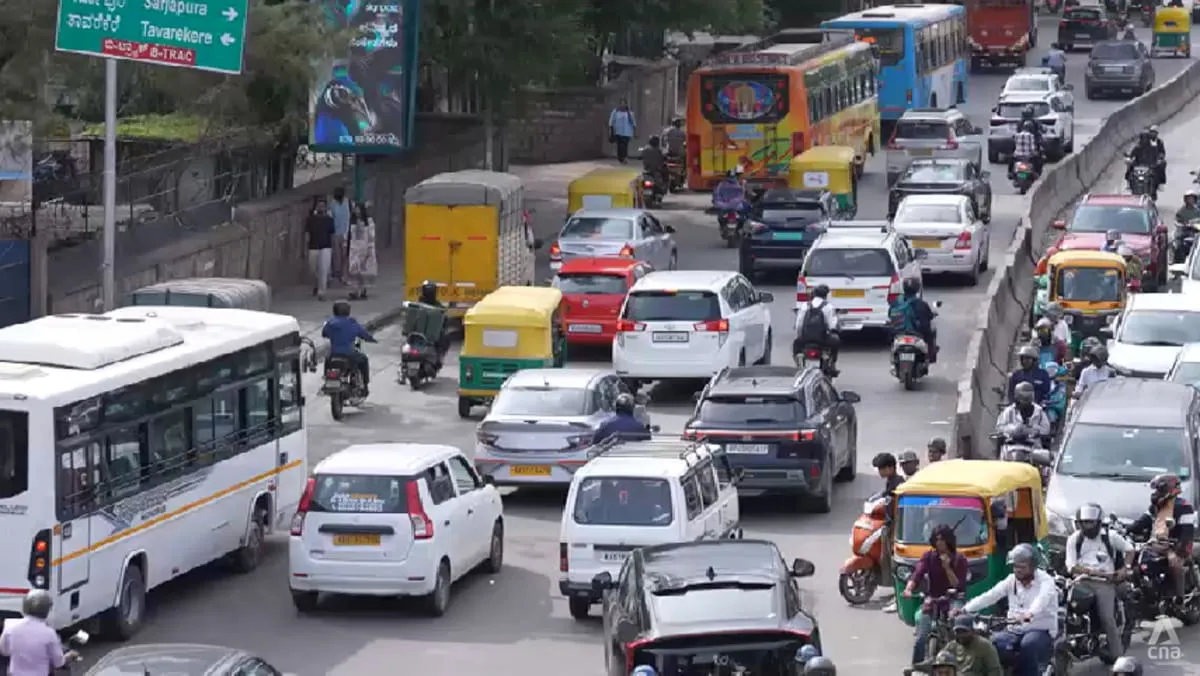
BENGALURU – India's prominent tech hub, Bengaluru, continues to face a complex paradox in 2026. Despite aggressive efforts by local authorities to expand its public transport network through new metro lines and bus fleets, its residents remain locked into a dependence on private vehicles. Poor connectivity and pervasive road safety concerns are the primary obstacles preventing these initiatives from alleviating the chronic congestion plaguing this innovation epicenter.
Over the past few years, significant investments have been poured into modernizing the city's transport infrastructure. New metro lines are continuously under construction, promising more efficient mobility for millions of citizens. Similarly, the number of public buses has increased to reach previously underserved areas. However, the pace of this infrastructure growth has not been matched by comprehensive solutions to fundamental underlying problems.
A recent study indicates that despite a significant increase in physical coverage, intermodal transport integration remains critically weak. Many metro stations and bus stops lack adequate supporting facilities for pedestrians or cyclists, forcing residents to use private vehicles to reach their initial or final travel points.
This connectivity gap is compounded by the city's often pedestrian-unfriendly design. Poorly maintained sidewalks, a scarcity of safe crossings, and the constant threat from dense traffic make walking or cycling an unappealing, and often unsafe, option for most residents.
'I frequently use the metro to get to work, but the journey from my home to the station takes longer than the metro ride itself because there's no direct bus route,' stated Ravi Kumar, a software engineer living on the outskirts of Bengaluru. 'Ultimately, I choose to drive my car, even though I know I'll be stuck in traffic.'
Road safety concerns also act as a crucial deterrent. Traffic accident rates in Bengaluru remain high, particularly for pedestrians and motorcyclists. This creates a perception that driving a private vehicle is the safest option, regardless of the costs and time spent enduring congestion.
City authorities and urban planners face a substantial challenge. They must focus not only on physical construction but also on developing an integrated and safe transport ecosystem. Without a holistic approach, the expansion of public transport networks will only be a partial and ultimately ineffective solution.
Urban experts suggest that Bengaluru authorities study other cities that have successfully integrated their transport systems. Singapore, for instance, boasts a well-interconnected public transport system that encourages its residents to reduce reliance on cars. Similar phenomena are observed in other Asian cities striving to address congestion problems, as highlighted in reports such as 'Singapore-Malaysia on High Alert for Severe Congestion: Year-End Holidays Could Paralize Traffic' or 'Global Electrification Targets Hit a Roadblock: UN Negotiations Stalled on Traffic Jams'.
The challenge for Bengaluru lies in transforming public mindset while simultaneously providing genuinely competitive alternatives to the perceived convenience of private vehicles. This necessitates long-term policies, sustained investment in 'last-mile' connectivity, and enhanced awareness of road safety.
Infrastructure development alone, without considering the social aspects and user behavior, will continue to lead to inefficiencies. Given Bengaluru's status as a tech hub that continuously attracts talent and investment, traffic burden is predicted to increase further if this fundamental issue is not addressed promptly.
Editorial Insight: Bengaluru's struggle to alleviate congestion mirrors the rapid urbanization challenges in many major global cities. The core issue is not merely building more, but building intelligently and integrally. The failure to unify transport elements, from metros to sidewalks, creates a disincentive for users. For 2026 and beyond, Bengaluru needs to re-evaluate its development strategy, emphasizing intermodal connectivity, pedestrian safety, and incentives for public transport usage, to reduce its carbon footprint and enhance the quality of life for its citizens.