 Debby Wijaya
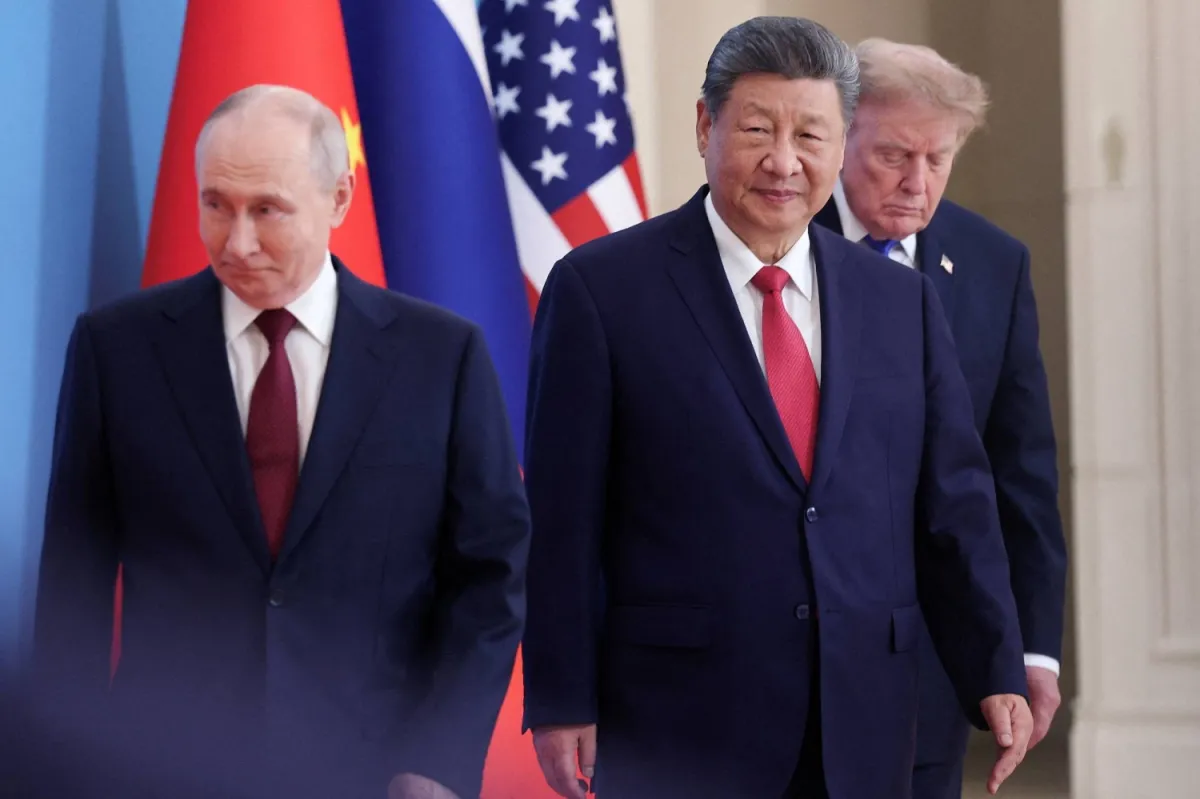
TOKYO – Japan has officially voiced its profound apprehension regarding the potential for regular summit meetings among the United States, Russia, and China. This concern stems from Tokyo's perspective that the prevailing international order, particularly the enforcement of global rule of law, could be jeopardized by a consolidation of power among these three major global players. Prime Minister Fumio Kishida, through his spokesperson, affirmed Japan's unwavering commitment to upholding stability and the supremacy of law in the increasingly complex geopolitical landscape of 2026.
Japan's unease is well-founded. From the viewpoint of Tokyo diplomats, trilateral meetings excluding other nations could erode the principle of multilateralism and diminish the role of global institutions such as the United Nations and economic forums like the G7 or G20. This is feared to create a power bloc potentially dictating the global agenda, overlooking the interests of middle and smaller powers.
President Donald Trump, who returned to office in 2025, has often shown a preference for direct bilateral or trilateral diplomacy. This approach is reflected in issues such as dialogues on global energy stability and even in sensitive discussions concerning peace efforts with Russia or technology agreements with China. This pragmatism, while effective in certain cases, often raises questions about its impact on collective security architecture.
Conversely, Russia under Vladimir Putin continues to strive for recognition as a global power equal to the United States and China. Its aggression in Eastern Europe and involvement in regional conflicts reinforce Russia's image as a player willing to challenge the status quo. Regular summits would significantly strengthen Moscow's geopolitical standing.
China, with its expanding economic and geopolitical ambitions through the Belt and Road Initiative and territorial claims in the South China Sea, is also a central actor in global power dynamics. Beijing, which historically has complex relationships with both Moscow and Washington, may see this forum as an opportunity to solidify its influence on the world stage.
Japan, as a key democratic ally of the United States in Asia and a vital global economic player, believes that the post-Cold War international order was built on principles of openness, transparency, and the rule of law. Closed-door meetings between these three nuclear powers could potentially undermine these foundations, creating uncertainty and instability.
Political analysts in Tokyo consider that dialogue among major powers is indeed crucial for preventing conflict escalation, but its format and inclusivity are equally important. If such summits only involve three parties without broad consultation, it could create a perception that the world is divided into spheres of influence, disregarding the voices of other directly affected nations.
Japan will continue to work towards strengthening global governance based on law and fostering inclusive dialogue. We believe that global stability and prosperity can only be achieved through broad cooperation, not through decisions made by a select few powers, a senior diplomat from Japan's Ministry of Foreign Affairs stated in a closed briefing.
The implications for the Indo-Pacific region are also a primary concern. This region has become an arena of strategic competition among major powers. If the US, Russia, and China reach certain understandings without involving regional players, it could shift the balance of power and trigger security uncertainties, particularly for countries like Japan, South Korea, and Australia.
Tokyo is not only expressing concern but also taking diplomatic steps to strengthen its traditional alliances, including with the United States and other G7 members. Japan is actively promoting the reinforcement of trade rules, maritime security, and technological cooperation as a counterbalance to this potential global power shift.
Editorial Insight:
Japan's concerns highlight a core dilemma in modern geopolitics. While dialogue among great powers is essential for crisis management, the potential for forming exclusive blocs can erode trust and collective principles that underpin the global order. Japan, as a key proponent of international liberalism in Asia, is at the forefront of efforts to maintain an inclusive multilateral framework, a task that becomes increasingly challenging amidst the power dynamics of 2026. The prospect of such summits demands greater transparency and a commitment not to sacrifice global interests for immediate gains.