 Robert Andrison
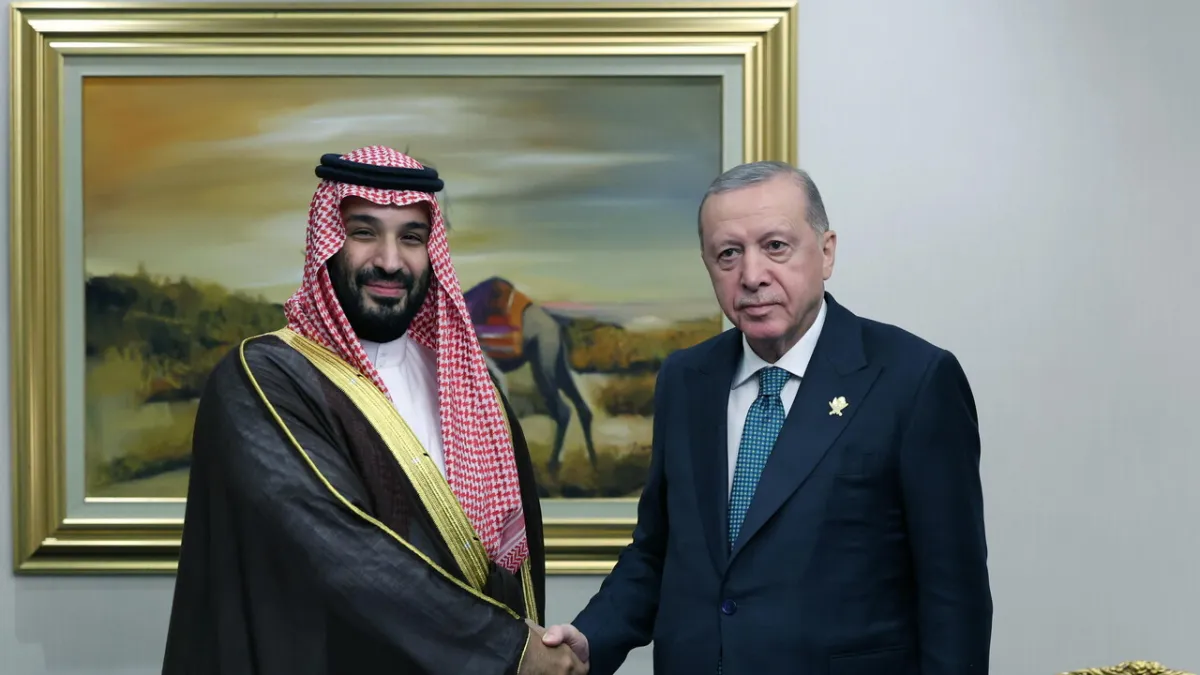
JEDDAH – A crucial defense pact has been officially signed in Jeddah, Saudi Arabia, involving three significant regional powers: Turkey, Saudi Arabia, and Pakistan. This historic agreement, inked by Turkish President Recep Tayyip Erdogan, Saudi Crown Prince Mohammed bin Salman, and Pakistani Prime Minister Shehbaz Sharif, is projected to form a new security bloc with profound geopolitical implications in the Middle East and South Asia in 2026.
The signing of this pact, which took place amidst intense international scrutiny, marks a new chapter in the efforts of the three nations to strengthen military cooperation, intelligence sharing, and coordinate joint defense strategies. Leaders stated that the alliance aims to address complex security challenges, ranging from terrorism to broader regional threats.
President Erdogan, in his speech, emphasized the importance of solidarity among Muslim nations to maintain stability and sovereignty. “This alliance is not just about physical defense, but also about defending shared values and the future of a peaceful region,” he remarked, underscoring Ankara’s commitment to closer regional cooperation.
Similarly, Crown Prince Mohammed bin Salman highlighted the capacity of the three countries to contribute to global security. “Saudi Arabia, along with Turkey and Pakistan, possesses immense potential to be a pillar of stability. This pact is a tangible manifestation of our willingness to invest in collective security,” Bin Salman stated, emphasizing Riyadh’s strategic role.
Prime Minister Sharif of Pakistan also added a critical dimension to the pact, seeing it as a crucial step in strengthening Islamabad’s defense posture and expanding its diplomatic reach. “This partnership will provide a solid framework for military technology exchange, joint exercises, and enhancing collective defense capabilities,” Sharif explained.
At the core of this pact are several key points expected to form the foundation of future cooperation:
- Enhanced Intelligence Exchange: Strengthening coordination in confronting threats of terrorism and extremism.
- Joint Military Exercises: Conducting a series of military drills to improve interoperability and rapid response.
- Defense Industry Cooperation: Facilitating technology transfer and co-production of military equipment.
- Defense Policy Coordination: Aligning views and strategies on regional and international security issues.
International geopolitical observers assess that this pact could serve as a counterbalance to the influence of other powers in the region, while also providing a platform for the three countries to assert their strategic independence. This move can also be seen as a response to the increasingly complex shifts in global and regional power dynamics.
Nevertheless, some analysts also warn of potential challenges accompanying such an alliance, including differing national interests and the dynamics of relations with superpowers. However, the initial consensus suggests that the potential strategic gains far outweigh the risks.
Turkey, with its significant military strength and influence in the Eastern Mediterranean, along with Saudi Arabia, an economic and military power in the Persian Gulf, and Pakistan, possessing a large armed force and nuclear expertise, form a formidable combination. This alliance will be closely watched by various international actors monitoring developments in the Middle East and South Asia.
Now, the ball is in the court of the technical and military committees of the three countries to translate this political agreement into concrete action plans. The implementation of this pact in the coming years will be a key indicator of the success of this nascent strategic alliance.
Editorial Insight: The defense pact between Turkey, Saudi Arabia, and Pakistan is not merely ceremonial but represents a significant shift in global security architecture, particularly within the Muslim world. Amidst the geopolitical uncertainties of 2026, this alliance has the potential to become a vital balancing force, challenging traditional hegemonies, and creating new security corridors stretching from Eastern Europe, through the Middle East, to South Asia. Its sustainability and effectiveness will heavily depend on long-term political commitment and the ability to overcome internal differences and external pressures.