 Gabriella
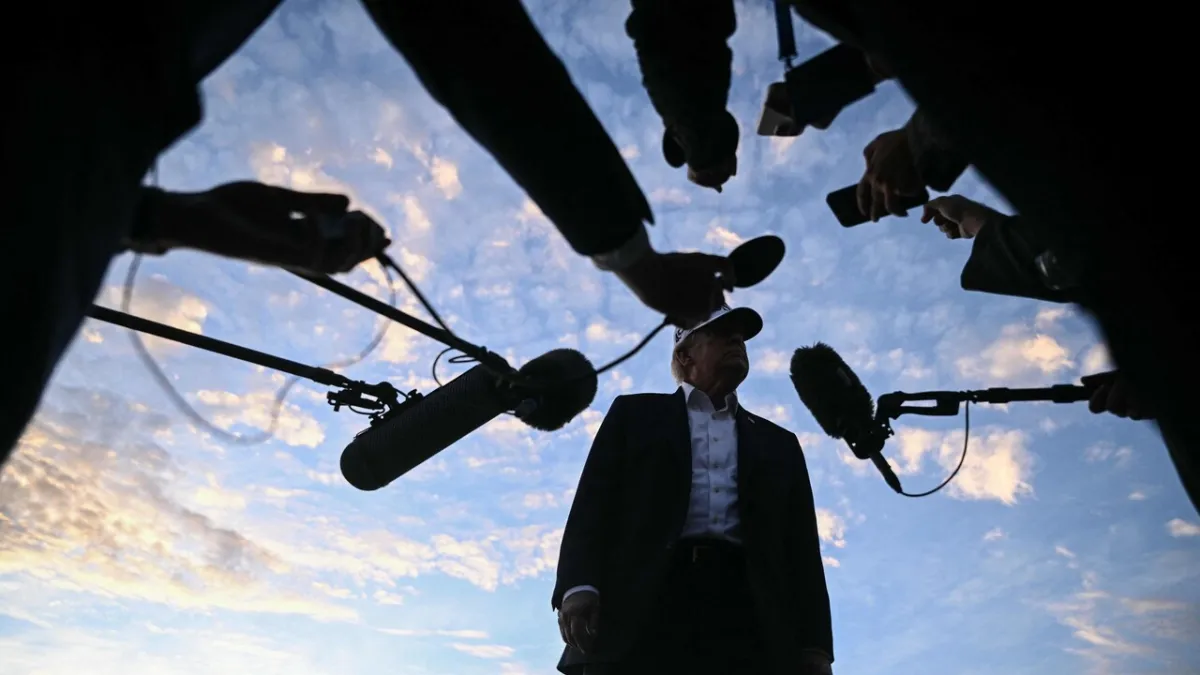
WASHINGTON – United States President Donald Trump has emphatically declared himself the sole crucial bulwark capable of controlling the pace and potential threats of artificial intelligence (AI) to civilization. This provocative statement emerges amidst calls from China highlighting the need to de-escalate excessive alarmism regarding this disruptive technological advancement, while Canada, conversely, proposes the establishment of a global regulatory body.
During a press conference at the White House, President Trump underscored his vision of his central role in ensuring AI develops responsibly without threatening the foundations of society. He claimed his leadership is essential to balance innovation with the mitigation of extreme risks that may arise from this advanced technology.
In contrast to Trump's rhetoric, Beijing, through its Chief of Intelligence, issued a warning about the potential dangers of AI, yet simultaneously called for the public narrative not to be dominated by disproportionate fears. China, a major player in AI development, appears to be balancing the acknowledgment of risks with the encouragement of unhindered innovation.
Statements from Beijing indicate a dual strategy: recognizing national security risks and potential manipulation, but also wishing to avoid stringent regulations that could impede their competitive edge. This reflects the global internal debate on how to balance AI's transformative potential with its existential threats.
Meanwhile, from Ottawa, Canada has gone further by proposing the establishment of an independent global organization to oversee and regulate AI development. This proposal aims to create a coherent international framework, prevent an uncontrolled AI arms race, and ensure uniform ethical standards.
Canada's proposal has garnered support from several European nations also concerned about the lack of global governance for AI. They perceive a need for international consensus to address challenges that transcend national borders, such as data privacy, algorithmic bias, and the potential military application of AI.
The debate over AI regulation has intensified in recent years, with various experts and world leaders voicing concerns. President Trump himself previously criticized strict limitations on AI, warning that 'negative forces lurk in internet control' if innovation is too constrained. This statement can be read further in the article Trump Criticizes AI Restrictions, Negative Forces Lurk Internet Control.
Some parties argue that the 'sole controller' or 'bulwark' narrative advanced by Trump may reflect an ambition to position the United States as the dominant leader in determining the future direction of AI. However, this could also create tensions with other nations that desire a collaborative approach.
This convergence of differing views—from the US's claim of sole control, China's caution, to Canada's call for global governance—highlights the complexity of regulating a technology whose development far outpaces current regulatory capacities. It requires careful diplomacy and mutual understanding among superpowers to shape a safe and beneficial future for AI.
The development of AI technology, from machine learning algorithms to autonomous systems, continues to show extraordinary leaps. Each country strives to secure a leading position in this innovation, while simultaneously grappling with unresolved ethical and security dilemmas.
Editorial Insight:
President Trump's rhetoric, positioning himself as the sole 'bulwark' for AI, while provocative, actually reflects a vacuum in global leadership on this issue. While China seeks to navigate between risks and ambitions for technological hegemony, Canada's proposal for a global regulatory body offers a realistic middle ground. Without strong international coordination, the future of AI risks falling into regulatory fragmentation and potential geopolitical conflict, where each nation is busy defining its own version of 'safe limits.' This is an arena that demands more than just claims of leadership; it requires substantial multilateral cooperation.