 Dodi Irawan
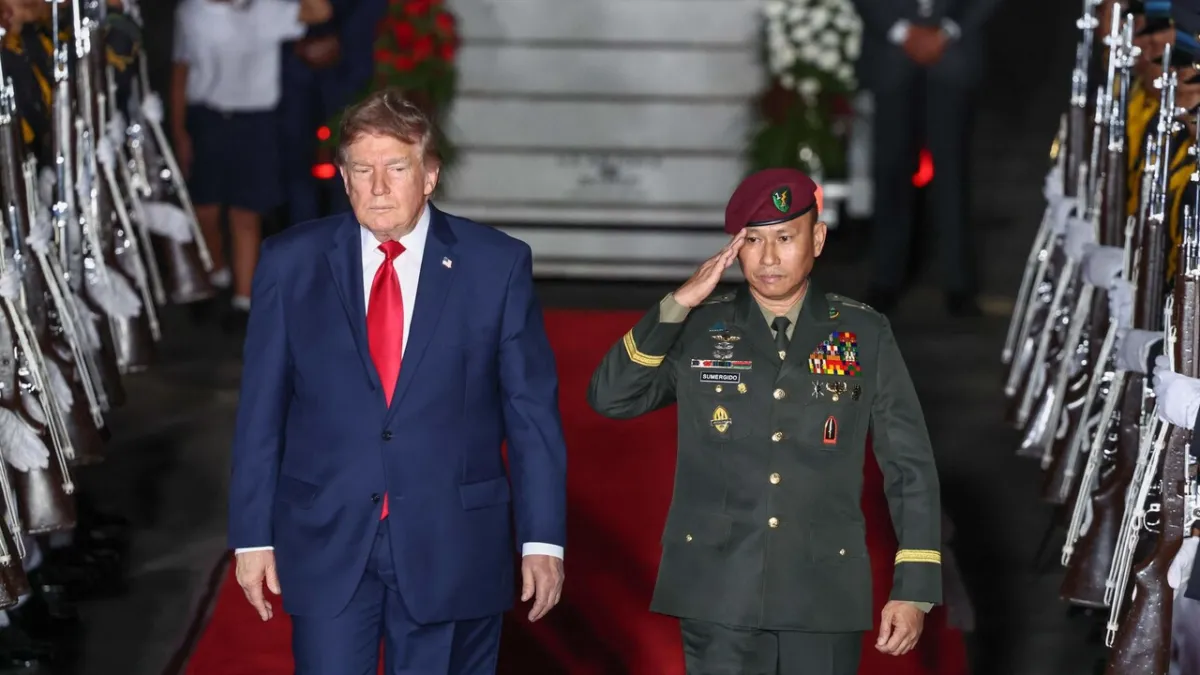
MANILA – United States President Donald Trump arrived in Manila today for a crucial Summit. The visit aims to strengthen strategic alliances with the leaders of India, Japan, and Australia, while also anticipating a pivotal trilateral meeting in China tomorrow with Presidents Xi Jinping and Vladimir Putin. This event marks the intensity of regional geopolitical dynamics in 2026, highlighting US efforts to solidify influence amid global power competition.
Trump's arrival in the Philippine capital has been met with close scrutiny from various parties, including several groups protesting in different parts of the city. As previously reported, the unrest in Manila welcoming Trump has indeed been part of the narrative surrounding significant diplomatic visits in Asia. The main focus of the Manila visit is the Quad summit, a strategic security dialogue forum between the US, Japan, India, and Australia.
The leaders of the four nations engaged in in-depth discussions on various regional and global issues. The agenda included strengthening maritime security in the South China Sea, enhancing economic cooperation, and joint strategies to counter transnational threats. This meeting reaffirms Washington's commitment to a free and open Indo-Pacific, aligning with the Trump Administration's vision for Asia.
In a brief press statement before the meeting, a senior White House official, who requested anonymity, stated, 'The Quad Summit in Manila is not just a routine meeting. It is a tangible manifestation of our efforts to build a resilient security architecture in the region, ensuring stability, and promoting shared prosperity.'
Tomorrow, global attention will shift to China, where President Trump is scheduled to hold a highly anticipated trilateral meeting. He will meet with Chinese President Xi Jinping and Russian President Vladimir Putin. The agenda likely includes regional stability, global trade issues, and increasingly complex cyber security challenges.
This trilateral meeting holds immense geopolitical significance, considering the often-complex relationships between the three nations, marked by both competition and pragmatic cooperation. For the United States, it presents an opportunity to navigate relationships with two major world powers that hold differing views on many international issues.
President Trump's marathon visit to Asia underscores the United States' ongoing diplomatic efforts to balance traditional alliance interests with direct dialogue involving rival powers. International political analysts view this maneuver as a careful strategy to mitigate tensions while opening avenues for constructive collaboration in strategic areas.
The impact of this series of meetings is expected to be felt across various sectors, from regional security stability to global market fluctuations. Investors and economic observers await concrete outcomes that may emerge, particularly regarding trade and investment policies.
President Trump's visit to Asia in 2026 is also inseparable from the context of global technological developments, including the issue of US chip restrictions that threaten Asian data centers. This issue will likely be touched upon in bilateral and trilateral discussions, given its broad impact on global supply chains and technological competition.
Editorial Insight: President Donald Trump's visit to Asia, particularly the series of summits in Manila and China, underscores the complexity of modern diplomacy amidst global power polarization. Washington's efforts to strengthen the Quad while simultaneously engaging directly with Beijing and Moscow reflect pragmatism in confronting geopolitical realities. The success of this visit will be measured not only by the commitments achieved but also by its ability to prevent escalation and open constructive channels of communication for the future. This is a significant gamble for the future stability of the Asia-Pacific.