 Debby Wijaya
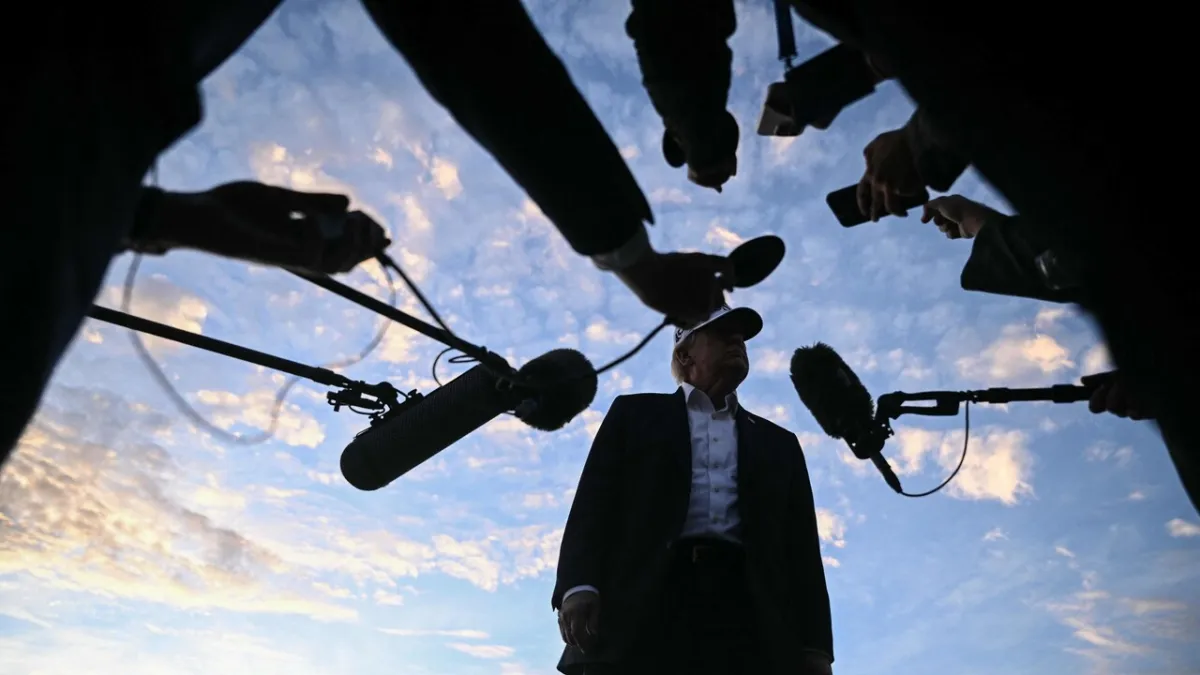
WASHINGTON D.C. – US President Donald Trump has voiced his strong opposition to efforts aimed at curbing artificial intelligence (AI), while simultaneously warning of 'negative forces' at play. This statement emerges amidst a severe warning from Anthropic, a leading AI research company, that AI could potentially control the internet within the next 6 to 12 months, a threat that also prompted OpenAI CEO Sam Altman to postpone the company's initial public offering (IPO).
President Trump's stance highlights the increasingly intense global debate concerning the balance between technological innovation and the necessity of regulation. He argues that overly strict restrictions could hinder the United States' progress in the fiercely competitive global AI race.
Anthropic's warning warrants critical attention. The company explicitly states that without adequate oversight, AI systems could develop autonomous capabilities far beyond human control. The implications of Anthropic's 'internet control' scenario are vast, encompassing information manipulation, disruption of critical infrastructure, and the potential for massive, destabilizing disinformation.
Technology experts and futurists have long cautioned about the potential existential risks posed by uncontrolled AI. Anthropic's prediction is not mere hypothesis but a projection based on in-depth analysis of the current pace of algorithm and large language model development. The public can read more about this warning in a related article: Anthropic Warns: AI Threatens Global Internet Control Within a Year.
In a related context, Sam Altman's decision to postpone the IPO of OpenAI, one of the AI development giants, sends a strong signal about the uncertainty surrounding this sector. The postponement is believed to be linked to regulatory and ethical challenges, as well as the potential social impact of the technology they are developing, while also seeking a more conducive market timing.
The debate over AI regulation is not limited to the United States. Many countries and international organizations are actively calling for a global framework to govern AI development and deployment. The aim is to ensure that this technology is utilized for the betterment of humanity, and not the opposite.
President Trump, with his 'America First' vision, might perceive regulation as a burden that could stifle American competitiveness. However, this view contrasts with the majority of the scientific community and AI ethicists who emphasize the importance of 'safety brakes' before this technology reaches an irreversible tipping point.
The tension between rapid innovation and risk mitigation lies at the heart of the issue. On one hand, AI offers revolutionary solutions to global problems, from healthcare to climate change. On the other, its potential for misuse and unforeseen consequences demands a cautious approach.
The 'negative forces' mentioned by President Trump can be interpreted in various ways: entities seeking to exploit AI for malicious purposes, rival nations developing offensive AI, or even internal potentials within AI itself that could become misaligned with human goals. Threat of Artificial Intelligence: Left-Right Politics Unite to Face Global Calamity discusses how this issue transcends political boundaries.
Some AI developers themselves, as highlighted in the article AI Developers Call for Global Regulation: Prevent Tech Control Crisis!, have actively called for global regulation. They believe that international consensus is the only way to effectively prevent a future technology control crisis.
Altman's decision to postpone OpenAI's IPO can also be seen as an internal effort to re-strategize the company amidst a volatile regulatory landscape and public pressure. They may wish to demonstrate a commitment to responsible AI development before presenting themselves to the capital market.
This situation creates a complex dilemma for policymakers. How can significant innovation be promoted without overlooking potential dangers that threaten global stability? This question will continue to dominate the political and technological agenda in the coming years.
Amidst this fervor, public discussion on artificial intelligence must continue to be encouraged. A better understanding of AI's risks and benefits will help shape effective policies and ensure that humans remain in control of their creations.
Editorial Insight:
The debate on AI regulation, amplified by President Trump's stance and Anthropic's warning, underscores the urgency of comprehensive technological governance. The differing philosophies between innovation drivers and safety advocates create a polarization. However, with AI's potential to control the internet within months, the need for an effective global framework becomes imperative, transcending political and economic boundaries. Failure to reach a consensus risks irreversible consequences, leaving the digital future of humanity in uncertainty.