 Dodi Irawan
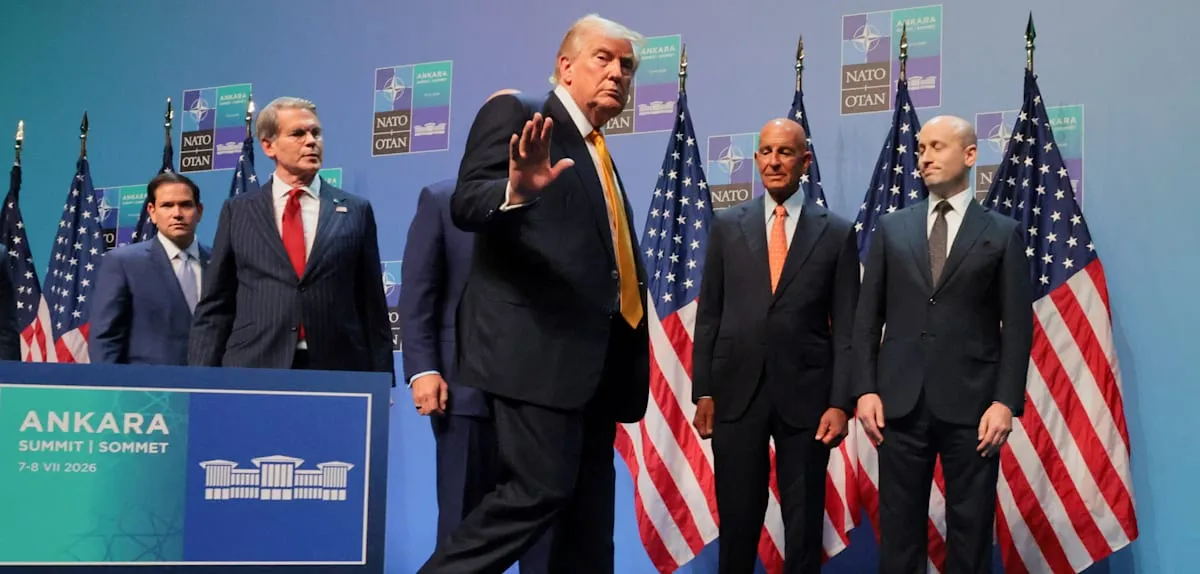
Ankara — United States President Donald Trump made a surprising statement during the NATO Summit in Ankara, Turkey, in 2026. In a Q&A session with the media, Trump explicitly indicated that the future deployment of US troops in Europe could depend on issues surrounding Greenland. This statement immediately sparked widespread speculation about the implications of Washington's foreign policy on the transatlantic alliance.
The dispute over Greenland, an autonomous Danish territory rich in strategic resources, once again heated up on the international agenda. When a reporter asked about the number of US troops that would remain stationed in Europe in the future, Trump gave a brief but meaningful answer, "Many things will depend on Greenland."
This response underscores the potential link between US military strategy in Europe and Washington's geopolitical ambitions regarding Greenland. Previously, during Trump's first presidency, the idea of purchasing Greenland emerged, sparking diplomatic tensions with Denmark. Now, the issue has resurfaced with a more strategic nuance.
International political analysts interpret Trump's statement as a negotiation tactic or an effort to reassert America's priorities within the framework of foreign policy. This is not the first time Trump has “shaken” allies, as seen when he claimed NATO was solid after making controversial statements. This dynamic aligns with previous expert analyses suggesting Trump's political direction tends to move away from Europe, potentially destabilizing NATO. A similar occurrence was also noted in the article Trump Shakes Allies, Then Claims NATO Solid: Rome 'Good' Again.
The NATO Summit in Ankara served as a platform for discussing various global security issues, including member states' commitments to defense budgets. Trump's statement on Greenland adds complexity to these discussions, especially for European countries that rely on the US military presence as a regional and global power balancer.
European leaders are reportedly responding to this statement cautiously. Some diplomats view it as a form of political pressure, while others try to understand the long-term implications of the statement for alliance solidarity. Concerns arise that US foreign policy under the re-elected Trump administration might be more transactional.
The issue of Greenland itself is not merely a territorial matter. Its strategic geographical position in the Arctic makes it crucial for defense and economic interests, especially in the context of great power competition. Control or influence over Greenland can provide significant advantages in controlling Arctic shipping lanes and access to abundant natural resources.
This statement can also be seen as part of President Trump's effort to redefine the United States' role on the global stage, emphasizing national interests above traditional alliance commitments. This is similar to the "America First" policy he frequently championed.
Although further details regarding the "Greenland condition" mentioned by Trump were not elaborated, the statement was sufficient to trigger a wave of discussions and concerns among NATO member states. Italy's policy under Meloni, urging new priorities for NATO's sustainable commitment in 2026, also indicates a shift in priorities among members.
Greenland's influence on the deployment of US troops in Europe will continue to be closely watched by geopolitical observers and world leaders. The long-term implications of this statement for the architecture of European security and the stability of the NATO alliance remain to be seen.