 Debby Wijaya
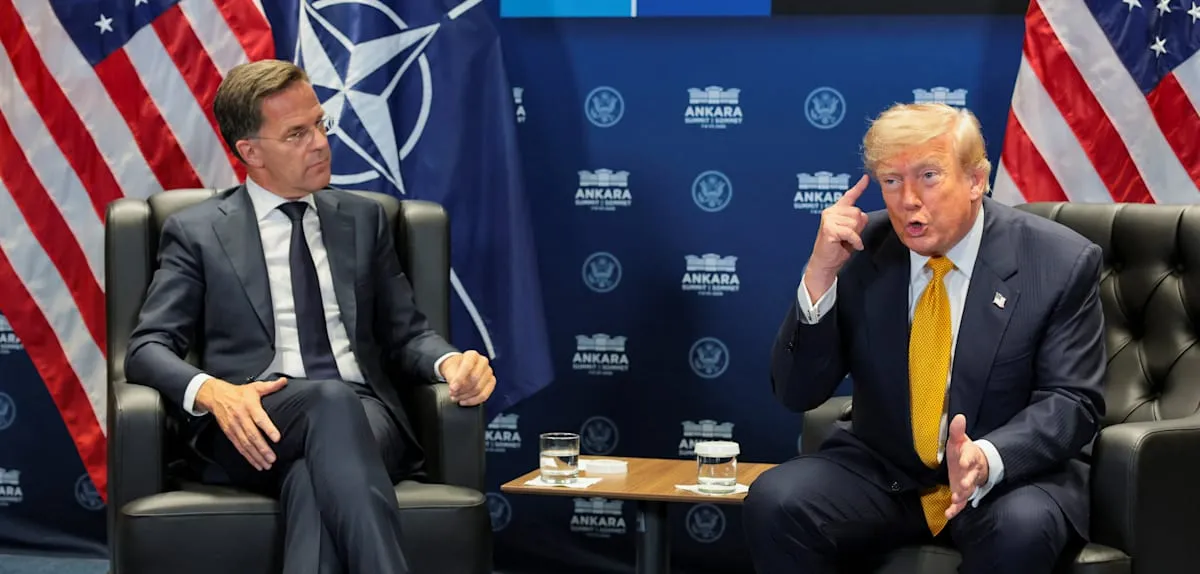
WASHINGTON — United States President Donald Trump has emphatically declared a ceasefire with Iran null and void, effectively canceling previous peace agreements. The controversial statement was made by Trump during an appearance with NATO Secretary-General Rutte, where he bluntly labeled Iran's leaders as "evil, sick people" in power, signaling an escalation of tensions between the two nations in 2026.
This sudden declaration from the White House immediately rattled the global diplomatic landscape, questioning the validity of hard-won agreements. Trump, known for his direct rhetoric, provided no further details on the cancellation decision, beyond pointing to the character of the leadership in Tehran.
President Trump's phrase "evil, sick people" refers to the regime in power in Iran, reflecting his distrust of their ability and good intentions to maintain regional stability. This is not the first time Trump has used sharp language to criticize political rivals or nations perceived as endangering US interests.
The presence of NATO Secretary-General Rutte when this statement was delivered sparked speculation regarding policy coordination between Washington and the Western military alliance. Although Rutte did not directly comment on Trump's statement regarding Iran, his presence indicates a broader strategic importance of the issue.
US-Iran relations have long been marked by ebbs and flows, often leading to confrontation. From the US withdrawal from the Iran nuclear deal in the past to a series of economic sanctions, these tensions are indeed prone to volatility. This cancellation of the ceasefire adds to the long list of frictions defining the dynamics between the two countries.
This move is predicted to trigger a new wave of uncertainty in the Middle East, an already fragile region. Political and international security analysts are now closely monitoring potential responses from Tehran and the impact on US allies in the area.
International relations observers suggest that Trump's declaration could trigger a military escalation, as has happened in the past. Concerns about an increase in US military attacks on Iran and Tehran's potential retaliation are key points of focus amidst global instability in 2026.
Nevertheless, some argue that Trump's statement might be a negotiation tactic to pressure Iran back to the negotiating table with terms more favorable to the United States. However, the risk lies in provoking an unpredictable response from Tehran, which is also known for its firm stance.
Foreign policy under the Trump administration is often characterized by a unilateral approach and an emphasis on "America First." The cancellation of the ceasefire with Iran aligns with this pattern, prioritizing US national interests over multilateral compromises.
Trump's statement can also be seen as an attempt to assert US dominance on the global political stage, especially in front of its NATO allies. Previously, Trump had criticized NATO member states, as highlighted in the article Trump Criticizes NATO: Meloni Liked, But Less Help to the United States, demonstrating consistency in his emphasis on alliances.
The international community now hopes that all parties can exercise restraint and seek constructive diplomatic solutions to prevent a wider conflict. Stability in the Middle East is key to global peace, and every escalatory step must be considered with extreme caution.