 Demian Sahputra
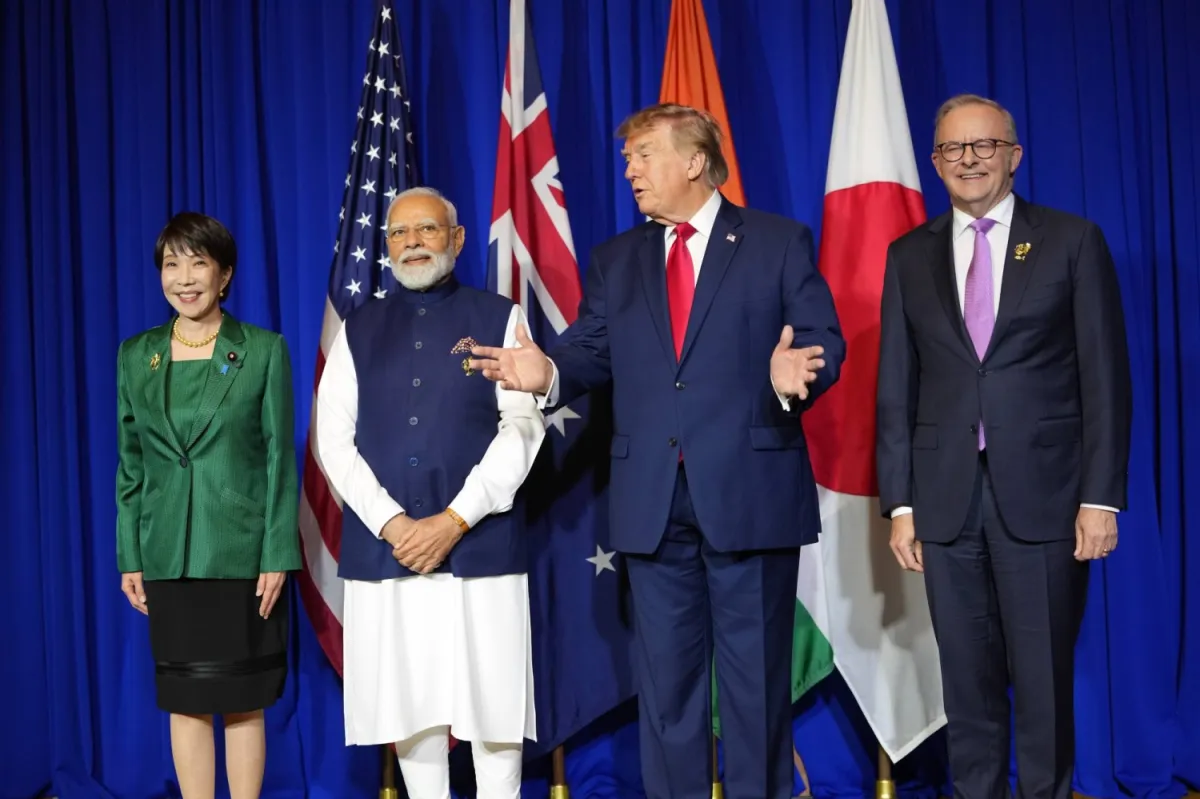
TOKYO – The inaugural Quadriateral Security Dialogue (Quad) summit under the leadership of United States President Donald Trump has concluded, providing significant impetus to this strategic alliance group. Leaders from Japan and India stated that the summit successfully created much-needed new momentum, although significant questions about the alliance's future sustainability and effectiveness still loom.
The meeting, held in Tokyo, brought together President Trump with the Prime Minister of Japan, the Prime Minister of India, and the head of state of Australia. Intensive discussions focused on efforts to strengthen maritime security cooperation, infrastructure development, and supply chain resilience in the increasingly complex and strategic Indo-Pacific region.
President Trump, who returned to office in 2025, explicitly highlighted the importance of Quad as a pillar of regional stability. He emphasized the United States' commitment to maintaining a free and open Indo-Pacific, a narrative consistent with Washington's foreign policy over recent years.
The Japanese delegation, represented by its Prime Minister, welcomed Washington's initiative. They view this summit as a crucial foundation for coordinating responses to various security challenges, including increased military activities in the South China Sea and evolving cyber threats.
In line with Japan, the Prime Minister of India expressed optimism about the meeting's outcomes. He highlighted Quad's potential to promote connectivity and development in emerging countries in the region, through transparent and sustainable joint projects.
Nevertheless, several political and diplomatic analysts voiced their doubts. They questioned how far this generated momentum could translate into concrete and sustainable actions, given the constantly changing geopolitical dynamics and the sometimes divergent national interests of each member.
One major concern is the fluctuation of commitment from each member state. History shows that the Quad has experienced ups and downs, with periods of inactivity before being revived in response to shifts in global power. The question of will it last? is not new to this group.
Some argue that the Quad's effectiveness heavily depends on strong and consistent leadership vision from each member. Without deep strategic alignment and clear implementation mechanisms, initial momentum could fade over time.
The summit's focus also encompassed non-security issues, such as collaboration in critical technology development and climate change mitigation. This multi-dimensional approach is expected to strengthen ties among members and broaden Quad's relevance beyond merely defense.
The Quad alliance, often referred to as the diamond of democracies in the Indo-Pacific, now faces a real test. Whether this inaugural meeting under President Trump will serve as a catalyst for a new era of robust cooperation, or merely a brief chapter in the challenging history of regional alliances, time will tell.
Editorial Insight: The Quad summit under President Trump's leadership clearly brings a distinctive political touch, focusing attention on consolidating allied power amidst increasingly intense geopolitical competition. The Quad's biggest challenge is no longer merely identifying threats, but how to transform a spirit of solidarity into a resilient security and economic architecture, transcending individual leaders' terms, and mitigating the inherent differences in interests within any multinational alliance.