 Stefani Rindus
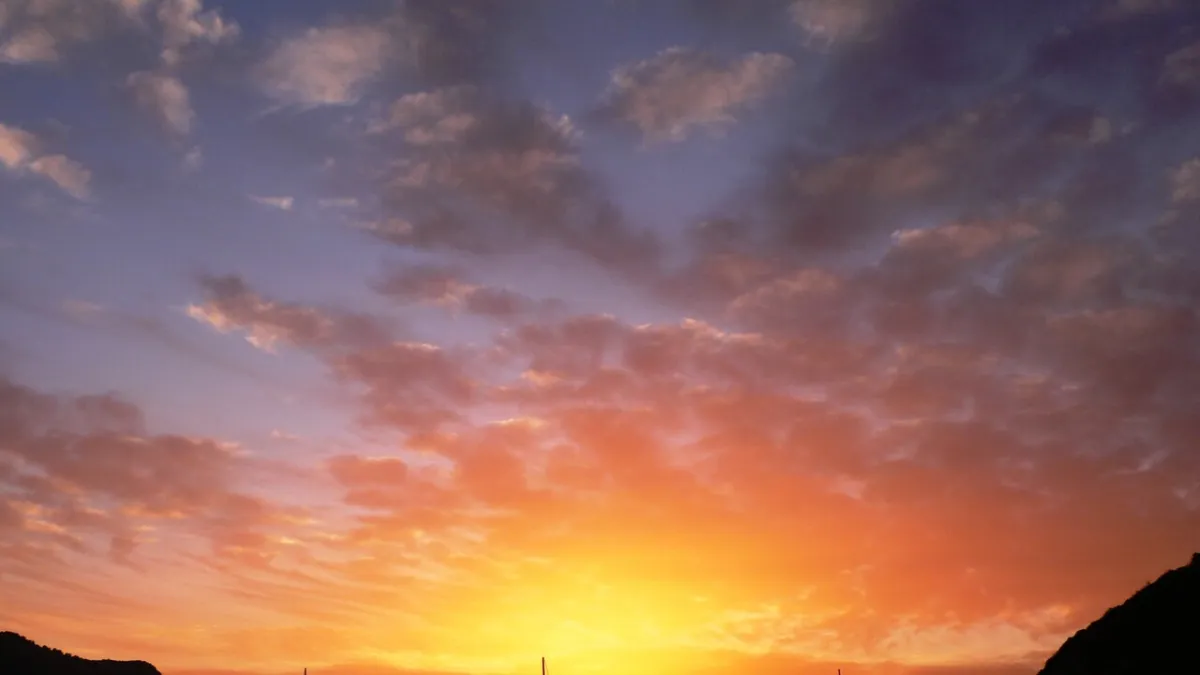
Summer 2026 promises an unparalleled visual experience for enthusiasts of cosmic beauty. From dazzling sunsets to the allure of lunar eclipses and a canopy of countless stars, five exotic routes are ready to guide travelers to unveil the most spectacular sky panoramas across various parts of the world. Destinations like Ibiza and the Aeolian Islands lead the list of must-visit spots for anyone seeking to witness magnificent celestial phenomena throughout this season.
Ibiza, the hedonistic island in Spain, is renowned not only for its vibrant nightlife but also for its exceptionally dramatic sunsets. Every afternoon at Café del Mar or other Sunset Strip venues, the horizon transforms into a canvas of fire and gold, mesmerizing thousands of onlookers who gather to capture this magical moment. The atmosphere created, often accompanied by relaxing music, makes the sunset experience in Ibiza not just a spectacle, but a daily ritual celebrated with ever-changing beauty.
Moving to Southern Italy, the Aeolian Islands offer a different and equally stunning sky experience. At the peak of summer 2026, the \"Red Moon\" phenomenon is expected to grace the Mediterranean sky, particularly around Stromboli and Vulcano. This rare partial or total lunar eclipse will transform Earth's satellite into a mystical reddish hue, creating an epic scene above the tranquil Tyrrhenian Sea. The natural beauty of these volcanic islands provides a perfect backdrop for such a cosmic display, adding to the rich appeal of Southern Italy, akin to the charm of Apulia 2026.
Crossing the ocean, the Atacama Desert in Chile awaits sky explorers. Known as one of the driest places on Earth, Atacama is blessed with some of the clearest skies in the world, free from light pollution. World-class observatories are located here, yet even with the naked eye, the Milky Way galaxy and star clusters appear in such detail, as if within reach. The Southern summer, coinciding with the Northern winter, ensures ideal conditions for uninterrupted star observation, making it an astrophotography paradise.
Returning to the Mediterranean, Santorini, Greece, offers a combination of legendary sunsets and romantic night skies. While Oia is famous for its iconic sunset views over the caldera, other parts of the island also provide opportunities for serene stargazing. Away from the crowds, in secluded villages, the sparkle of thousands of stars can be enjoyed, creating an intimate atmosphere perfect for couples or personal reflection beneath the cosmic blanket.
In the Atlantic Ocean, Teide National Park in Tenerife, Canary Islands, serves as a sanctuary for amateur and professional astronomers alike. Situated at a significant altitude, in the shadow of the Teide volcano, this national park has been designated a \"Starlight Reserve\" by UNESCO. Its pitch-dark skies allow for unobstructed views of constellations, planets, and even distant nebulae. The Teide Observatory hosts public night tours, complete with impressive high-powered telescopes.
Thorough planning is essential for these sky observation journeys. Checking lunar phases, eclipse schedules, and local weather forecasts is crucial to ensure an optimal experience. For a perfect sunset, arriving early is key to securing the best spot. Meanwhile, for stargazing, moving away from urban areas and using red lights around the observation site will significantly enhance eye sensitivity to dim light, maximizing the visual experience. Astronomy applications on mobile phones can also serve as practical guides for identifying celestial objects.
Beyond their captivating visual appeal, these celestial phenomena also serve as a reminder of the vastness of the universe and the importance of preserving Earth's environment. The minimal light pollution in these destinations not only supports tourism but also aids scientific research. Scientists continuously monitor changes in celestial bodies, and every eclipse or rare sighting provides valuable data for a deeper understanding of cosmology.
These stunning natural phenomena also significantly drive local economies. Astro-tourism is increasingly popular and a rapidly growing sector. Hotels, restaurants, and tour guides in destinations like Atacama or Tenerife have adapted, offering special packages that include stargazing sessions, night sky photography workshops, and educational tours. This demonstrates that the beauty of the sky is not just a universal heritage but also a valuable and sustainable economic asset.
Summer 2026 is an invitation to look upwards, beyond the daily hustle and bustle, and absorb the infinite cosmic wonders. With these carefully planned routes, unforgettable experiences await, bringing us closer to the mysteries of the universe. Whether it is a sunset painting the horizon with dramatic hues or the boundless scatter of stars in the dark sky, every moment is a gem worth cherishing and preserving.