 Angel Doris
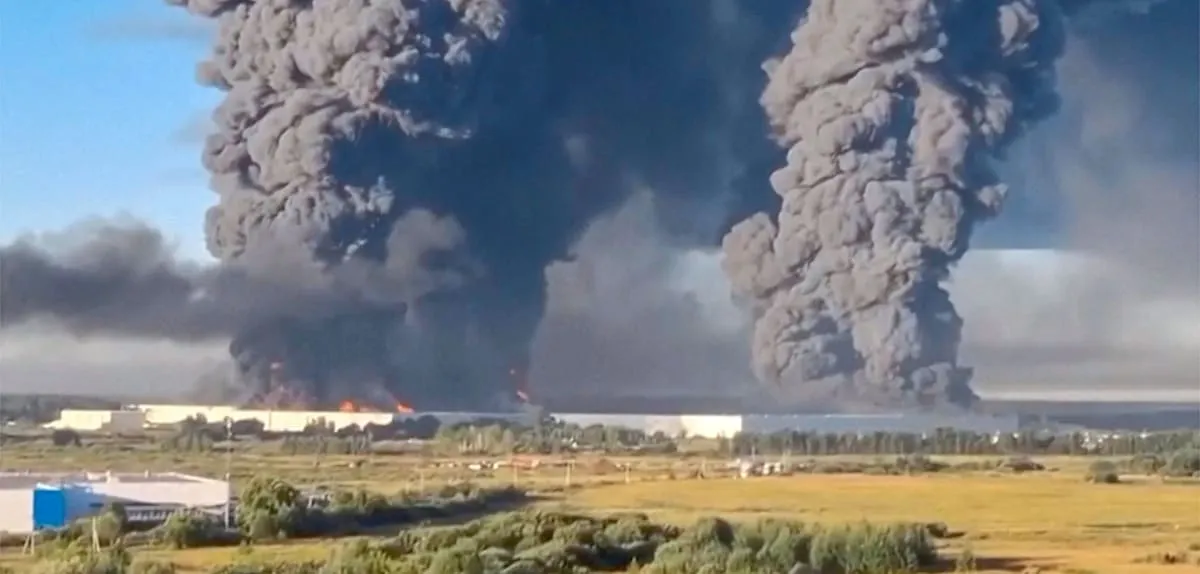
MOSCOW — The conflict between Ukraine and Russia has significantly escalated once again after the Ukrainian military launched an attack on a vital logistics hub near the Russian capital, Moscow, last weekend. The incident resulted in eight fatalities and injured over fifty civilians, while also causing several large warehouses to ignite. This assault immediately triggered a large-scale military response from Russia, which retaliated by launching approximately forty ballistic missiles at strategic targets across Ukrainian territory.
The attack, claimed as an effort to pressure Russia, targeted one of the largest storage and distribution facilities, informally dubbed the “Russian Amazon” due to its crucial role in the national supply chain. The strategic location of this logistics center, not far from the heart of the Russian government, indicates an escalation in Ukraine's tactics to expand their operational reach. Satellite imagery and initial reports show severe damage to key infrastructure, disrupting the distribution of essential goods and services in the Moscow region.
The casualties, mostly civilian workers present at the site, add a tragic dimension to this prolonged conflict. Rescue teams are still working to find victims in the rubble, while local authorities have declared a state of emergency and initiated a comprehensive investigation into the incident. Economic losses from the destruction of this logistics facility are estimated to run into billions of rubles, with long-term impacts on supply stability in Russia.
It did not take long for the Kremlin to respond. Within hours of the attack, Russian forces launched a massive retaliatory strike using approximately forty advanced ballistic missiles. These attacks reportedly targeted military installations, energy infrastructure, and communication facilities in various major Ukrainian cities, including Kyiv and Kharkiv. The Russian Ministry of Defense asserted that this action was a firm response to what they termed Ukrainian aggression.
The impact of the Russian missile strikes in Ukraine was also devastating, with initial reports indicating significant damage to both civilian and military infrastructure. Air raid sirens blared across the country, forcing millions of citizens to seek shelter. Ukrainian authorities have not yet released the exact number of casualties or damages but confirmed that many areas experienced power outages and telecommunication disruptions due to the missile impacts.
International political and military analysts assess that Ukraine's attack on Moscow is President Volodymyr Zelenskyy's attempt to increase pressure on Russia to an unbearable extent. This strategy, according to some observers, aims to destabilize Russia's internal affairs and divert its military concentration from the front lines. Some believe that this tactic also signals Ukraine's unwavering resolve in the face of aggression, despite significant challenges.
In recent months, President Zelenskyy has indeed been widely reported to be facing internal pressure regarding war strategy, as highlighted in a previous report titled Power Storm Shakes Ukraine: Zelenskyy Trapped in Military Elite Conflict. A direct attack on Russia's logistical heart could be an attempt to demonstrate strong leadership amidst these difficult circumstances.
This latest escalation is expected to have broad consequences for the dynamics of regional and global conflict. The increased intensity of cross-border attacks has the potential to draw greater attention from the international community and strengthen calls for de-escalation. However, at the same time, it could also deepen the chasm of animosity between the two nations, moving further away from prospects of substantive peace negotiations.
World leaders have expressed deep concern over these developments, urging both sides to exercise restraint and return to the negotiating table. The UN Secretary-General called for an end to the cycle of violence that endangers millions of lives and threatens regional security. However, it seems these calls have yet to be heeded by the warring parties.
Given the increasingly brutal nature of the tit-for-tat attacks, the prospects for peace in 2026 appear bleaker. Ukraine will likely continue to seek innovative ways to strike strategic targets within Russian territory, while Russia is expected to enhance its air defense capabilities and continue launching robust retaliatory strikes. This conflict, far from subsiding, is showing alarming signs of escalating intensity. Global economic impact is also a serious concern. Supply chain disruptions, commodity price fluctuations, and geopolitical uncertainty will continue to burden the world economy, which has only recently recovered from various previous crises. The international community now faces the daunting task of finding effective diplomatic solutions before the situation spirals completely out of control.