 Robert Andrison
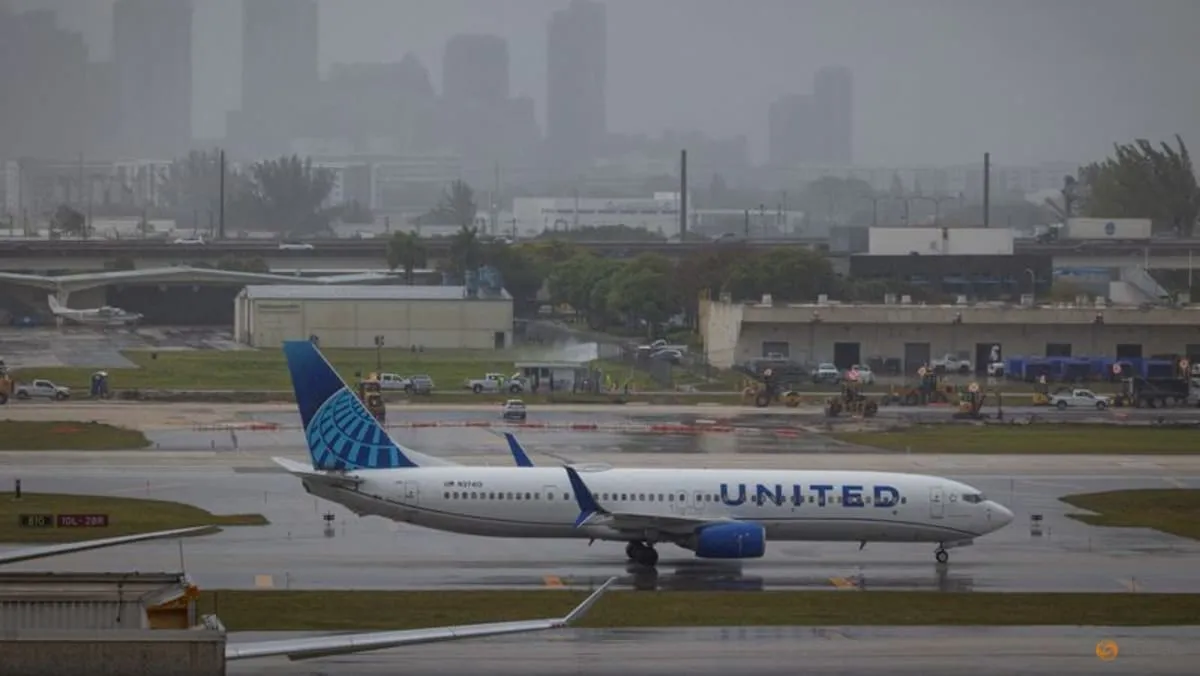
CHICAGO – United Airlines, one of the world's largest airlines, has officially announced a policy to block third-party artificial intelligence (AI) agents from using their digital platforms. This drastic decision comes in response to growing serious concerns regarding potential data security breaches and misuse of customer information. The policy, effective immediately in early 2026, sparks a widespread debate about ethical boundaries and regulations in AI technology implementation within public services and business sectors.
Internal sources at United Airlines revealed that the discovery of several minor incidents related to unauthorized access by AI agents prompted management to take preventive action. These incidents, while not yet causing significant losses, highlighted security loopholes that could be exploited to obtain passengers' personal data, flight details, or even payment information.
United Airlines spokesperson, Ms. Elena Sanchez, stated, 'Our top priority is to protect customer privacy and data security. We appreciate innovation, but not at the expense of the trust placed in us. Third-party AI agents often operate without transparent security protocols, posing risks we cannot tolerate.'
United Airlines' move is not the first in an industry increasingly feeling the impact of the AI revolution. Many technology and service companies are now grappling with similar challenges, seeking a balance between the efficiency offered by AI and the accompanying cybersecurity risks. Incidents such as digital bomb threats and brutal cyberattacks targeting personal data, although in different sectors, underscore the urgency to tighten digital security.
From the technology industry's perspective, this decision could set an important precedent. The CEO of an AI development company, Dr. Kenji Tanaka, whose firm develops agents for various sectors, expressed disappointment. 'We believe in AI's ability to enhance customer experience and efficiency. Restrictions like this should be based on dialogue and clear security standards, not merely a total block,' he remarked.
For millions of United Airlines customers, this policy may mean a more limited experience when interacting with airline services. AI agents often used to compare prices, automatically book tickets, or manage reservations can no longer function through United's platform.
Global aviation regulatory authorities and data protection bodies are expected to closely monitor this development. The US Transportation Security Administration (TSA) has not yet issued an official statement, but cybersecurity expert Professor Lena Schmidt from Stanford University emphasized the need for a strong regulatory framework. 'The era of AI demands that we redefine what security means. Entities like airlines hold invaluable sensitive data,' said Professor Schmidt.
United Airlines' decision adds to a long list of concerns surrounding AI regulation and ethics. The debate over technology dominance and data security is intensifying, as seen in news regarding scandals in the AI industry involving key figures or how AI giants like OpenAI continue to break revenue records, indicating that AI adoption is rapid, but its security aspects are still lagging.
The airline stated it is developing its own internal AI-based solutions that will be fully integrated with the highest security standards. This represents a strategic move to independently control their digital ecosystem, while ensuring innovation is not hampered.
Editorial Insight: United Airlines' move to block third-party AI agents highlights a fundamental dilemma in adopting advanced technology: innovation versus security. This decision, which may seem regressive to some, is actually a proactive response to increasingly complex cyber threats. It could be a catalyst for the aviation industry to establish stricter AI security standards, while also urging AI developers to integrate privacy as a core feature, rather than just an add-on. As a result, we will see more companies take full control over their AI implementations, creating a more closed but safer ecosystem.