 Chandra Wijayanto
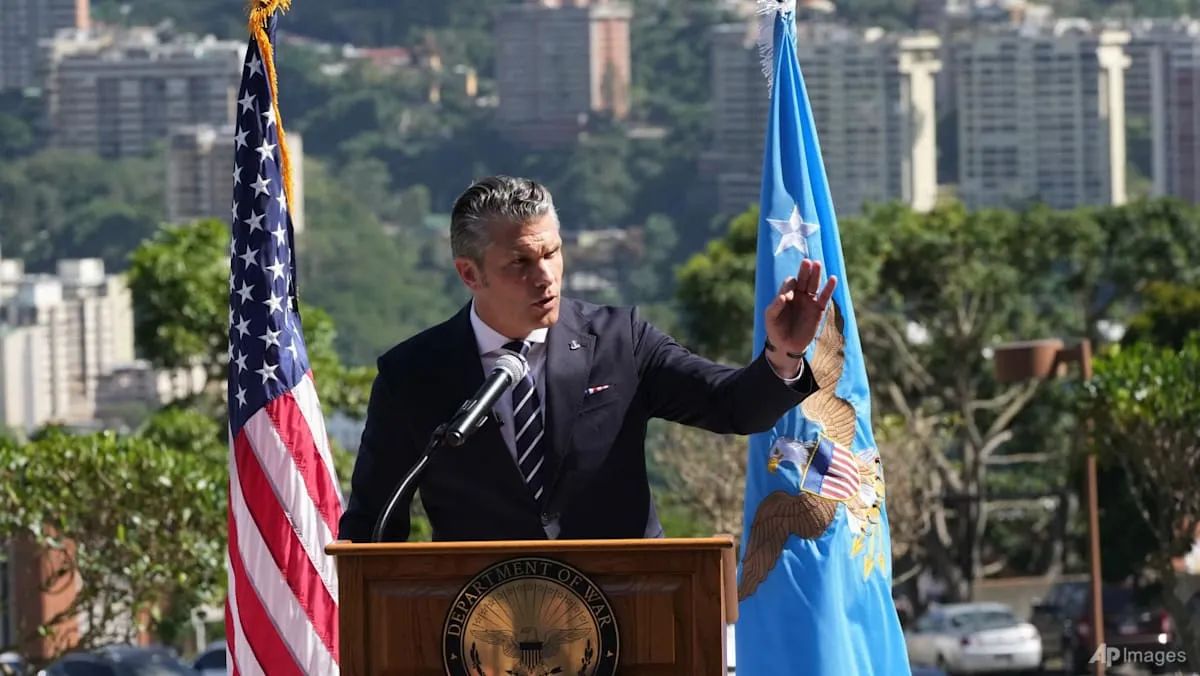
CARACAS – In a surprising geopolitical move, Pete Hegseth, a special envoy from United States President Donald Trumps administration, officially announced a military partnership agreement between the United States and Venezuela. This monumental announcement took place in the Venezuelan capital, Caracas, marking an unexpected normalization of relations that could potentially reshape the security landscape in Latin America in 2026.
This historic agreement comes after decades of diplomatic tensions and economic sanctions that characterized the bilateral relations between the two nations. Hegseths announcement, delivered in a joint press conference with high-ranking Venezuelan officials, underscores a significant shift in US foreign policy under the renewed leadership of President Trump.
Details of the accord are still being elaborated, but Hegseth indicated that the partnership would focus on several key areas. These include cooperation in anti-narcotics operations, enhancement of maritime security capabilities, and military exchange training programs aimed at combating transnational crime and maintaining regional stability.
This initiative raises many questions and speculations from the international community. The United States has long considered Venezuela a threat to regional stability, particularly under President Nicolas Maduros government. Therefore, this agreement is seen as a strategic maneuver that may aim to balance the influence of other powers in the region, or even to gradually de-escalate Venezuelas internal crisis.
From Venezuelas perspective, this partnership can be interpreted as an effort to gain international legitimacy and alleviate prolonged economic pressure. Access to military training and the potential partial lifting of sanctions could provide room for the long-isolated Maduro government. It could also send a strong signal to neighboring countries that Venezuela is now entering a new phase in its international relations.
Leading geopolitical analysts, such as Dr. Elena Petrova from the Global Studies University, assess that United States foreign policy is undergoing a 'pragmatic realignment' under President Trump. 'Washington appears to prioritize regional stability and immediate security interests over past ideological dogmas,' stated Dr. Petrova, emphasizing that this move has precedents from Trumps unconventional approach to diplomacy.
Naturally, reactions at the regional level vary. Colombia and Brazil, which share direct borders with Venezuela, will likely monitor these developments closely. The potential for increased military cooperation could bring new stability or create even more complex power dynamics in a vulnerable region.
This military partnership is also relevant to similar agreements the US has forged in other parts of the world, such as Denmarks ratification of a US military agreement in Greenland. This demonstrates a proactive pattern in US foreign policy to build strategic security alliances.
Domestically within the United States, this announcement will likely spark intense debate between supporters and opponents of Trumps policies. Conservatives may view it as a shrewd move to secure US interests, while critics might question the long-term implications of cooperating with a regime previously categorized as repressive.
Ultimately, the success and long-term impact of this US-Venezuela military partnership will largely depend on the implementation of the agreement and the commitment of both parties. It is a significant gamble taken by the Trump administration, with the potential for substantial geopolitical gains or unforeseen risks of escalation.
Editorial Insight: The US-Venezuela military partnership agreement is a strong indicator that the global geopolitical landscape is becoming increasingly fluid and unpredictable. This is not merely a bilateral accord but a marker of a paradigm shift in diplomacy, where strategic interests often supersede deep ideological differences. Moving forward, the world will observe how this unusual alliance reshapes the balance of power in Latin America and whether it sets a precedent for the resolution of other frozen conflicts.