 Gabriella
HAVANA — The United States surprisingly launched its so-called 'Rose Bomber' strategy in early 2026, delivering vital humanitarian aid by air to Cuba. This move comes amidst a severe economic crisis gripping the communist nation, exacerbated by a strict oil blockade imposed by Washington, and is seen as a dual diplomatic maneuver aimed at assisting the people while exposing the weaknesses of the Havana regime.
The long-standing oil blockade imposed by the United States on Cuba is now yielding massive impacts. Cuba's economy has plummeted to the brink of collapse, causing shortages of basic commodities and fueling the suffering of hundreds of thousands of residents.
In this context, 'Rose Bomber' emerges as a provocative term. It refers to the operation of delivering humanitarian aid via air, but with a deep political layer of meaning: a symbolic 'bombing' with 'roses' (aid) that is expected to open the world's eyes to the condition of the Cuban people under communist rule.
Washington openly admits that behind the noble intention to alleviate the burden on the Cuban people, strategic calculations are also at play. This aid delivery is designed to create internal pressure on the Havana regime by demonstrating that even their arch-enemy, the United States, is willing to extend a helping hand when the government itself struggles.
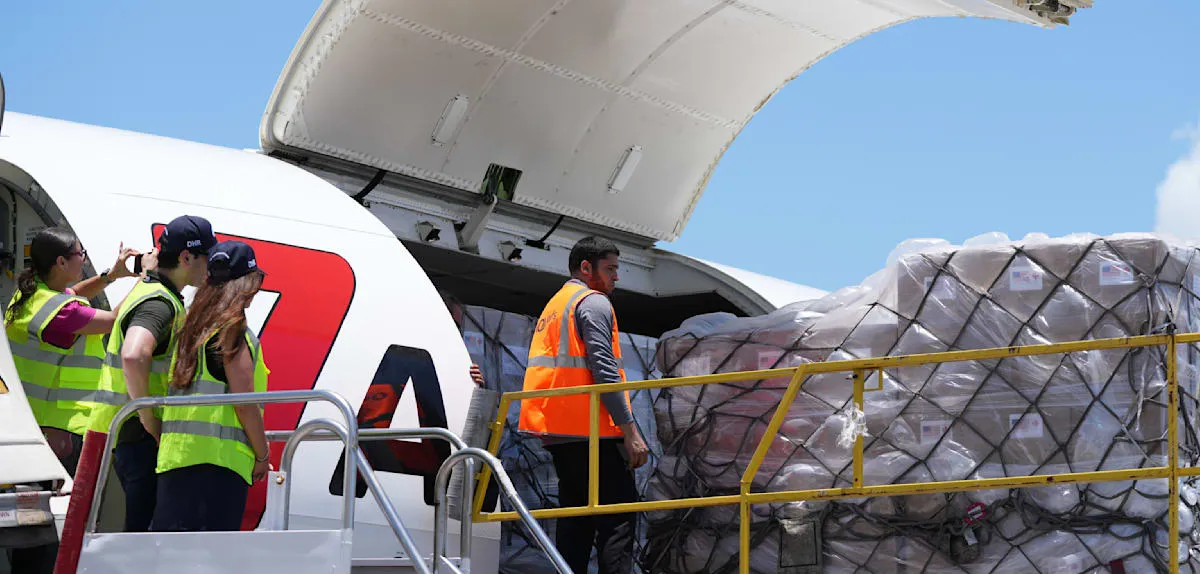
The aid packages, which include food, medicine, and other essential supplies, are being dropped from US military cargo planes at various strategic points across the island. This distribution process, closely monitored by international agencies, is expected to ensure the aid reaches the most vulnerable citizens.
The long history of animosity between the two nations, spanning decades since the Cuban Revolution, finds a new chapter in this strategy. From the Cuban Missile Crisis to ongoing economic embargoes, Washington-Havana relations have always been fraught with intrigue and ideological rivalry.
The Cuban regime, through state media, has condemned this action as 'hypocritical propaganda' and 'veiled intervention'. Senior officials in Havana accuse Washington of exploiting the people's misery for political ends, rather than genuinely offering unconditional help.
However, it is undeniable that many Cuban citizens have welcomed the arrival of this aid with hope and relief. For them, regardless of the political motives, this assistance is a lifeline amidst the increasingly suffocating hardships caused by the economic crisis.
The international community is divided in its response to this 'Rose Bomber' maneuver. Some countries view it as a pragmatic step to help civilians, while others criticize its potential for destabilization and interference in Cuba's sovereignty.
Geopolitical analysts see this strategy as an attempt by the United States to update its 'cold war' approach, but with a more modern humanitarian touch. The goal is to undermine the legitimacy of the Cuban government in the eyes of its own people and the world.
Dr. Elena Rodriguez, an international relations expert at the University of Miami, stated, 'This is not just aid, but a strong message. Washington wants to show who truly cares about the Cuban people, while highlighting the failures of the socialist system there.'
The long-term success of this 'Rose Bomber' remains an open question. Will it trigger internal reforms in Cuba, or will it harden the regime's stance and deepen hostilities? The future of relations between the two countries will heavily depend on the response and interpretation of this bold move.
The President of the United States in 2026 is reported to be closely monitoring the implementation of this strategy, hoping to achieve diplomatic objectives without triggering military escalation. The White House reaffirms its commitment to the freedom and welfare of the Cuban people.
Meanwhile, Cuban society continues its daily life under the shadow of crisis and ideological struggle. Aid from the sky may only be a temporary solution, but it brings a glimmer of hope and a reminder of the complexity of an unending conflict.