 Chandra Wijayanto
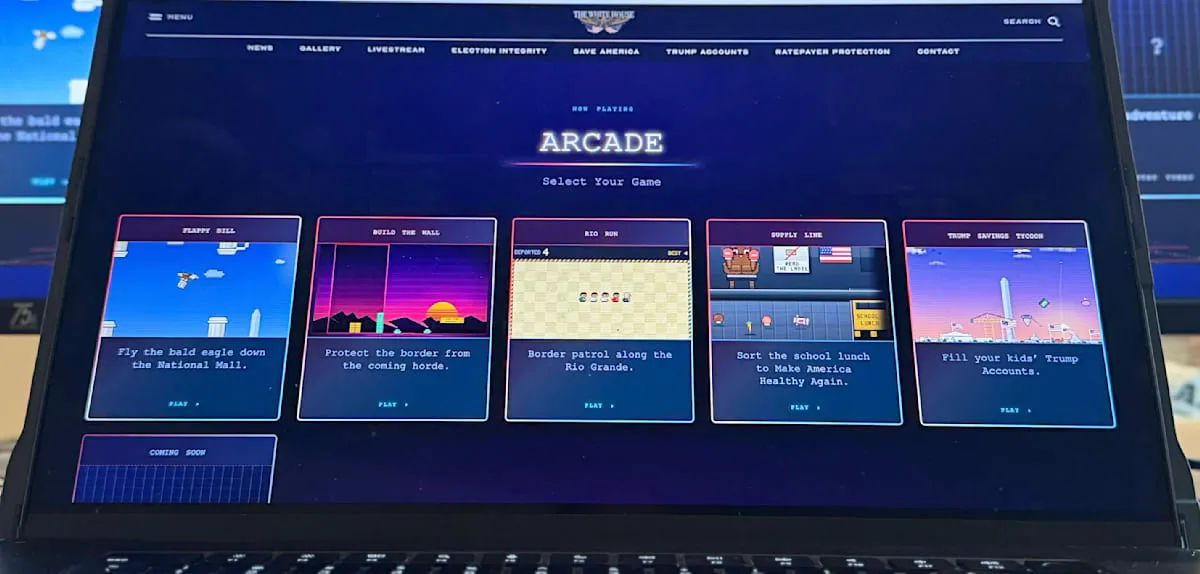
WASHINGTON – An online game titled 'Schutze die Grenze' (Protect the Border), launched on the official White House website in 2026, has ignited a wave of controversy and outrage within the digital entertainment industry. The game explicitly references the border barrier issue between the United States and Mexico, a topic that frequently divides public and political opinion. In response, the renowned game development company, Tetris, has unequivocally expressed its objection and demanded to be dissociated from the game.
The game's release comes amid a political climate in the United States continuously marked by fierce debates over immigration policies and border security. 'Schutze die Grenze' is described as an interactive simulation aimed at 'securing' the border, a narrative closely aligned with the current US Government's rhetoric.
A strong reaction emanated from the management of the Tetris Company. In its official statement, company representatives expressed deep outrage. They asserted that the use of elements or concepts resembling the Tetris game for political purposes is utterly unacceptable and contradicts the core values of their brand.
A Tetris spokesperson clarified that their brand image, which has long been known as a universal puzzle game without political affiliation, has been tarnished by this unexpected association. 'We are about fun and logical challenges, not divisive political statements,' the globally recognized company declared.
This incident is not the first time a governmental entity has used entertainment media to convey political messages. However, the use of a name or visual style so similar to a well-known trademark without consent has raised serious questions about ethics and intellectual property rights.
Conversely, there has been no official statement from the White House regarding Tetris's objections. The game's publication instead indicates the Administration of President Donald Trump's efforts to further amplify the message about the importance of strict border policies, consistent with its political agenda. Donald Trump's image itself has become an iconic symbol in various contexts, including numismatics.
Political observers and technology experts view this event as a clear example of the increasingly blurred lines between entertainment and propaganda. 'When governments start creating games with strong political messages, it's a signal that the digital space has fully become a battleground of ideologies,' stated an analyst from an independent think tank.
Border policies, including the construction of physical barriers, have long been a focal point of tension between the United States and Mexico, and have sparked humanitarian and global economic discussions. This game extends a controversial narrative, even into the realm of online entertainment.
From the perspective of the gaming industry, this case highlights the need for stronger brand protection and clear lines between state-sponsored content and independent entertainment products. Many game developers have voiced concerns that such incidents could open the door to unethical brand misuse and the gamification of sensitive issues.
This controversy also recalls debates surrounding the ethics of gamifying other complex issues, such as migration, which is also under scrutiny on the European continent. Some European countries are even preparing out-of-block migrant centers, showing this issue is globally relevant.
Ultimately, the 'Schutze die Grenze' episode involving Tetris serves as a significant case study at the intersection of politics, technology, and popular culture in the digital era of 2026. It underscores how governmental entities can leverage online platforms to promote agendas, and the challenges faced by private companies in protecting their brand integrity.
Editorial Insight: This incident is more than just a brand dispute; it is a clear indication of governmental attempts to use interactive media to influence public perception of controversial policies. Tetris's response demonstrates that game companies have an ethical role and responsibility to maintain their brand's neutrality from politicization. Long-term impacts could include increased scrutiny over state-sponsored 'gamified' content and a push for clearer regulations regarding the use of intellectual property in political contexts.