 Edward DP Situmorang
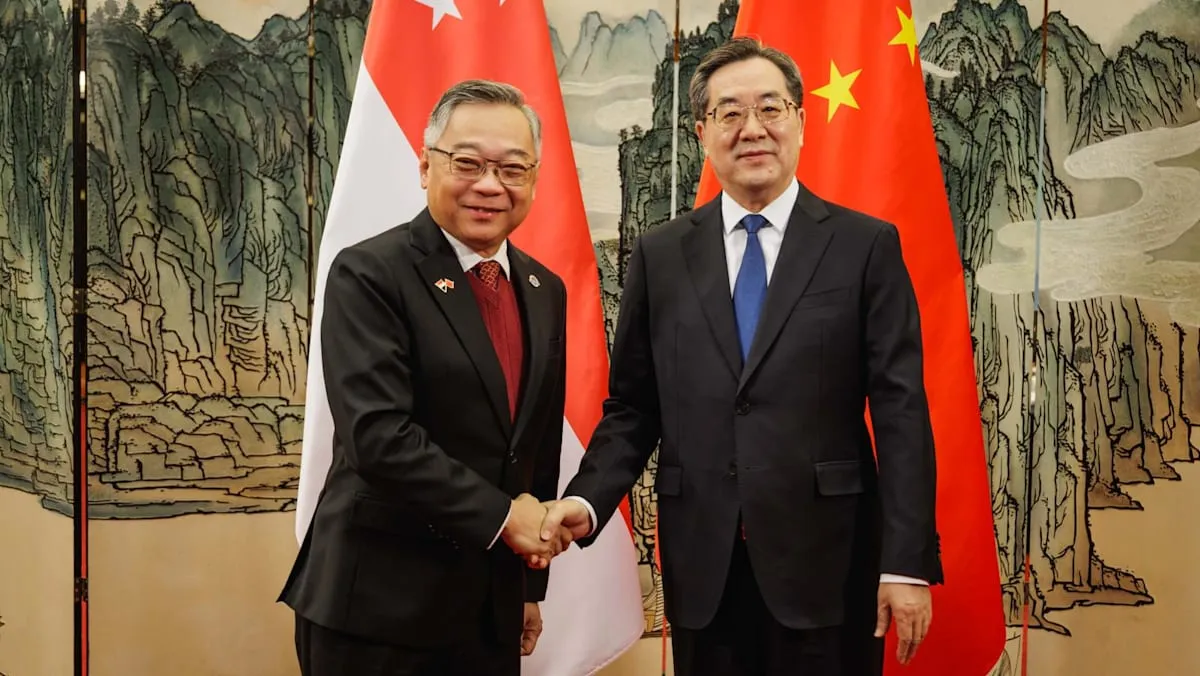
SINGAPORE – High-level delegations from Singapore and China convened for crucial bilateral dialogues in the Lion City during mid-February 2026. This meeting, a key highlight in Asian diplomacy, aimed to strengthen strategic partnerships, review significant agreements, and seek solutions to evolving regional and global challenges. The presence of senior officials from both sides underscored the urgency of discussing vital issues.
These bilateral talks reaffirmed the mutual commitment of both nations to enhance cooperation across various sectors. Discussions encompassed trade, investment, technology, and regional security stability, which form key pillars of their long-term relationship.
Singapore, as a global financial and logistics hub, holds substantial interest in maintaining harmonious and productive relations with an economic giant like China. Regional stability heavily relies on effective communication between major powers.
China, for its part, views Singapore as a critical strategic partner for regional connectivity and the implementation of its ambitious Belt and Road initiative. This partnership is expected to open new economic corridors.
A primary agenda item for the meeting was mitigating global economic uncertainties following the pandemic and escalating geopolitical conflicts, which impact supply chains and markets. Both nations sought adaptive strategies to protect their economies.
Discussions also touched upon the sensitive issue of the South China Sea. China's involvement in these maritime disputes often sparks concerns among ASEAN member states, demanding a cautious diplomatic approach.
In this context, Singapore's role as an ASEAN member is crucial in fostering constructive dialogue and seeking peaceful solutions. Regarding this issue, it is important to observe regional dynamics as highlighted in the article ASEAN 2027: Fragile South China Sea Code of Conduct, Asia's Stability at Risk?.
Analysts predict that these dialogues will yield several concrete agreements beneficial to both parties. These could include increased bilateral trade volumes or the development of joint projects.
For instance, the potential for increased bilateral trade volumes in the digital sector and enhanced cooperation in advanced technology research and development, such as artificial intelligence and renewable energy.
Representatives from Singapore's Ministry of Foreign Affairs emphasized the importance of maintaining open communication and mutual understanding amidst geopolitical complexities. Transparency is key to trust.
Meanwhile, the Chinese delegation underscored their commitment to the principles of multilateralism and the pursuit of peaceful resolutions for international disputes. This reflects a desire to promote stability.
It is hoped that the outcomes of this meeting will provide stability and predictability for the region's economy and security throughout 2026, creating a more conducive environment for growth.
Editorial Insight: The Singapore-China relationship consistently serves as a critical barometer for Southeast Asian stability. These high-level dialogues are not merely diplomatic routines; they reflect the pressing need for both nations to navigate the tumultuous geopolitical landscape of 2026. Their ability to find common ground on complex issues like trade and maritime security will set a precedent for future regional dynamics, simultaneously testing the effectiveness of diplomacy in de-escalating tensions.