 Debby Wijaya
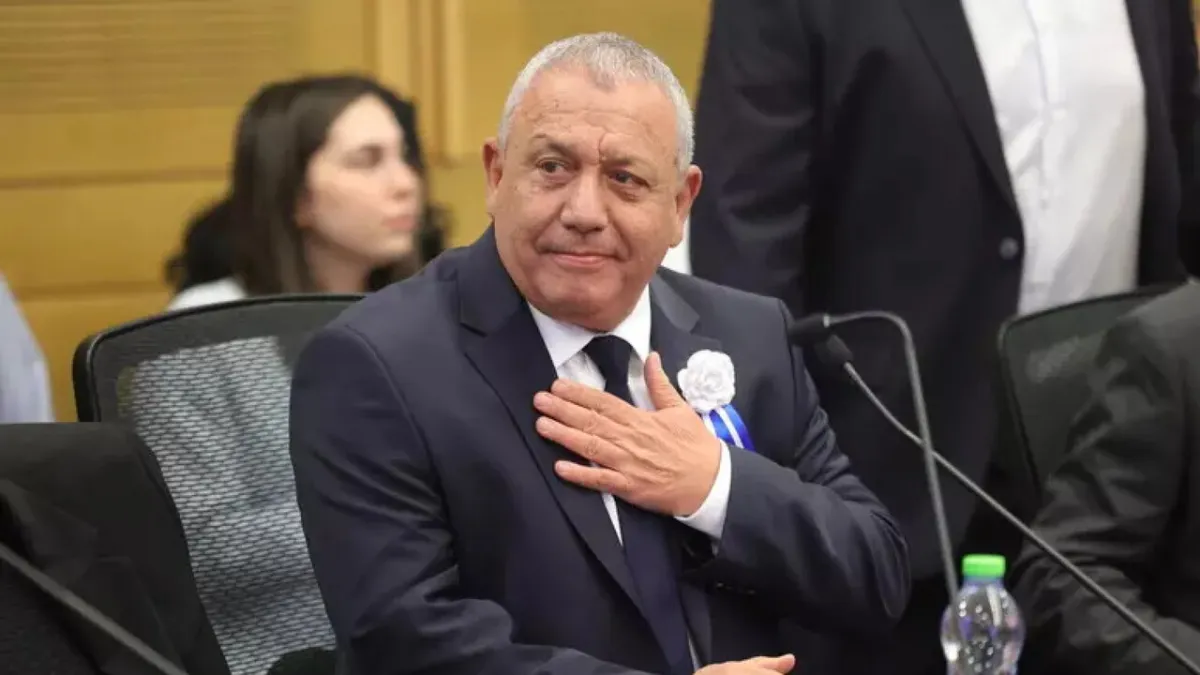
TEL AVIV – Tensions in the occupied West Bank have flared again after several senior Israeli politicians issued strong condemnations against violent acts carried out by radical settlers. War Cabinet member Gadi Eisenkot and Minister Gideon Sa'ar openly criticized incidents of car and property arson targeting Palestinian residents, unequivocally labeling these actions as 'Jewish terror'. This condemnation emerges amidst ongoing coalition negotiations between the Likud and Yashar parties, indicating serious internal divisions regarding the handling of extremism.
Gadi Eisenkot's statement, from an influential military and political figure, marks a significant turning point in Israeli public discourse. He explicitly declared that these acts of vandalism and arson constitute a form of terrorism perpetrated by extremist settler groups, urging the government to take decisive action against the perpetrators.
In agreement with Eisenkot, Gideon Sa'ar, a veteran politician from the center-right, did not hesitate to use the phrase 'Jewish terror' to describe the escalating violence in the West Bank. Both emphasized the urgency of addressing this issue to uphold the rule of law and maintain stability in the increasingly fragile region.
The latest incidents triggering this wave of condemnation involved a series of car and property arsons in several Palestinian villages across the West Bank. Local residents reported significant material losses and a pervasive atmosphere of fear caused by attacks that often occur without clear provocation.
Since the beginning of 2026, the escalation of settler violence in the West Bank has indeed shown an alarming increase. Reports from various human rights organizations, both local and international, document dozens of attacks targeting agricultural lands, homes, and basic infrastructure belonging to Palestinian communities.
The use of the term 'Jewish terror' by Israeli politicians themselves is not commonplace and reflects the severity of the situation. This term is often used by Palestinians to describe extremist settler violence, but is now echoed by influential voices within the Israeli establishment, signifying a recognition of the serious threat it poses.
This condemnation also places significant pressure on the negotiating government. The coalition formation process between Likud, the party led by the Prime Minister, and Yashar, could be hampered by differing views on how to deal with radical settlers. Right-wing factions within the coalition may hold a more lenient stance towards these settlers.
Such a situation has the potential to undermine efforts to foster dialogue or de-escalate the long-standing conflict between Israel and Palestine. When internal violence from settler groups is not adequately addressed, public trust and regional stability are further eroded.
Political observers believe that these firm statements from Eisenkot and Sa'ar are an attempt to push for a stronger response from Israeli law enforcement agencies. They hope that concrete measures will be taken to end the impunity of perpetrators of violence and prevent further escalation.
The Israeli government faces a complex dilemma. On one hand, there is international and domestic pressure to crack down on extremism; on the other hand, government coalitions often rely on support from parties with voter bases among settlers. Balancing security and politics becomes extremely challenging.
The international community, through the UN and various other organizations, has repeatedly called on Israel to fulfill its obligations under international law to protect the Palestinian population in the occupied territories and prosecute perpetrators of violence. Condemnations from within Israel itself are expected to reinforce these calls.
The future of the West Bank remains a flashpoint of conflict. Without decisive and consistent action against settler violence, the cycle of retaliation and destabilization will persist, further moving away from the prospect of a sustainable peace.
Editorial Insight: The strong condemnation from senior Israeli politicians like Eisenkot and Sa'ar, who dared to label radical settler actions as 'Jewish terror,' indicates a shift in narrative and an awareness of the destructive impact of internal extremism. This statement is more than mere rhetoric; it is a serious acknowledgment of the threat posed by radical groups to Israel's image, international law, and even internal security stability. However, the true challenge lies in implementing concrete actions on the ground, especially given the political sensitivities and influence of settler groups within the coalition government. Failure to decisively prosecute perpetrators will only exacerbate tensions and prolong the cycle of conflict in the West Bank.