 Chandra Wijayanto

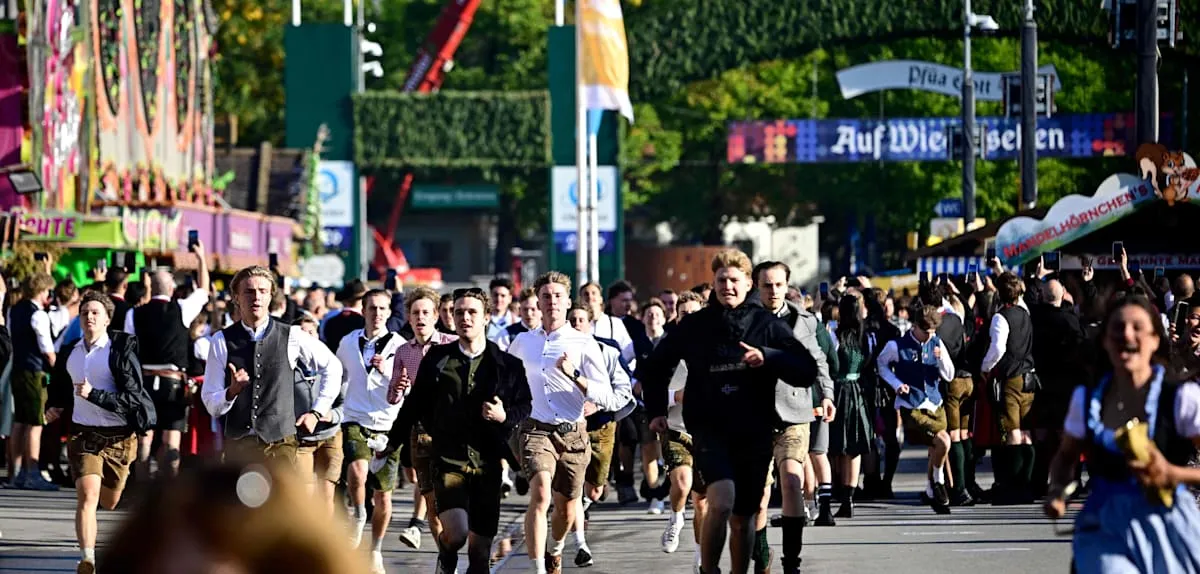
BERLIN – The youth organization of the Alternative for Germany (AfD) party, Generation Deutschland, has surprisingly declared substantial differences in views with its parent party's leadership. They explicitly reject the idea of Germany withdrawing from the Euro and affirm their commitment to the Schengen Area. This stance, as stated by the organization's chairman, marks an effort to position themselves independently within the German political landscape of 2026.
This declaration comes amidst increasing internal friction within the AfD, a party long known for its skeptical rhetoric towards the European Union and the single currency, the Euro. The chairman of Generation Deutschland, whose name was not mentioned in the initial source but whose role is crucial, emphasized that Germany's future lies in strong European integration, not isolation.
Generation Deutschland's decision to publicly distance itself from core policies of its parent party, particularly concerning the Euro and Schengen, indicates a shift in priorities among its younger members. They appear to be attempting to attract a new generation of voters who may be more pro-European and concerned about the economic and geopolitical impacts of a Euro-exit policy.
This stance undoubtedly creates new dynamics within the AfD, a party that continues to strive to expand its influence in German politics. Although the AfD has gained significant support, its extreme views sometimes pose an obstacle to forming coalitions with mainstream parties.
German political history shows that party youth organizations often serve as a barometer for future ideological directions. This upheaval within Generation Deutschland could be an early signal of a moderation of views among younger AfD members, or it could deepen existing divisions.
The Euro and the Schengen Area are fundamental pillars of the European Union, not only in economic aspects but also in freedom of movement and collective identity. Germany's withdrawal from the Euro would trigger massive economic chaos across Europe, while withdrawal from Schengen would end one of Europe's greatest integration achievements.
It is important to note that the AfD has faced harsh criticism and even calls for its prohibition on several occasions. The debate regarding the AfD's place in democracy has been a hot topic. Generation Deutschland's more moderate stance could be a strategy to alleviate public and authoritative concerns about the party's extremism. Readers can review this debate further in our article on Controversy Over AfD Ban Rocks Germany: Democracy at a Crossroads?.
Some political analysts speculate that this move is also an attempt by Generation Deutschland to build its own more independent and forward-looking image. Thus, they could gain greater bargaining power within the party structure and even on the national political stage.
This bold step also has the potential to spark broader discussions about the future direction of the AfD. Whether this will serve as a catalyst for larger internal changes or merely clarify the dividing lines between factions within the party remains to be seen.
Generation Deutschland's stance warrants close attention given its implications for the public debate on the European Union and Germany's position within it. This underscores that even within a party known for its strong views, the aspirations and vision of the younger generation can create waves of change.
Editorial Insight: Generation Deutschland's distancing itself from the Euro-skeptic rhetoric of its parent party is a significant development. This is not merely a difference of opinion, but rather an indication of an ideological struggle within the AfD that could influence the party's future direction. If these pro-European views strengthen, the AfD may need to re-evaluate its platform to attract broader support, or face the risk of further fragmentation.