 Robert Andrison
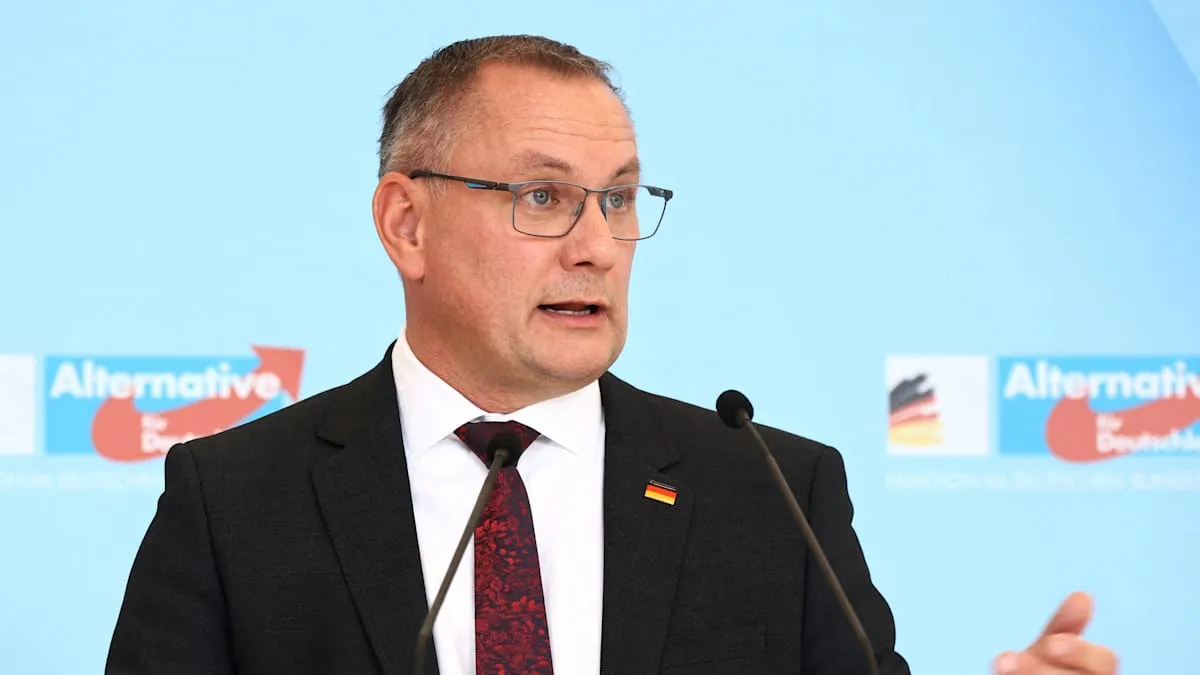
BERLIN – The Alternative for Germany (AfD) party has once again shaken the national political stage. AfD Co-Chairman Tino Chrupalla launched sharp criticism against the planned black-red pension reform by the German government. Chrupalla highlighted that this policy fails to acknowledge the substantial contributions of workers who have served and paid dues for 45 years, calling for the government to free citizens from the chancellor's policy, deemed detrimental, and for the chancellor to retire.
In his forthright statement, Chrupalla affirmed, Whoever has worked for 45 years and paid contributions has more than done their part for this country. This criticism is not mere empty rhetoric but reflects deep disappointment with the direction of social policy perceived as unfair to millions of German citizens.
The proposed pension reform, initiated by the current traffic light coalition—referring to the colors of the SPD (red), FDP (yellow), and Green parties—has become a subject of fierce debate across Germany. AfD, as the strongest opposition, consistently places social welfare and retirement security as their top political priorities.
Chrupalla emphasized that the proposed reform creates uncertainty for future generations while neglecting the rights that should be enjoyed by those who have contributed for a long time. AfD's position often centers on protecting national interests and German citizens from what they view as detrimental globalist or liberal policies.
For many German workers, especially those nearing retirement age, any changes in the social security system are crucial. Concerns about financial stability in old age become a central issue, fueling public tension and intense political discussions.
Chrupalla's statement is predicted to further heat up the political climate ahead of upcoming regional and federal elections. The AfD capitalizes on public sentiment that feels their rights are being neglected by the government. This criticism also reinforces the AfD's narrative that established parties care less about ordinary people.
Meanwhile, the coalition government argues that pension reform is necessary to ensure the sustainability of the system amidst evolving demographic and economic challenges. However, concrete details on how this sustainability will be achieved without burdening long-term workers remain a significant question.
Public response to this criticism varies. A majority of long-contributing workers voice support for Chrupalla, feeling their voices are represented. However, other groups question the political motives behind the statement, considering AfD's controversial stance on other issues, as seen in the case of the concerns of the Jewish community in Berlin.
The controversy surrounding Germany's pension reform is expected to continue dominating the political agenda. With an aging population and a shrinking productive workforce, finding a fair and sustainable formula for retirement security is a monumental challenge for any government.
The AfD continues to demand that the government present comprehensive solutions, not just temporary fixes that could harm those who have loyally contributed to the country for decades. Calls for accountability and a long-term vision are becoming increasingly vocal.
Editorial Insight: The sharp criticism from the AfD, through Tino Chrupalla, regarding pension reform in Germany highlights fundamental vulnerabilities in modern social welfare systems. The argument centered on 45 years of worker contributions resonates strongly amidst Europe's aging demographics. Should the coalition government fail to convince the public with transparent and fair solutions, this issue could become a serious political boomerang, eroding voter trust and strengthening the populist opposition. The long-term implications could include further polarization in social policy debates and significant pressure on coalition stability.