 Angela Stefani
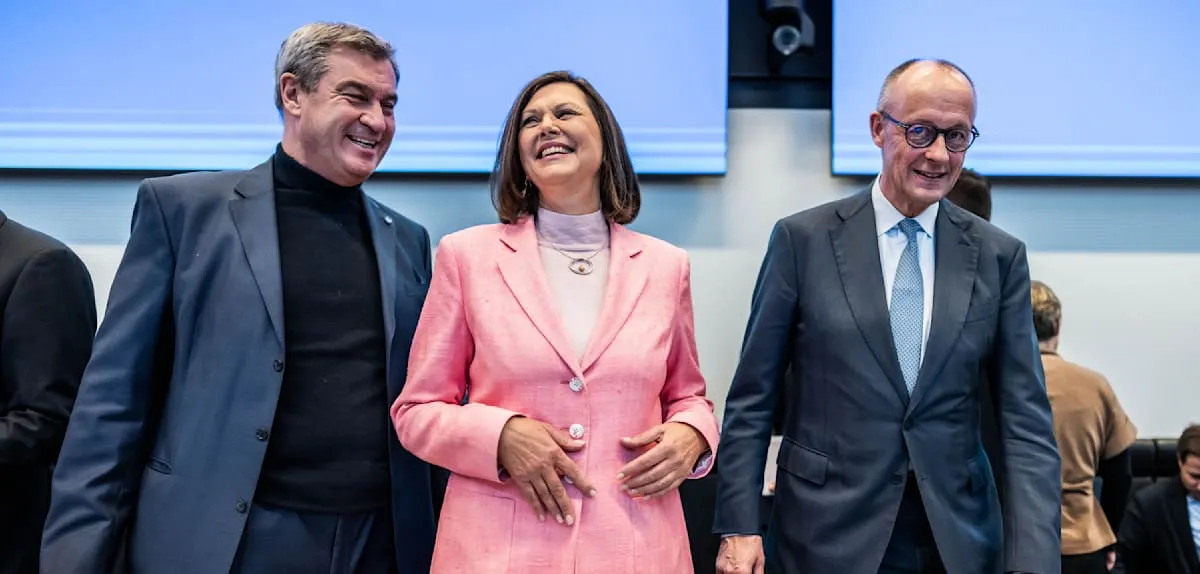
BERLIN – A political consensus appears to be forming in Germany in 2026 around the candidacy of Ilse Aigner. Chancellor Merz and Christian Social Union (CSU) Party Leader Soder have openly welcomed broad support from the Social Democratic Party (SPD) and the Green Party for her nomination. This move indicates an effort to build a solid base of support in parliament.
However, political dynamics are never without resistance. The Alternative for Germany (AfD) Party reacted with incomprehension and harsh criticism of Aigner's candidacy strategy. They highlighted alleged lack of impartiality from the candidate, especially after Aigner declined an invitation for a meeting proposed by the right-wing party.
Foreign Minister Merz, in a press statement in Berlin, emphasized the importance of stability and cross-party cooperation amid an increasingly fragmented political landscape. The support from the SPD and the Green Party for Ilse Aigner reflects our shared commitment to strong and stable leadership. This is a moment of unity, Merz stated.
Echoing Merz, CSU Leader Soder highlighted Aigner's track record as an experienced stateswoman. Ilse Aigner's experience is beyond doubt. This consensus shows that her vision for leadership is widely accepted, transcending traditional party ideological boundaries, Soder added to journalists.
On the other side of the political spectrum, the decision by the SPD and the Green Party to support Aigner is seen as a pragmatic step to strengthen the centrist bloc. This support can also be interpreted as a strategy to marginalize the influence of extremist parties in crucial national decision-making processes.
However, the AfD interprets this situation differently. An AfD spokesperson, in Frankfurt, stated that Aigner's refusal to engage in dialogue with them demonstrates alarming partiality. How can a candidate claim neutrality if she refuses to interact with a segment of her constituents? This clearly erodes her credibility, the spokesperson criticized.
The AfD even accused that this cross-party support is a deliberate political maneuver to disregard alternative voices in German democracy. They argue that a serious candidate for an important position must be willing to speak with all political factions, without exception.
This tension reflects the growing polarization in German politics, where the lines between traditional coalitions and the opposition are becoming sharper. Aigner's candidacy has become a symbolic battleground between established political forces and populist movements challenging the status quo.
Political observers in Munich note that this incident could potentially affect public perception of Aigner, even though majority support from major parties remains a significant asset. The issue of impartiality is a serious accusation that requires a careful response from Aigner's campaign team.
Editorial Insight: The dynamics surrounding Ilse Aigner's candidacy in 2026 illustrate Germany's complex political landscape. Cross-party support for a candidate, while aiming to foster stability, inherently risks inviting accusations of partiality. The AfD's response is a clear indication that a centrist bloc's unity strategy might inadvertently strengthen polarizing rhetoric, making the debate about candidate neutrality a central issue in upcoming political contests. This condition has the potential to reshape alliances and public perceptions of democratic process legitimacy.